
How jetIDEAI is built
- Native terminal in the IDE
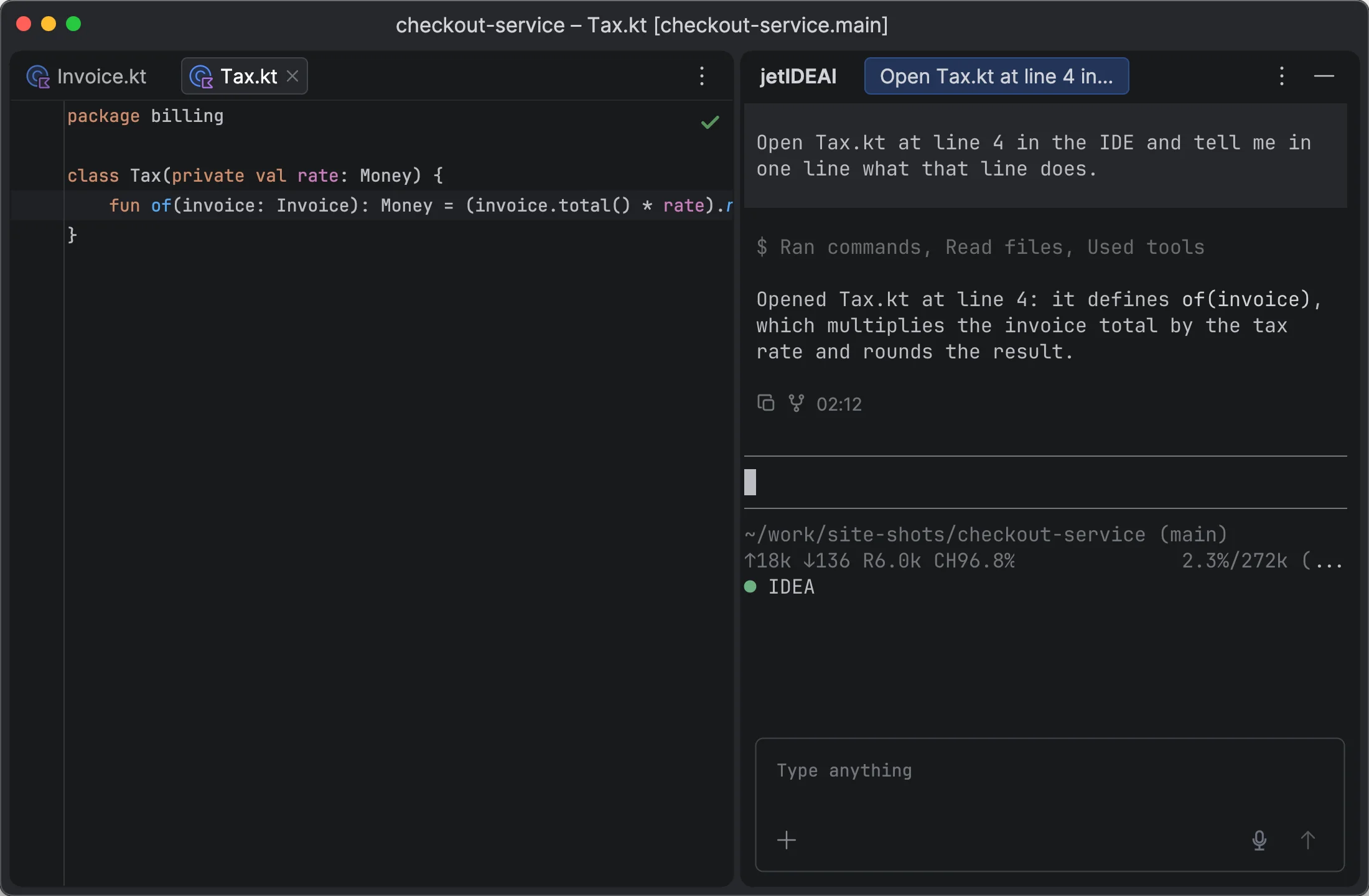
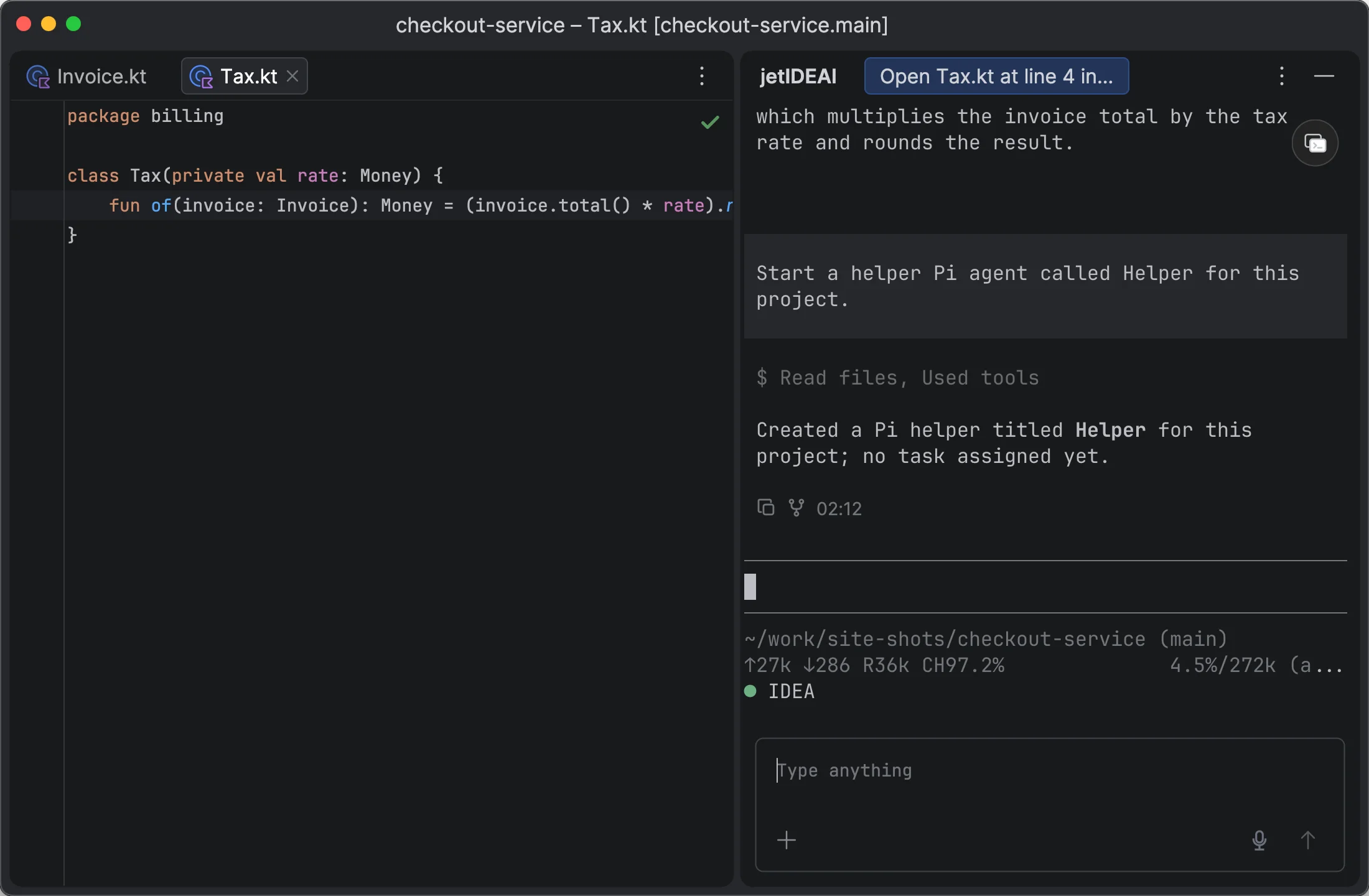
- IDE automation for any agent
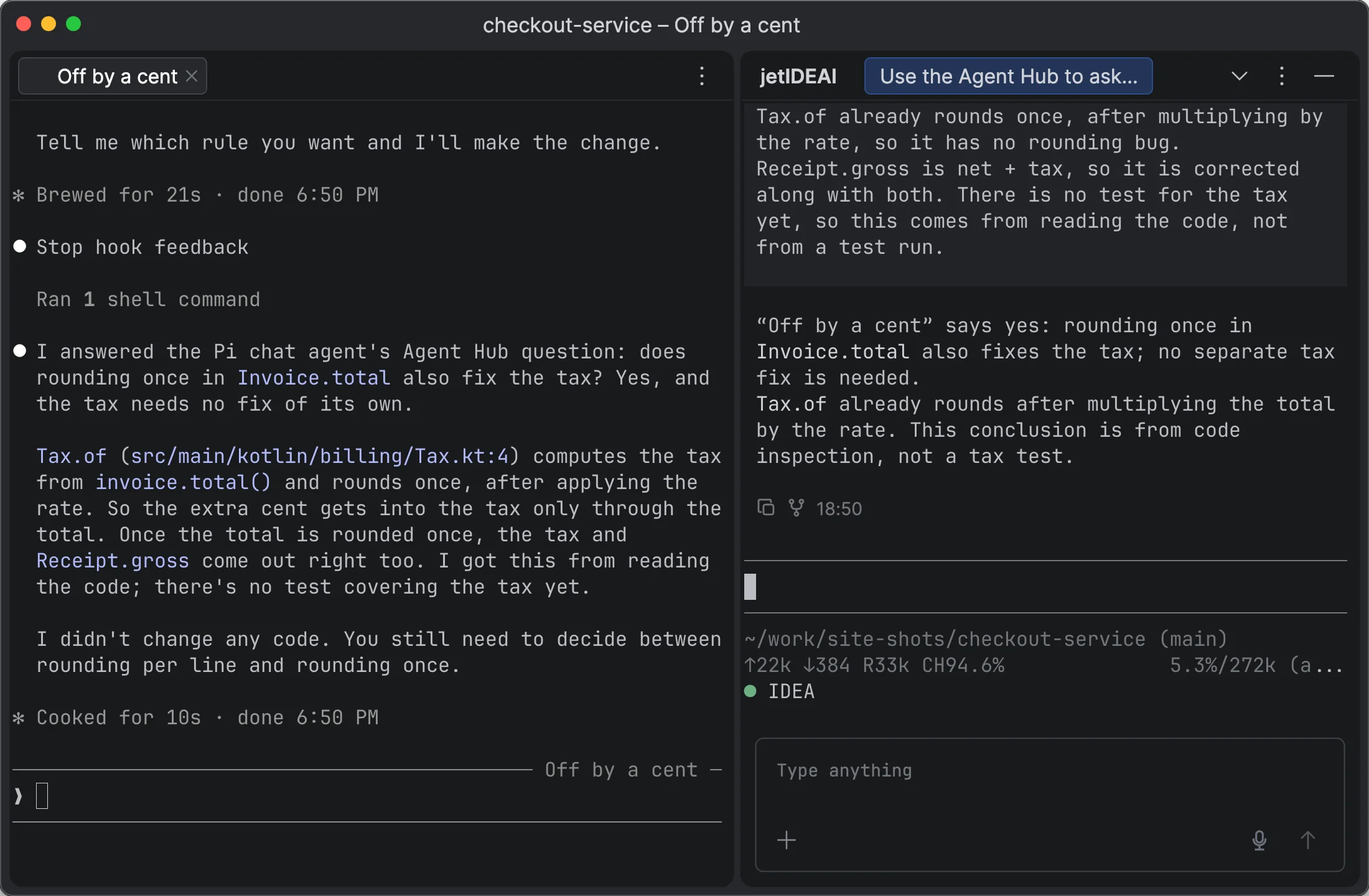
- Agent Hub
- Semantic Layers
- Scrollback virtualization
For developers who still look at the code.
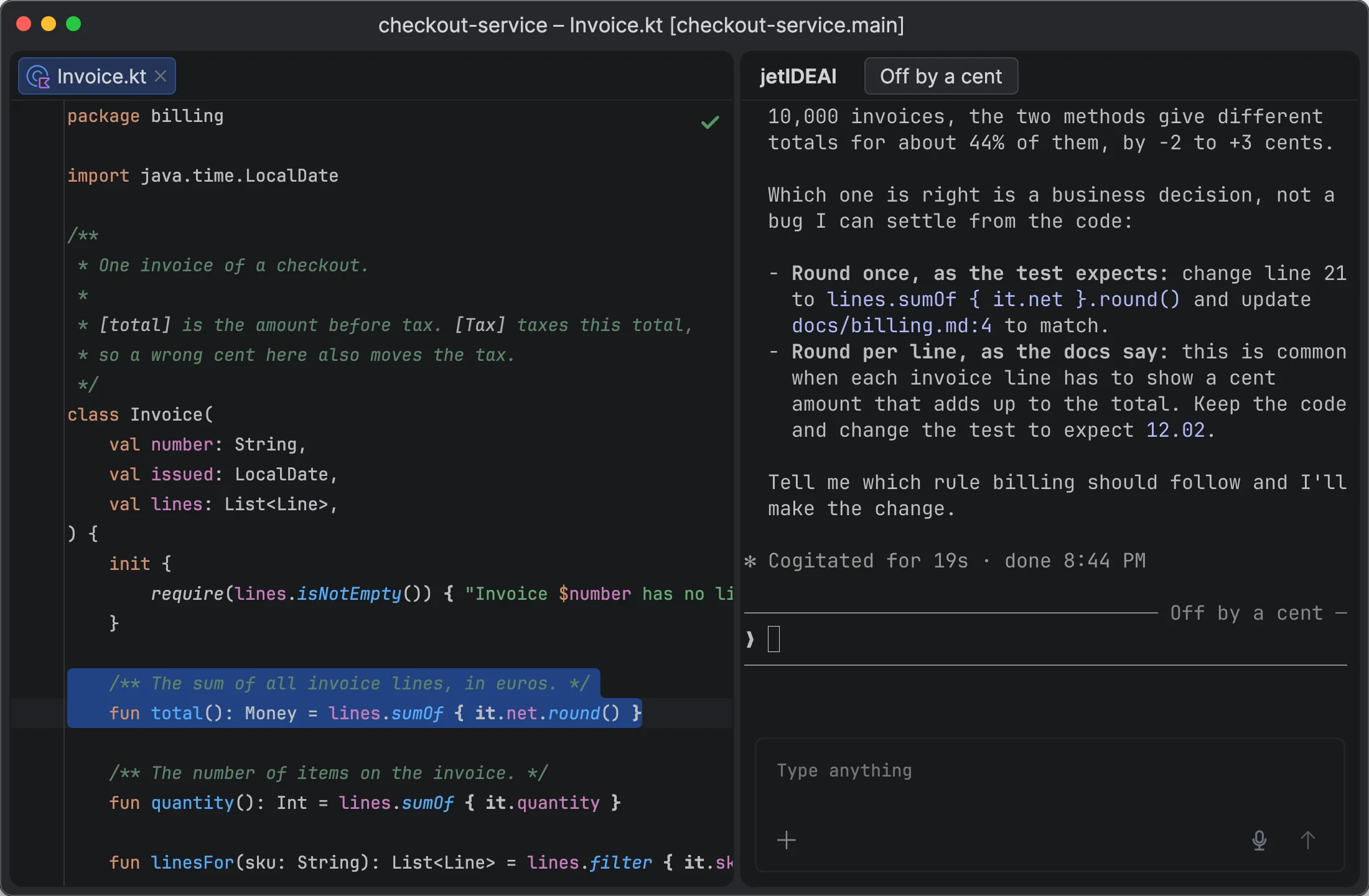
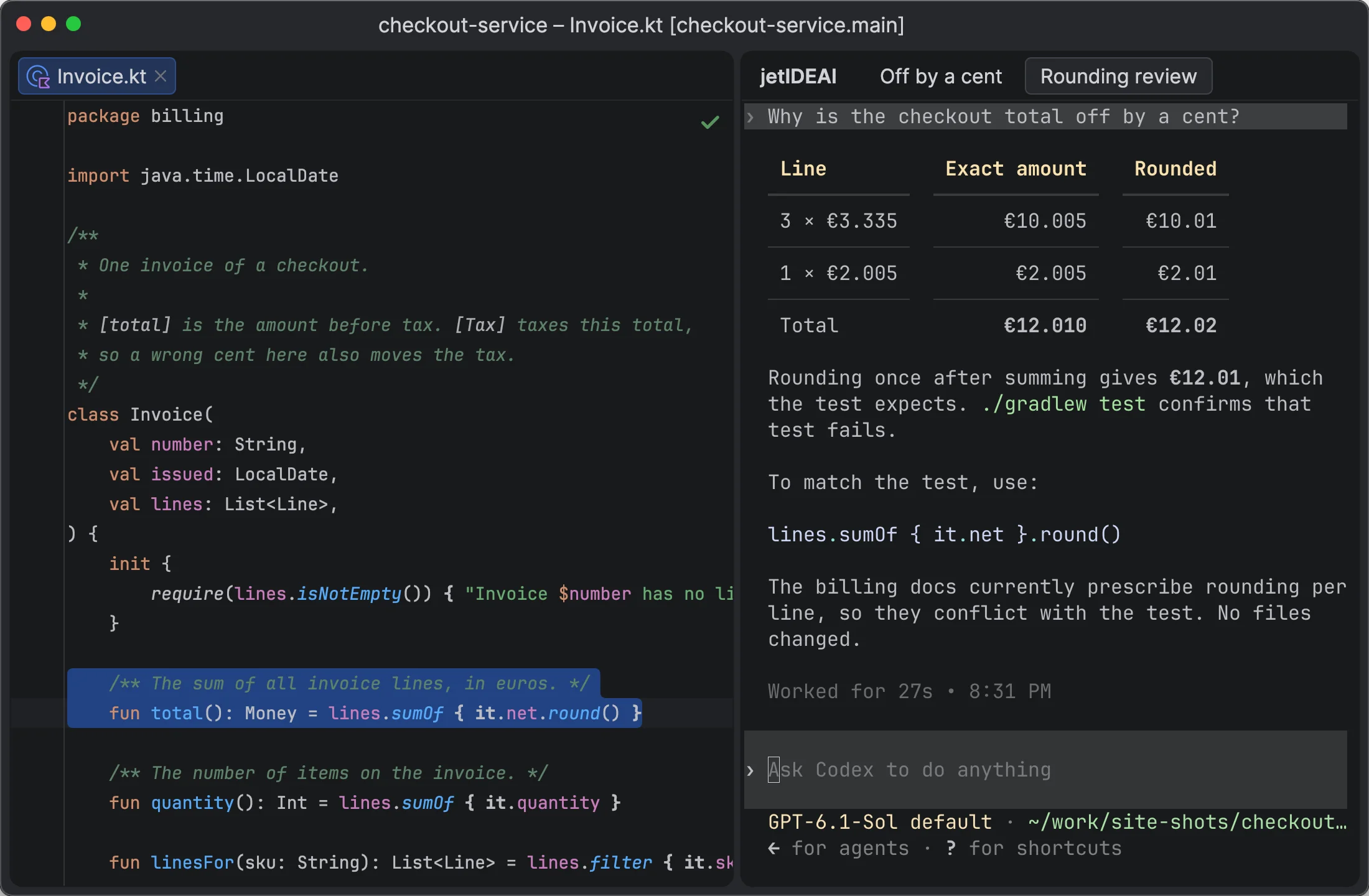
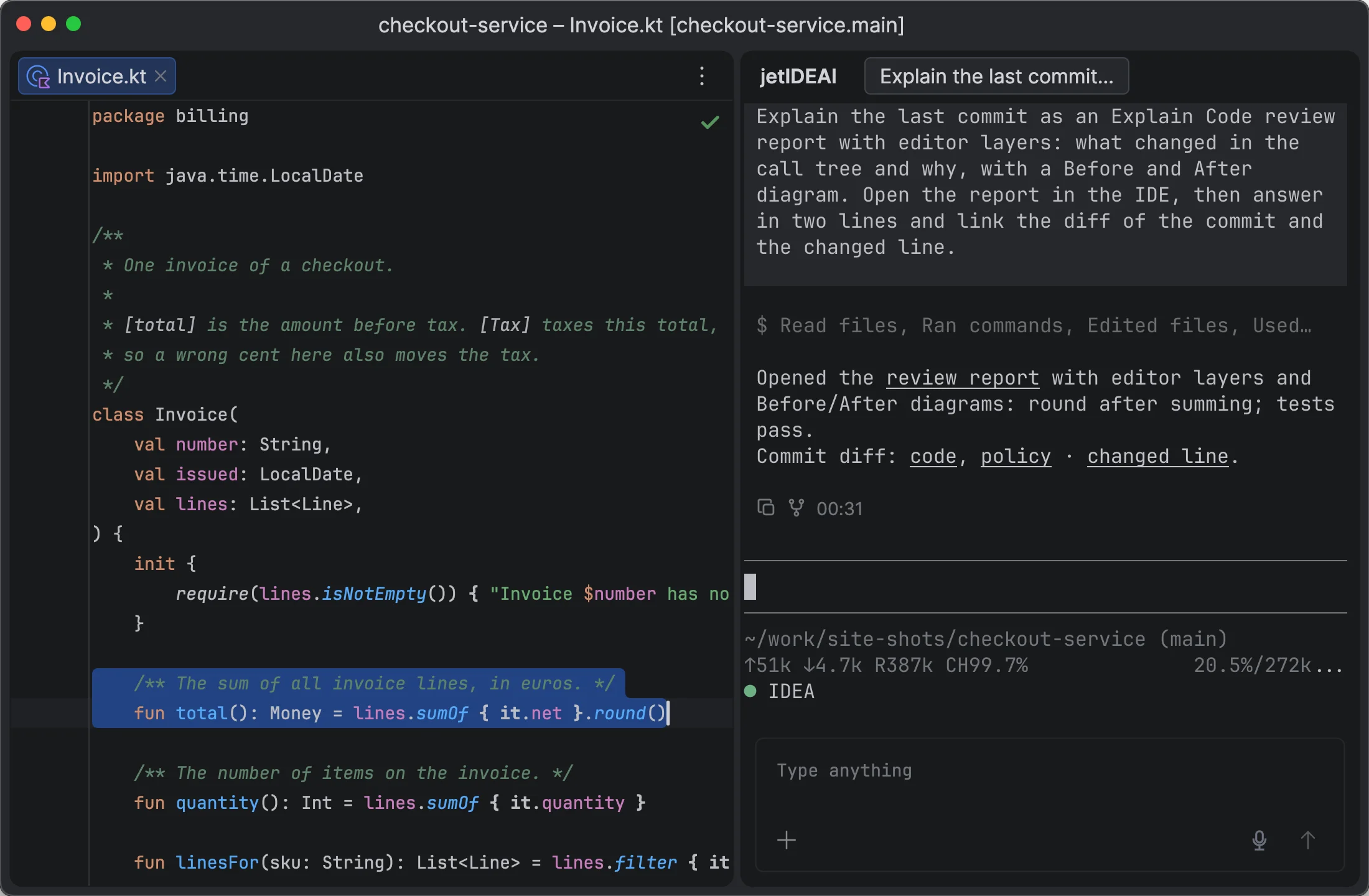
Claude Code, Codex, and Pi in a native Ghostty terminal, next to your code.

No separate terminal app, no window switching to check an edit.
Each agent runs in a tab of a terminal app. To see what it changed, you switch to the IDE and find the file.
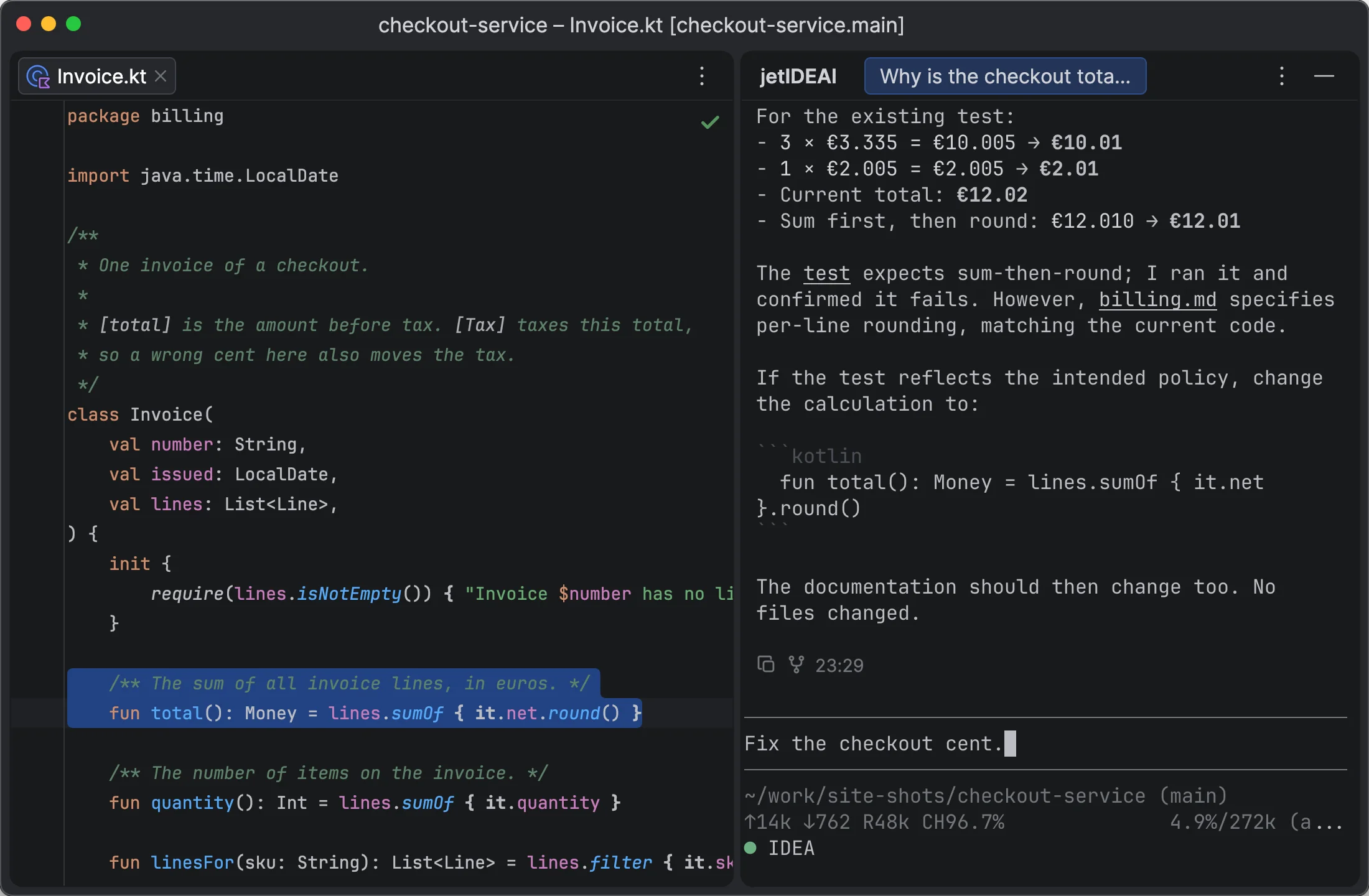
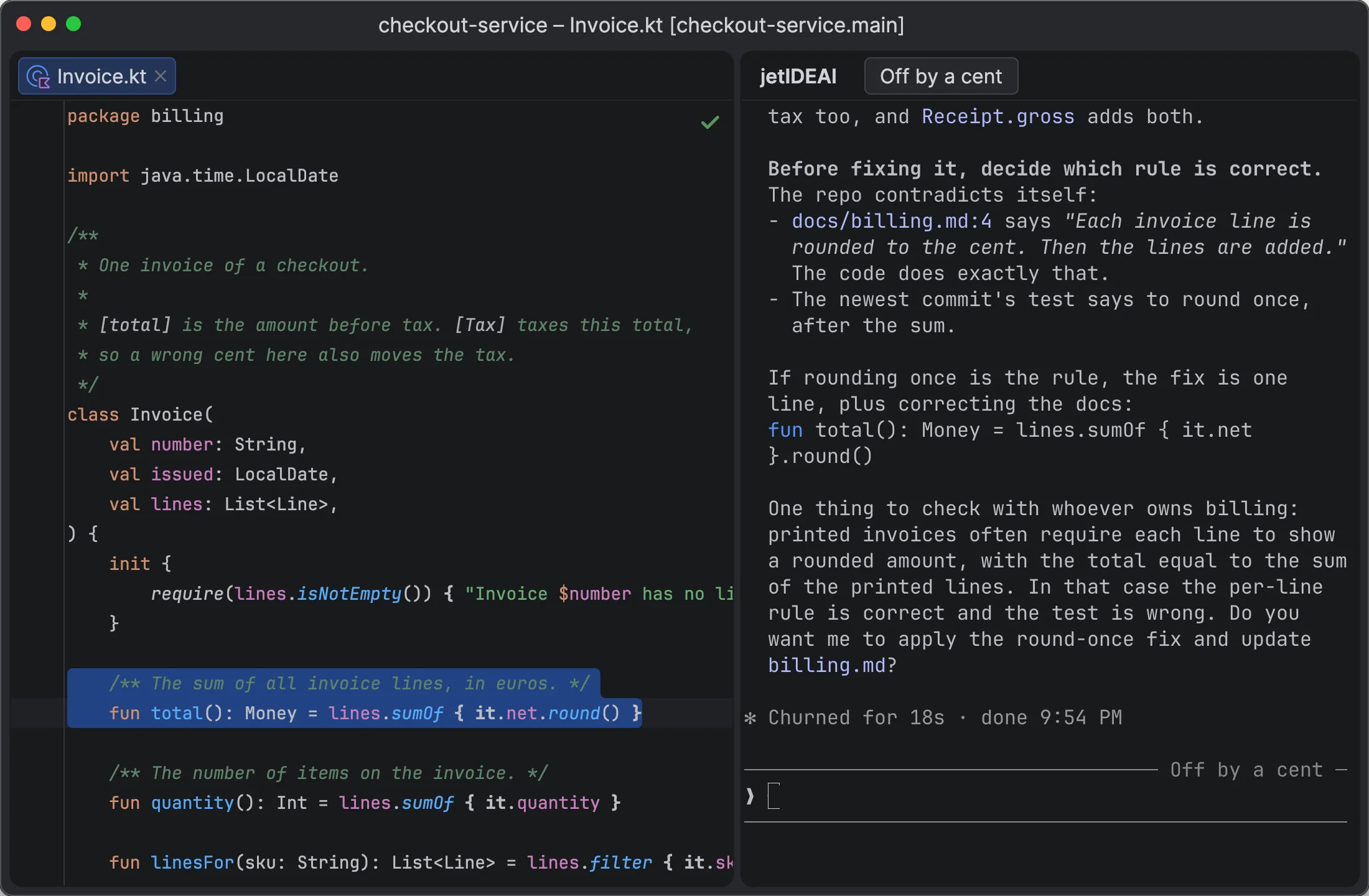
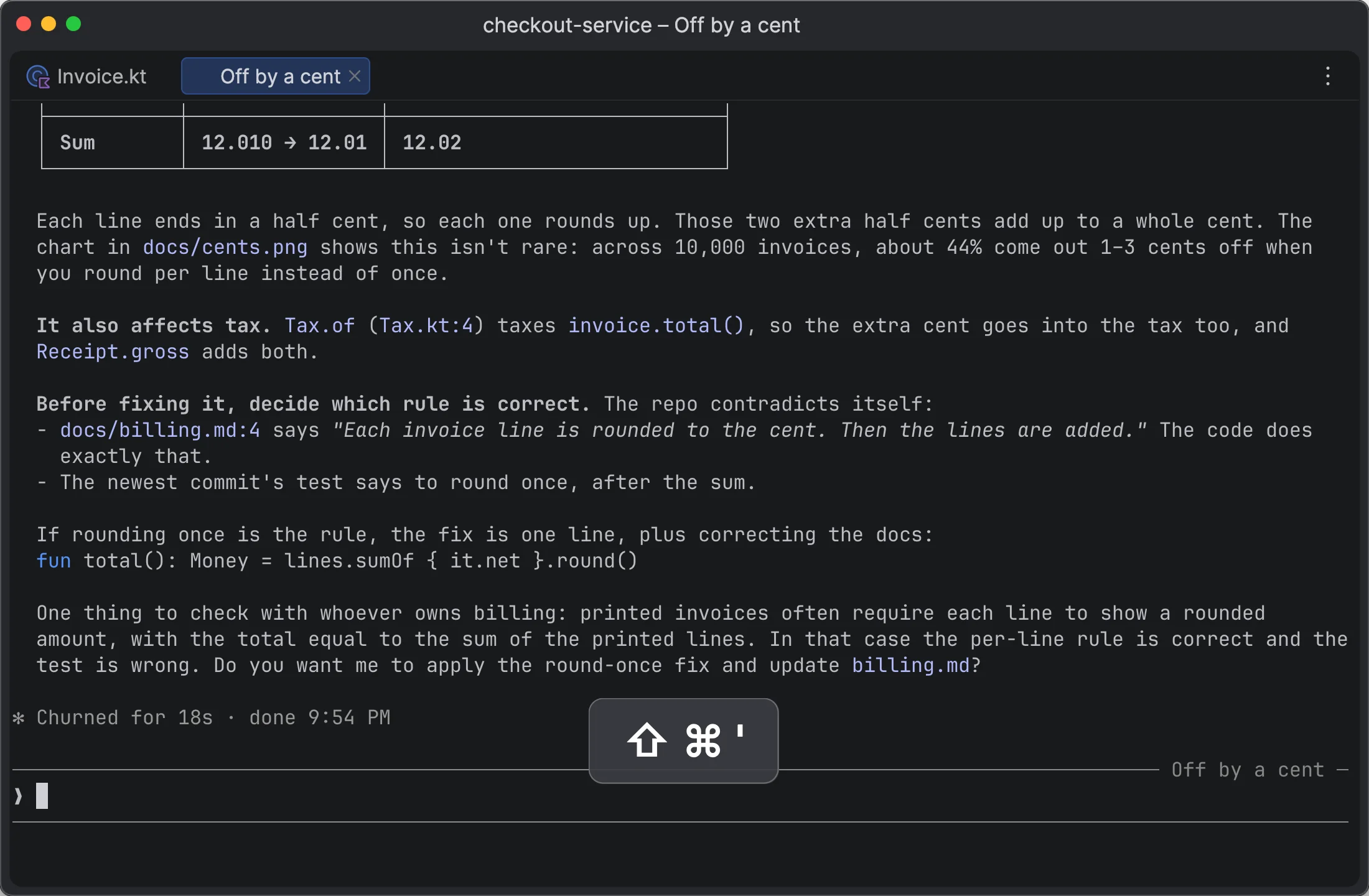
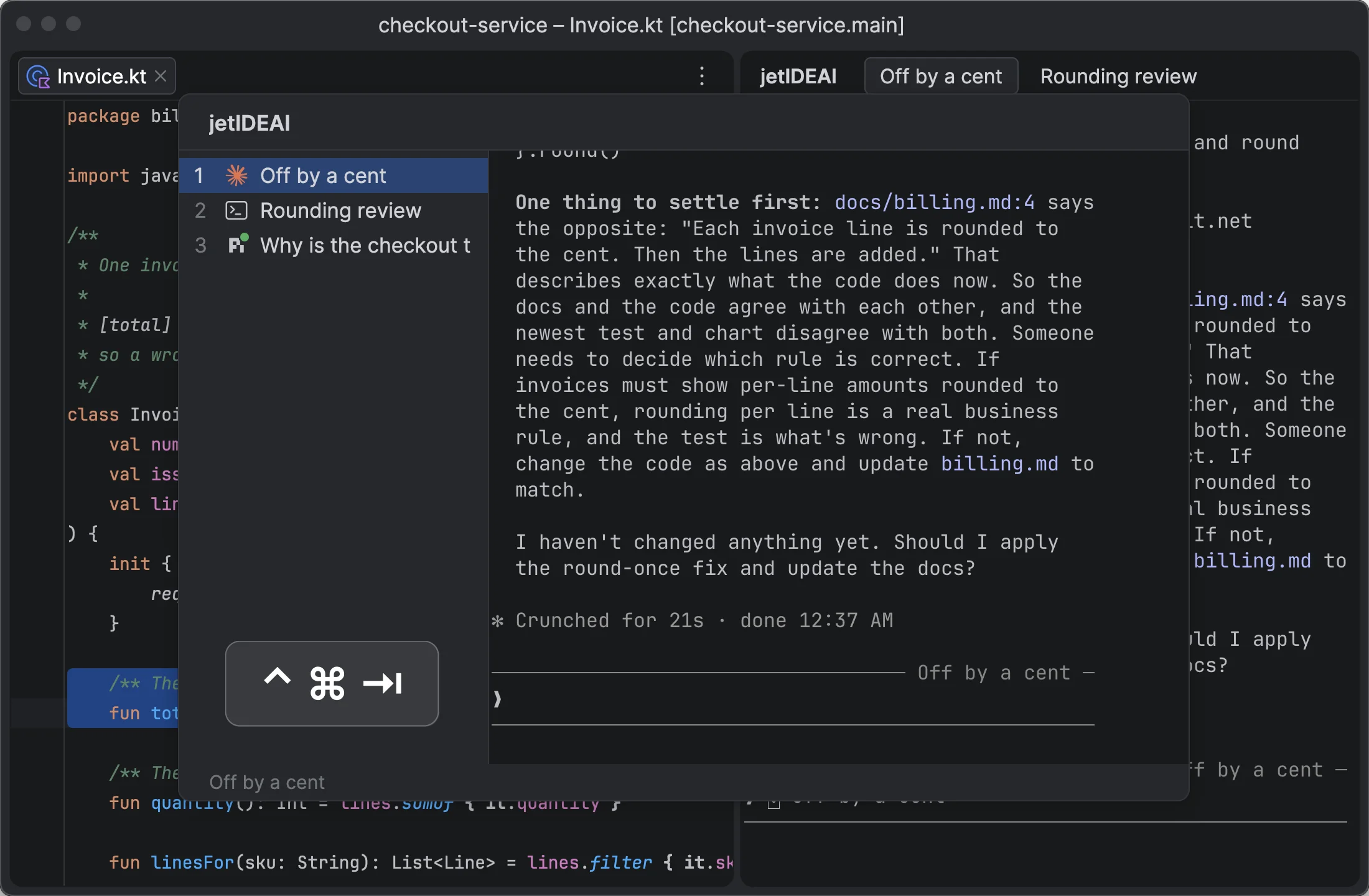
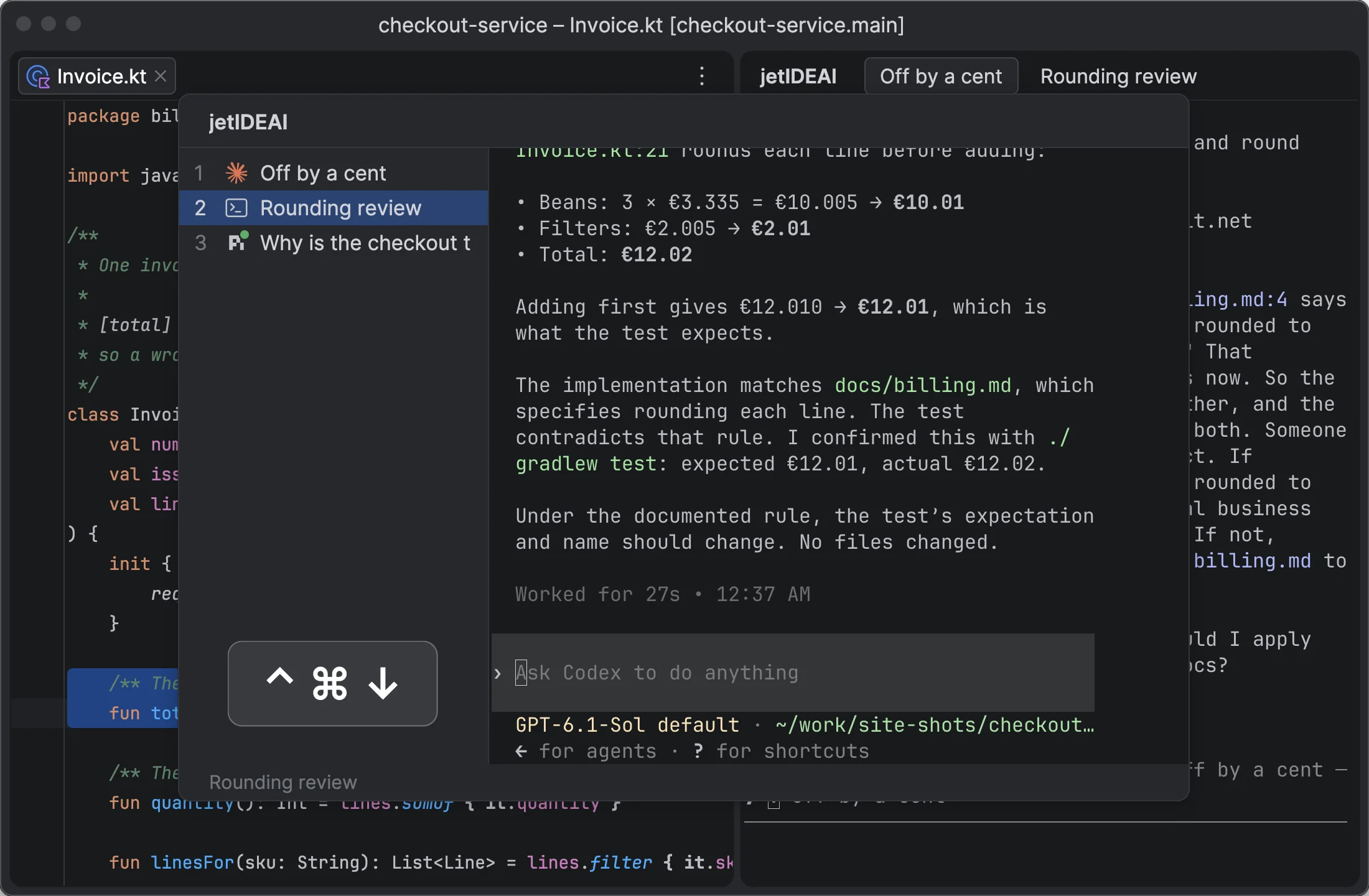
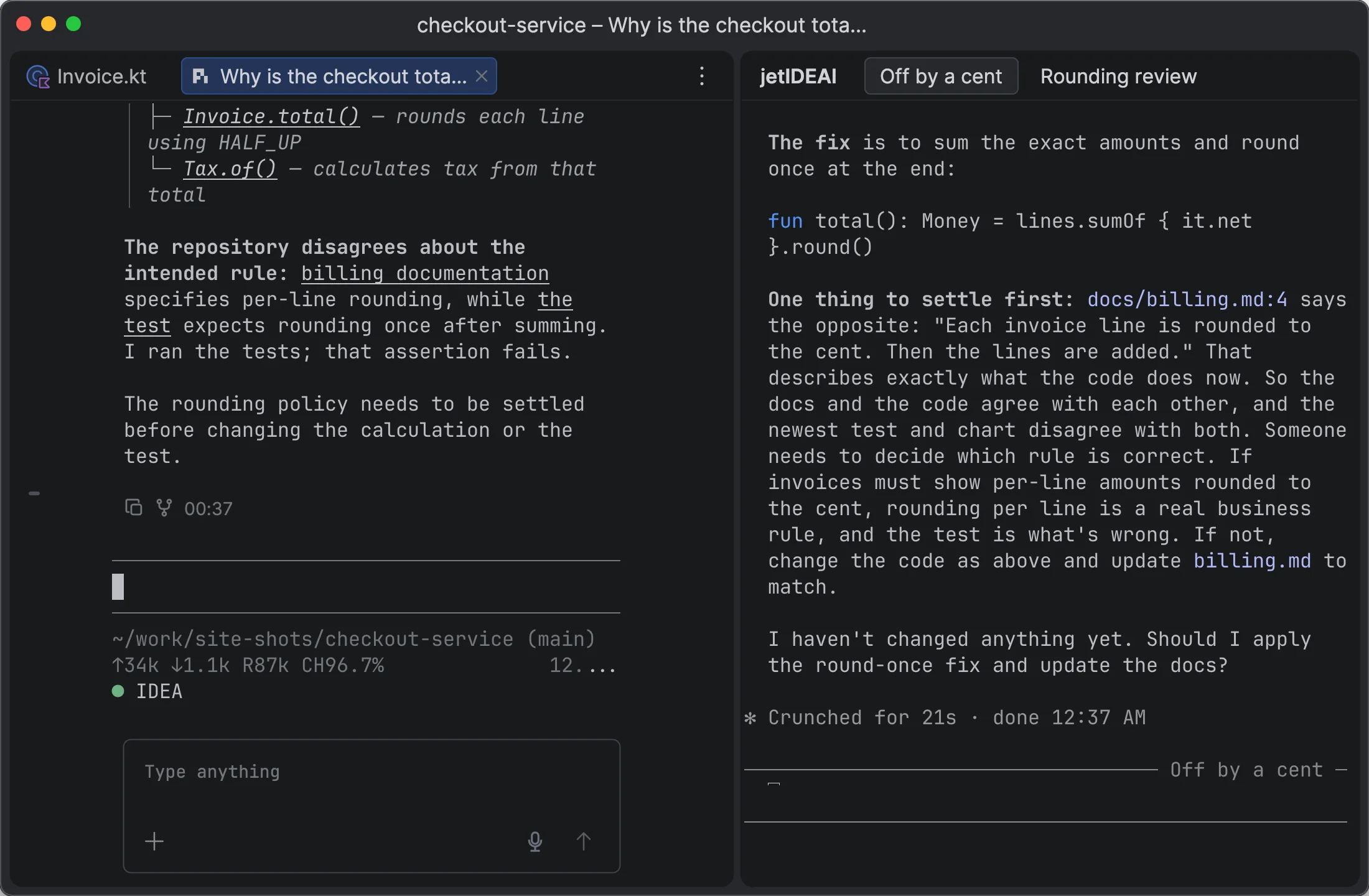
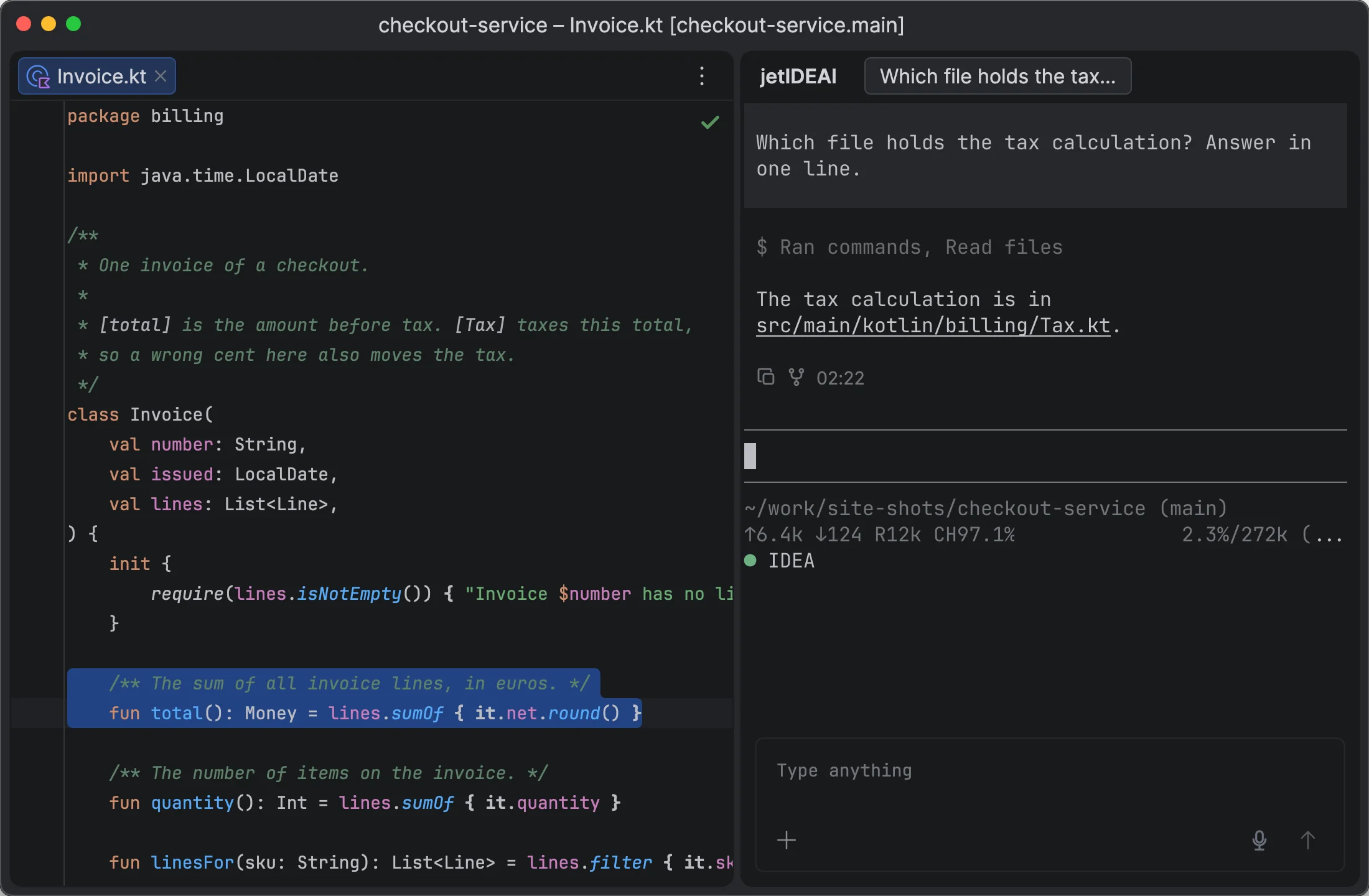
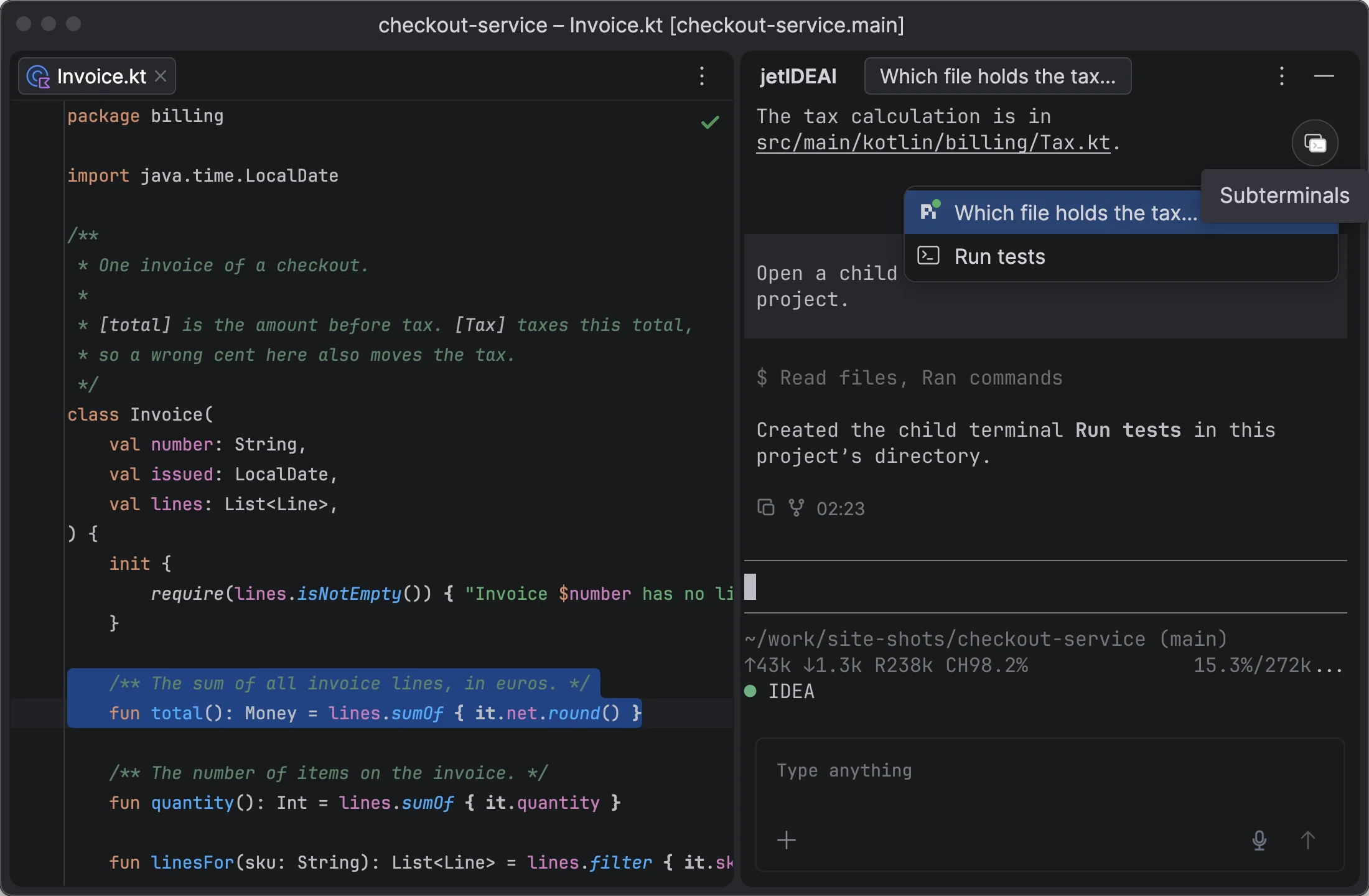
The terminals move into the IDE, next to the code. Your agent runs as is, with its own settings, skills, and extensions.
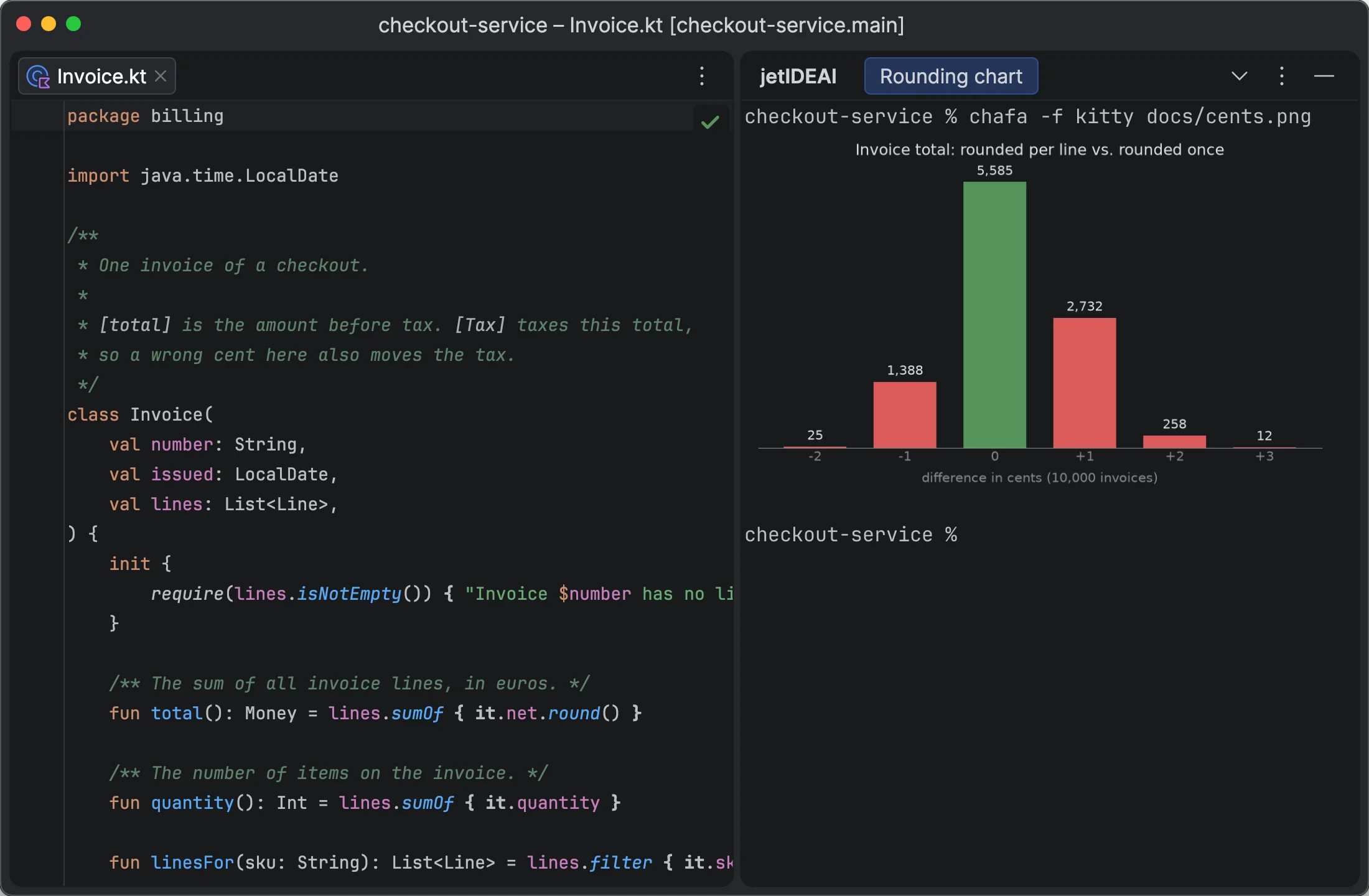
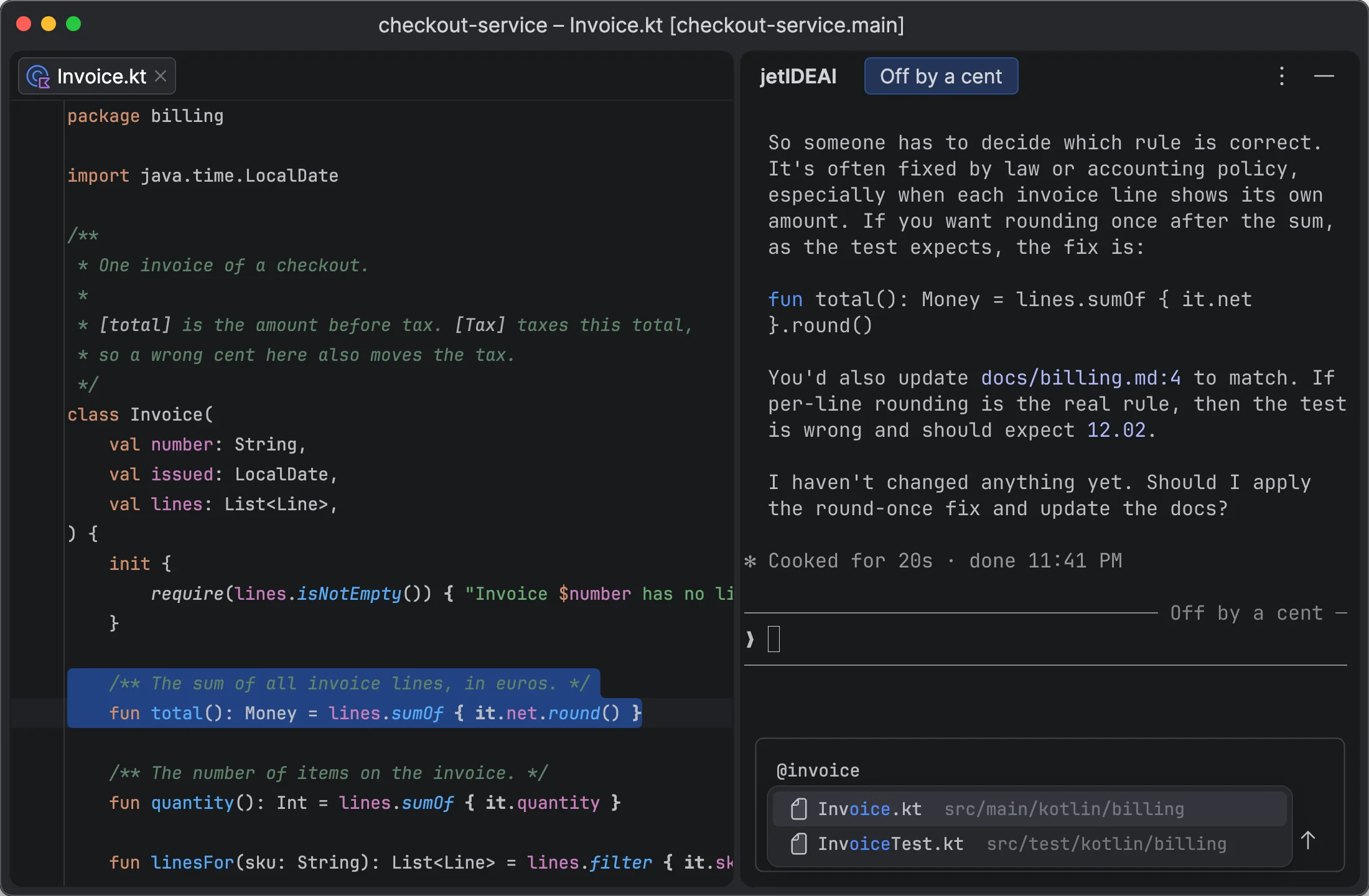
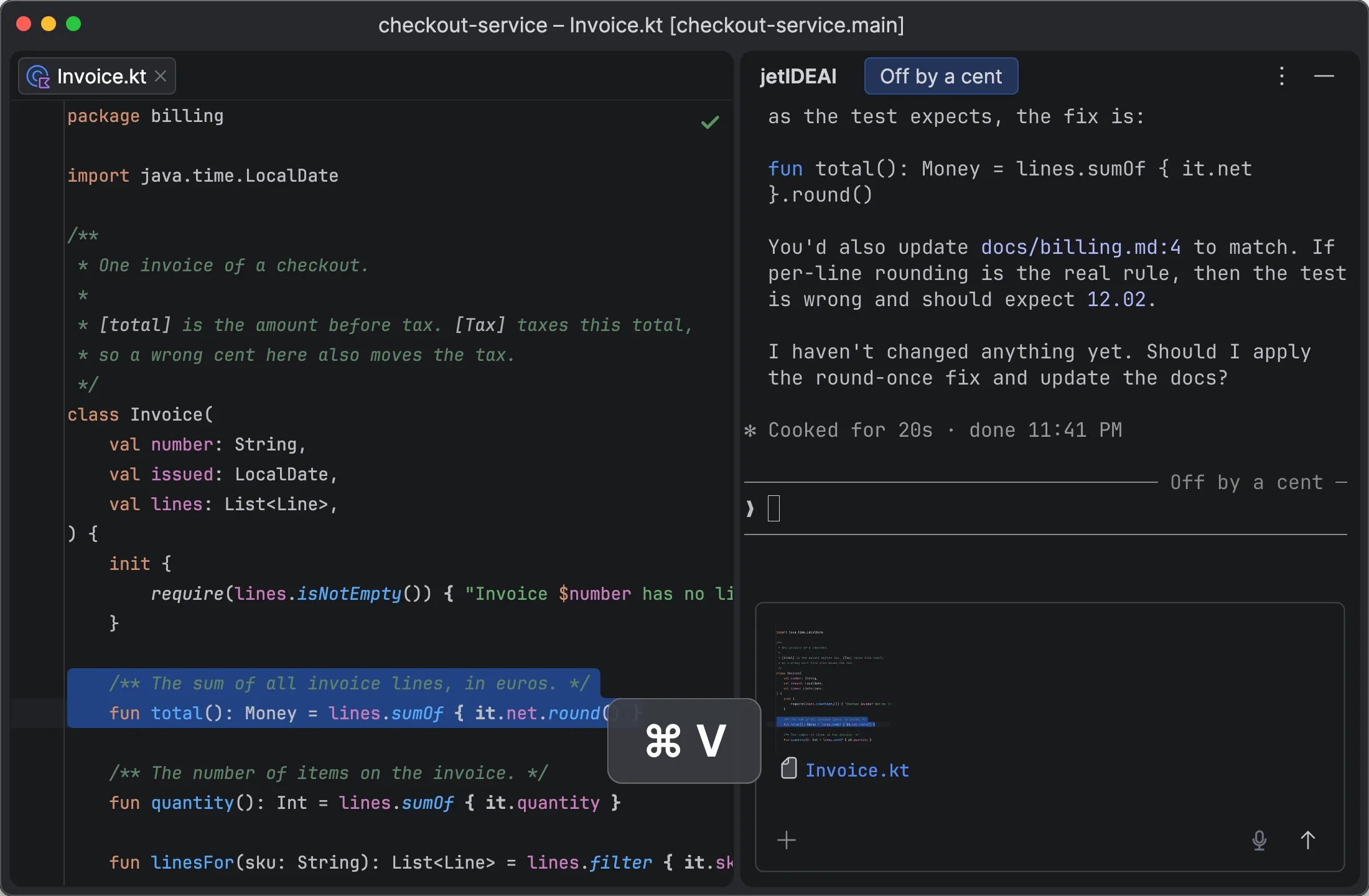
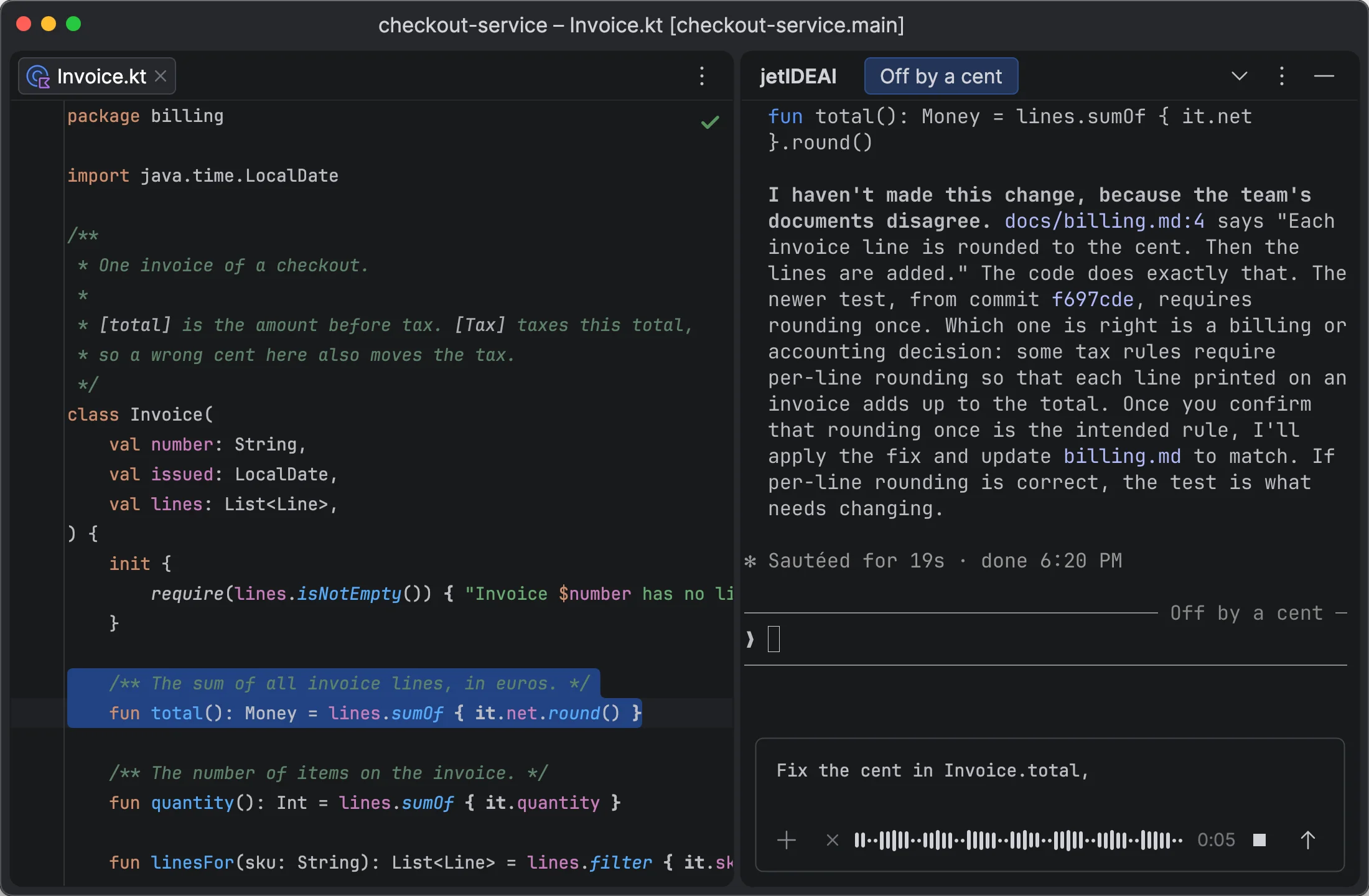
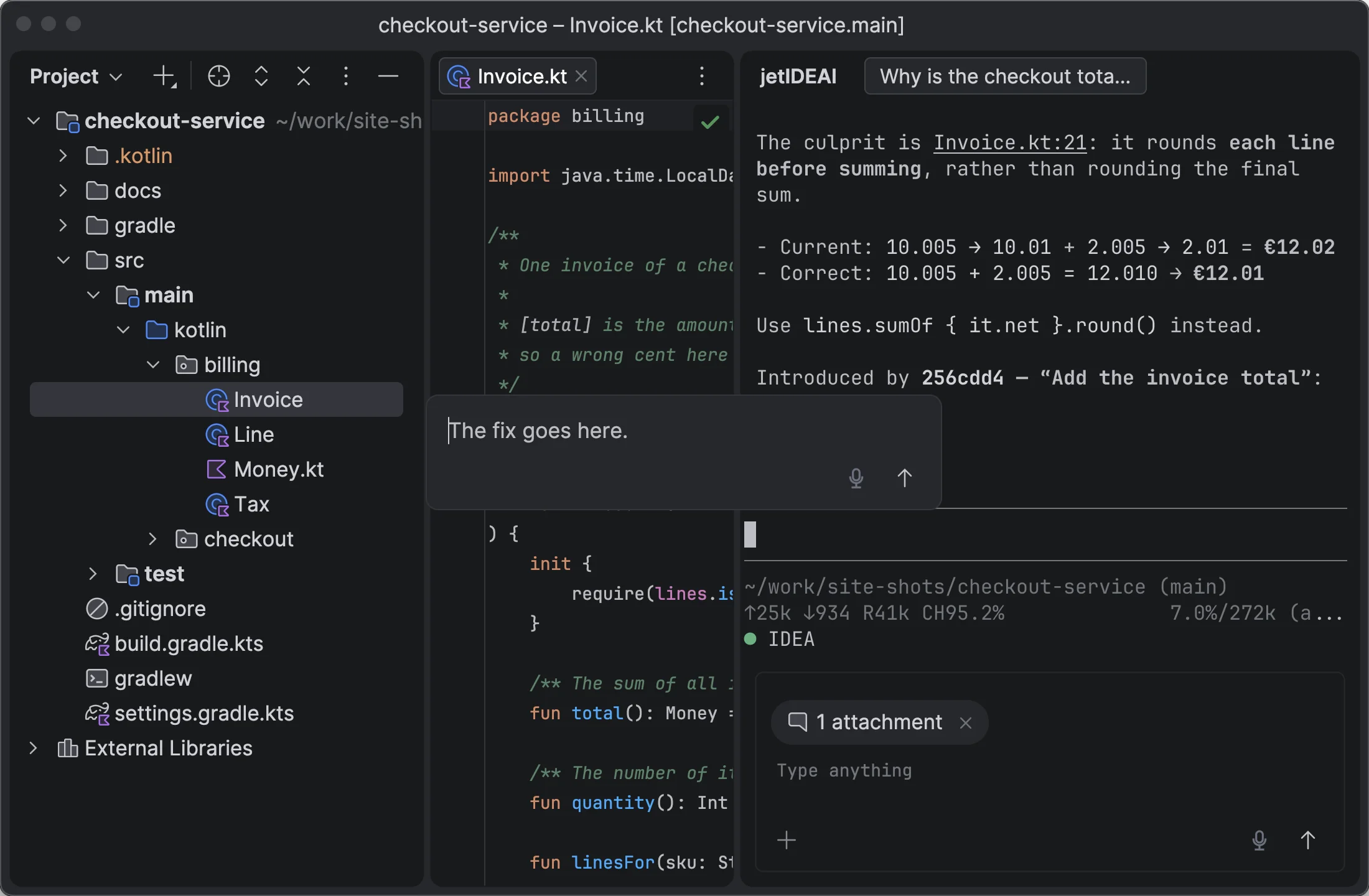
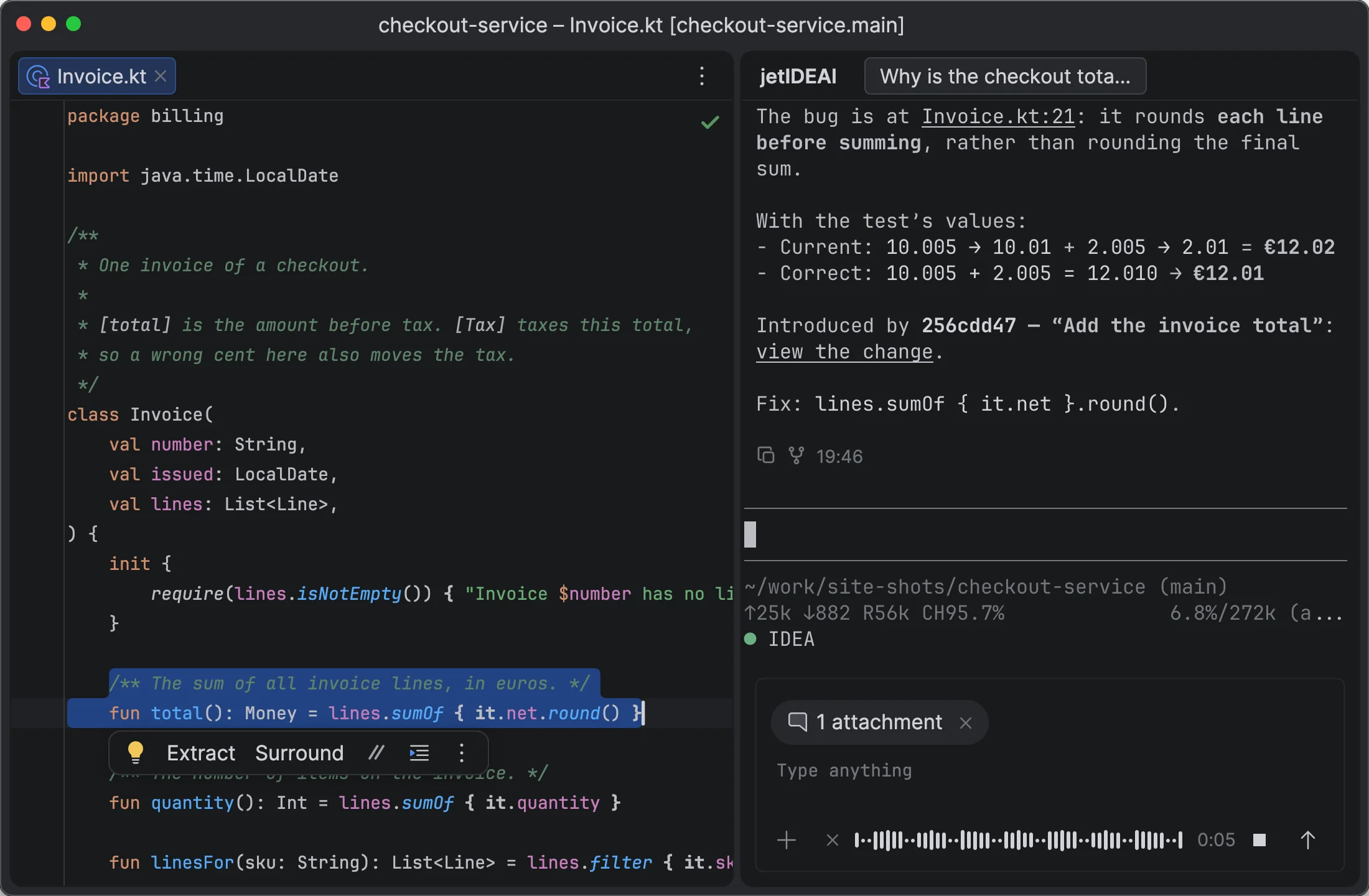
Links in an answer open the code, previews show it in place, and the Composer takes files and screenshots.
The terminal is Ghostty, rendered on the GPU.
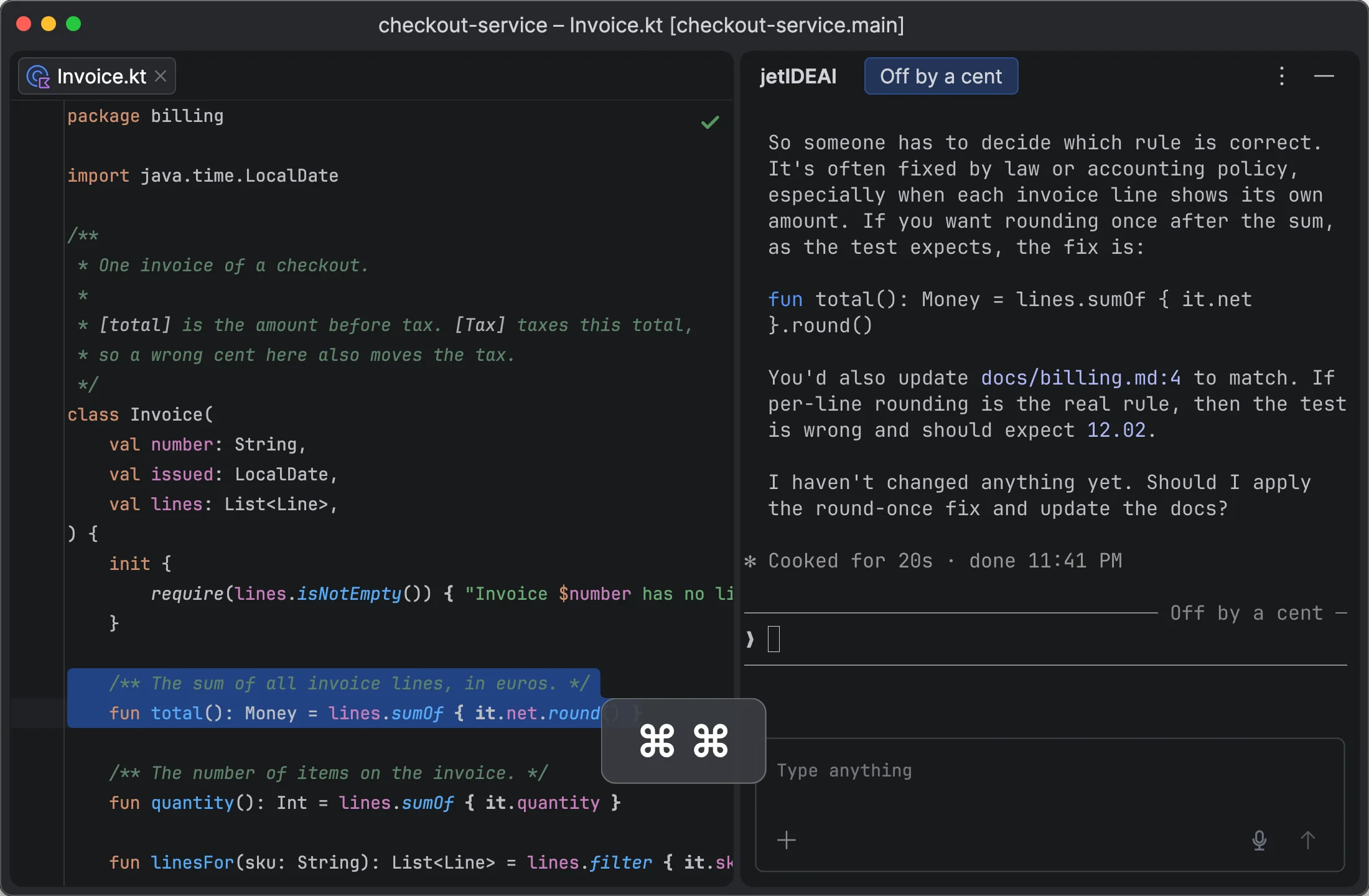
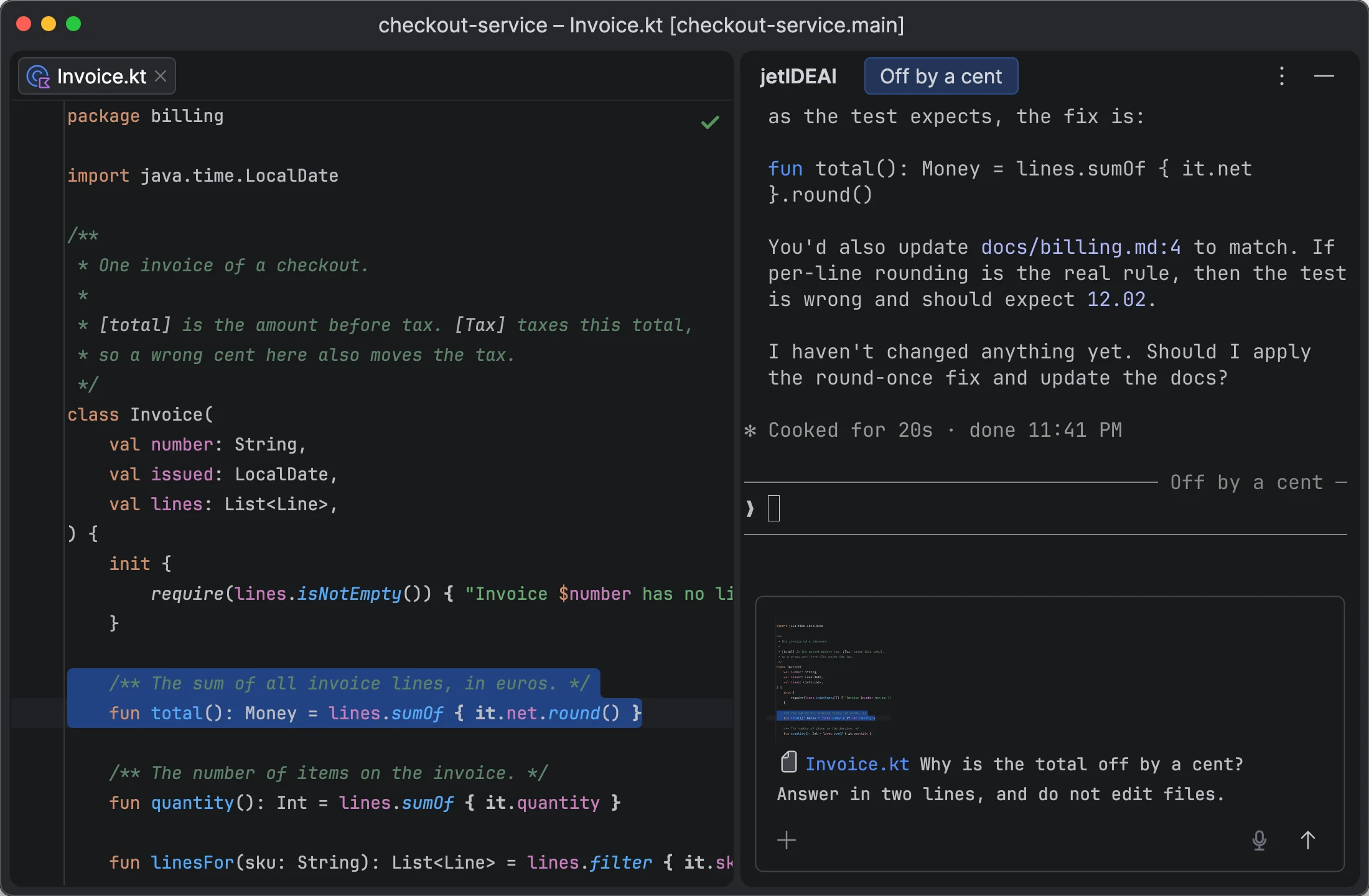
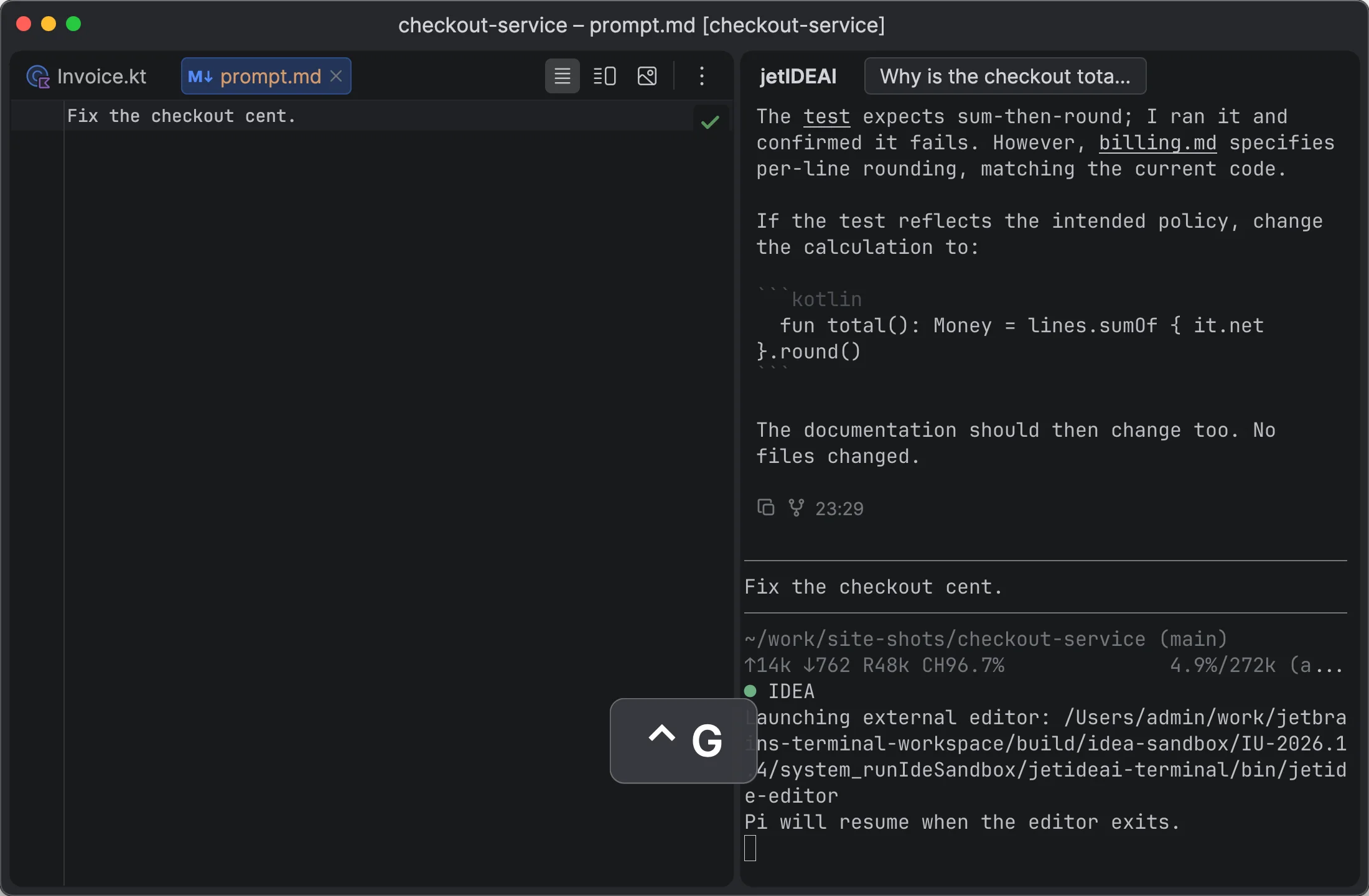
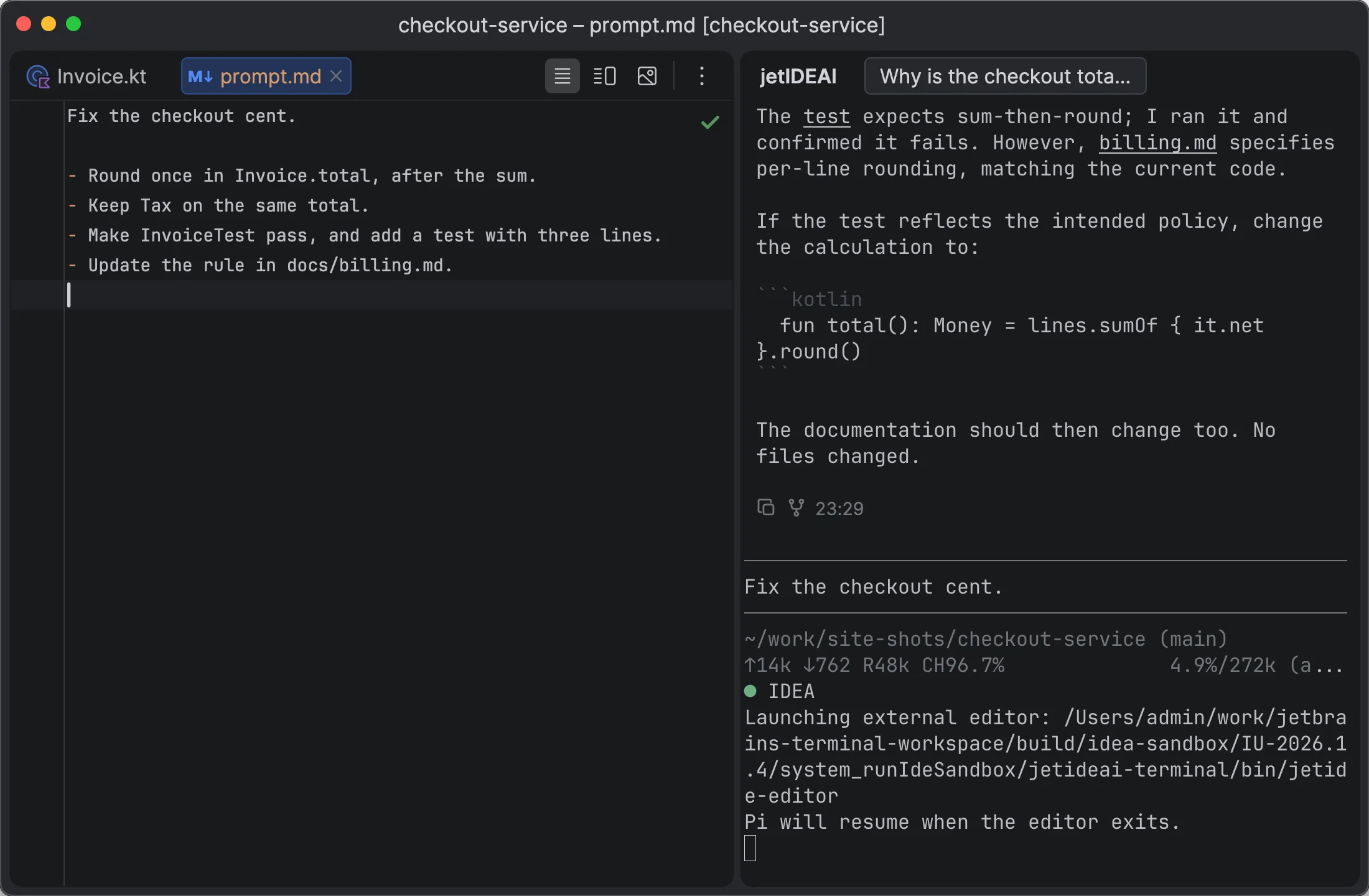
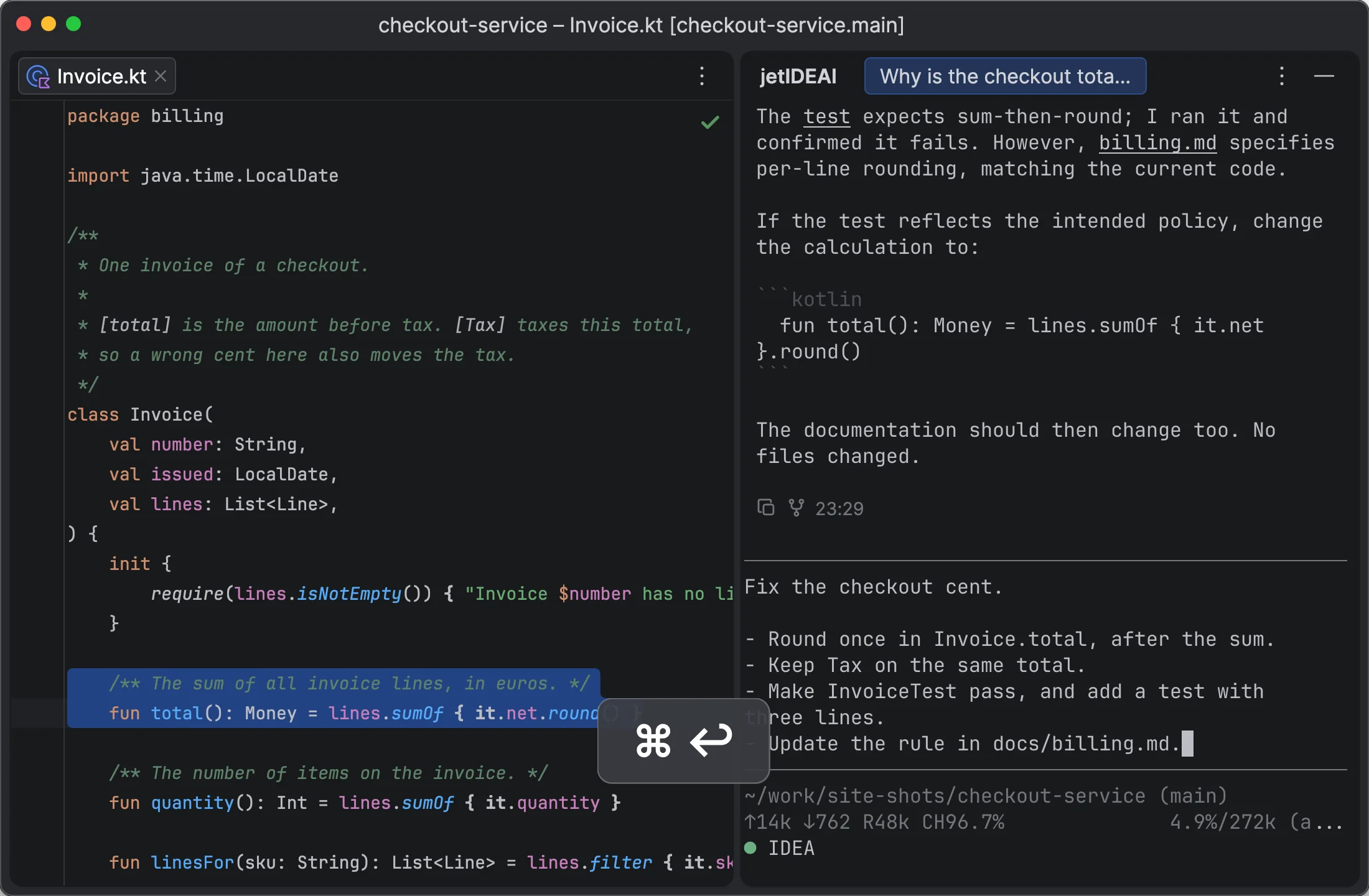
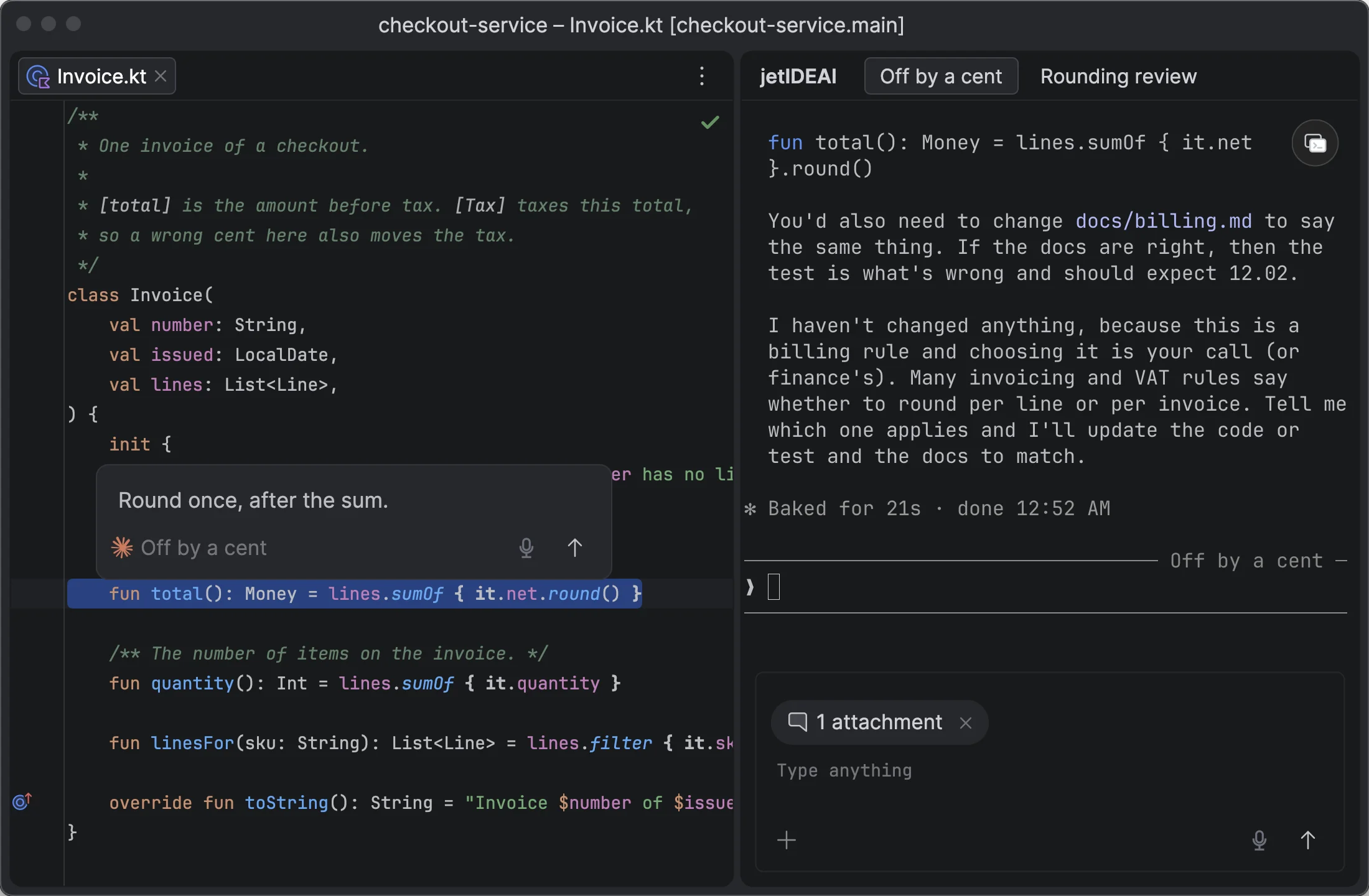
Write prompts in a real editor, attach files and screenshots, and switch between agents with live previews, all without leaving the IDE.


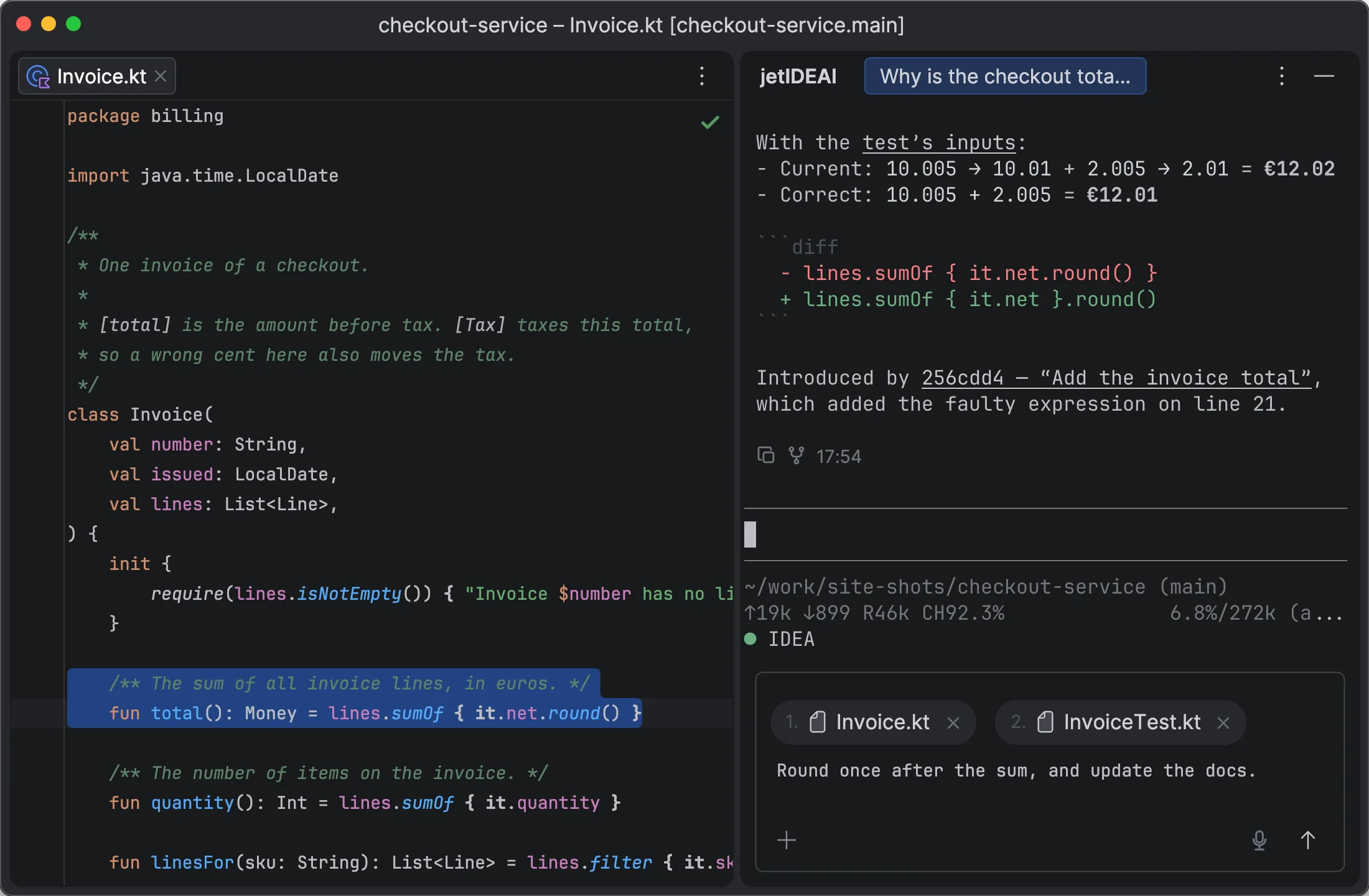
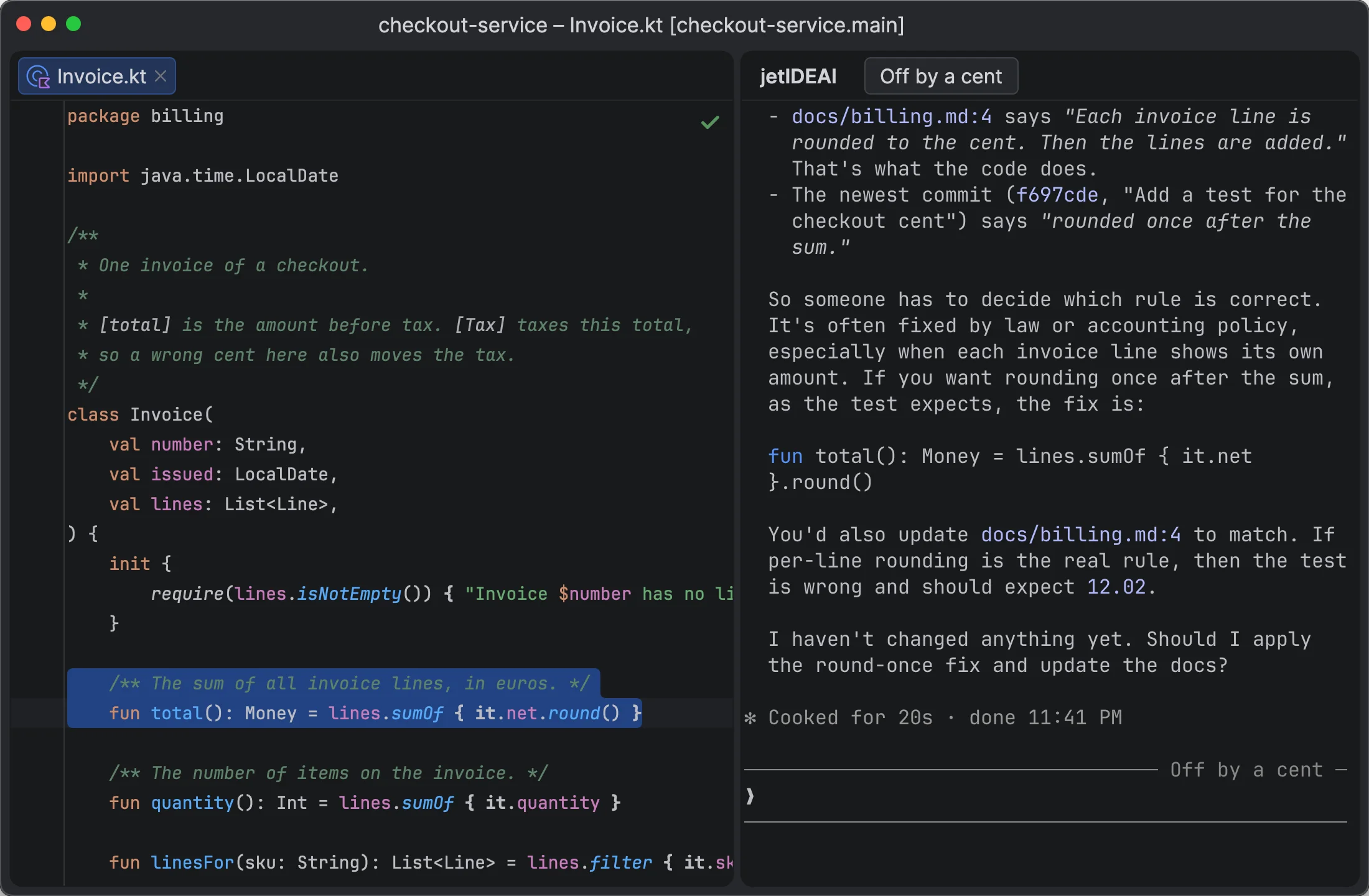
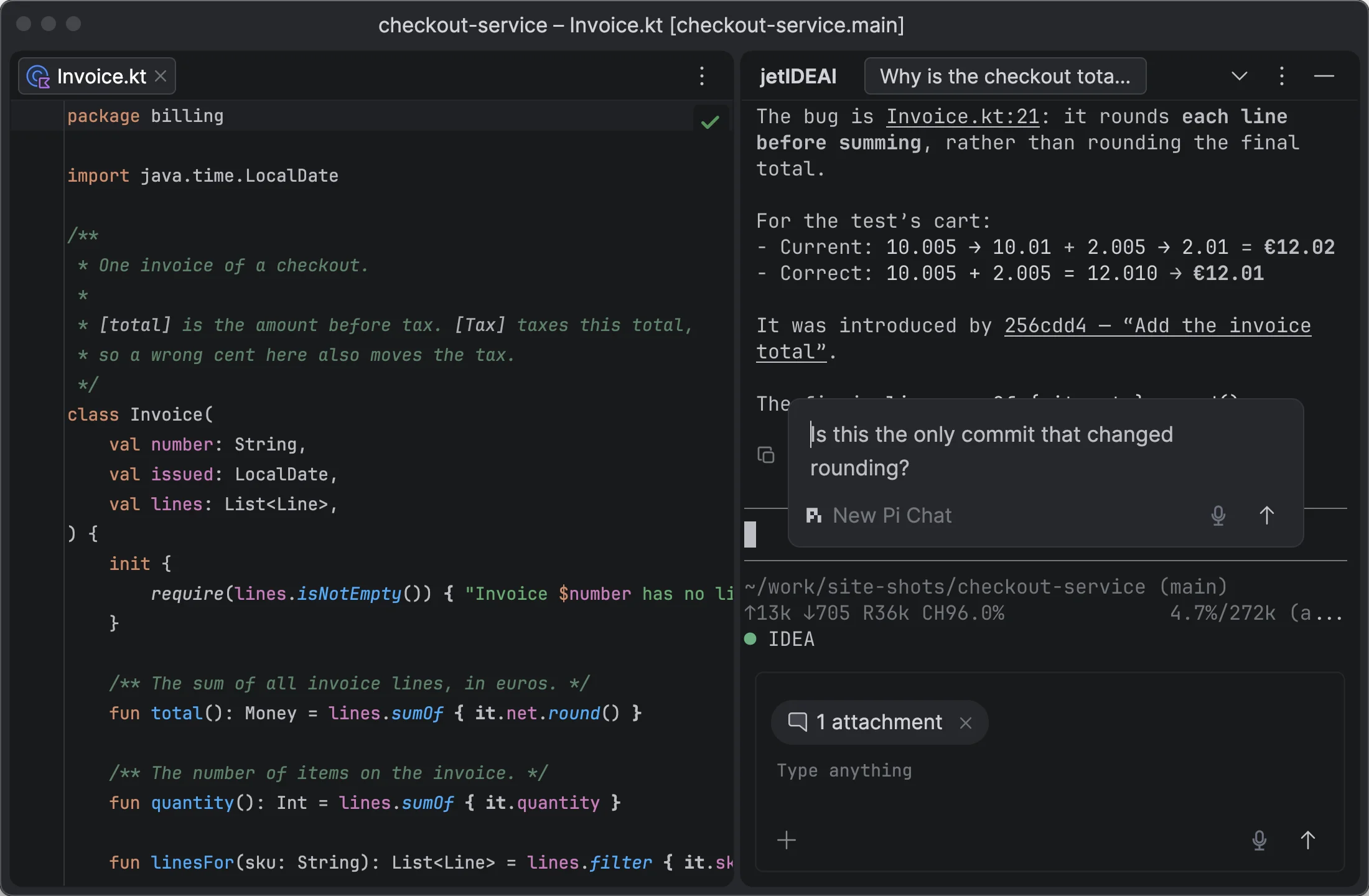
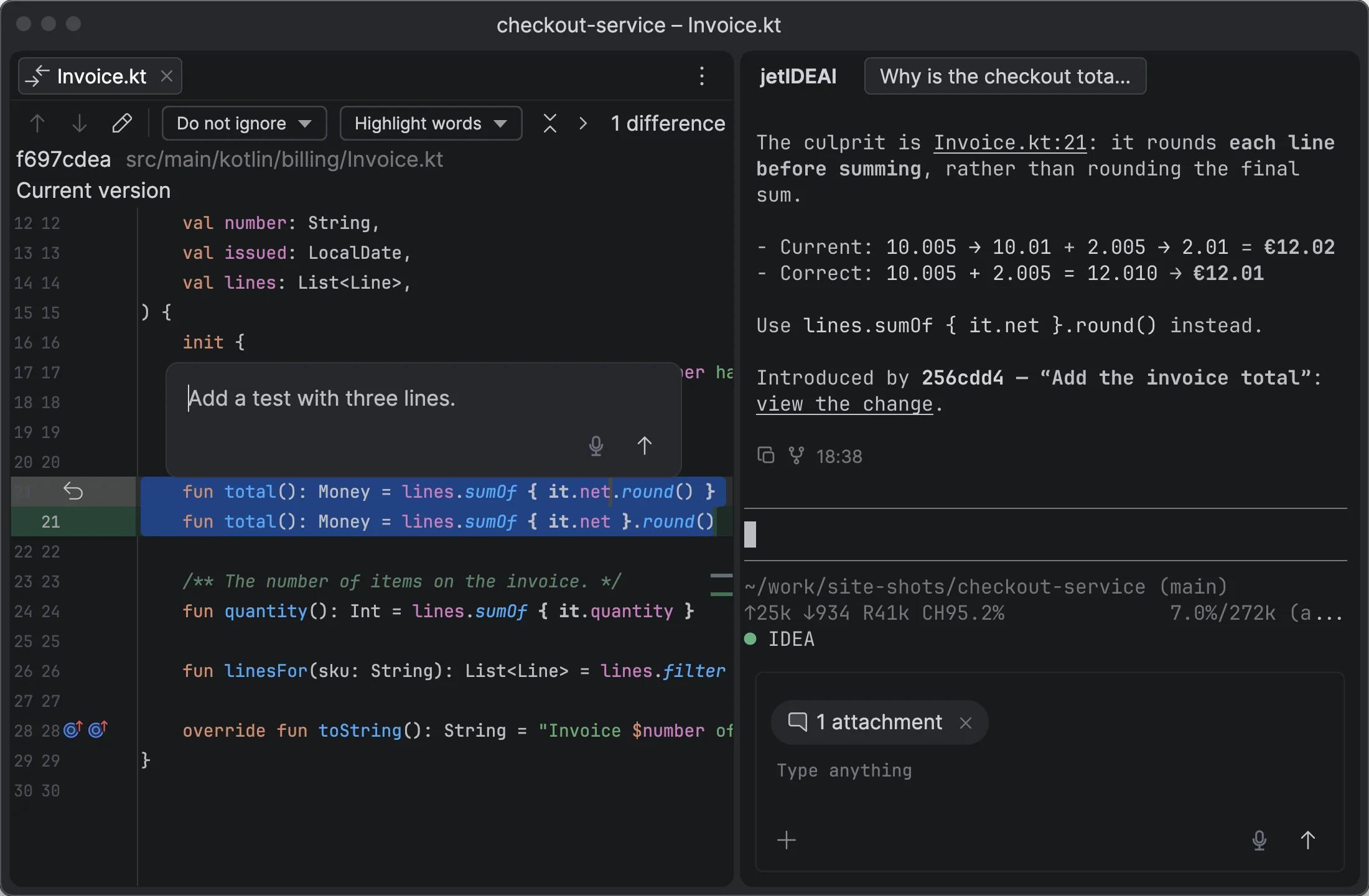
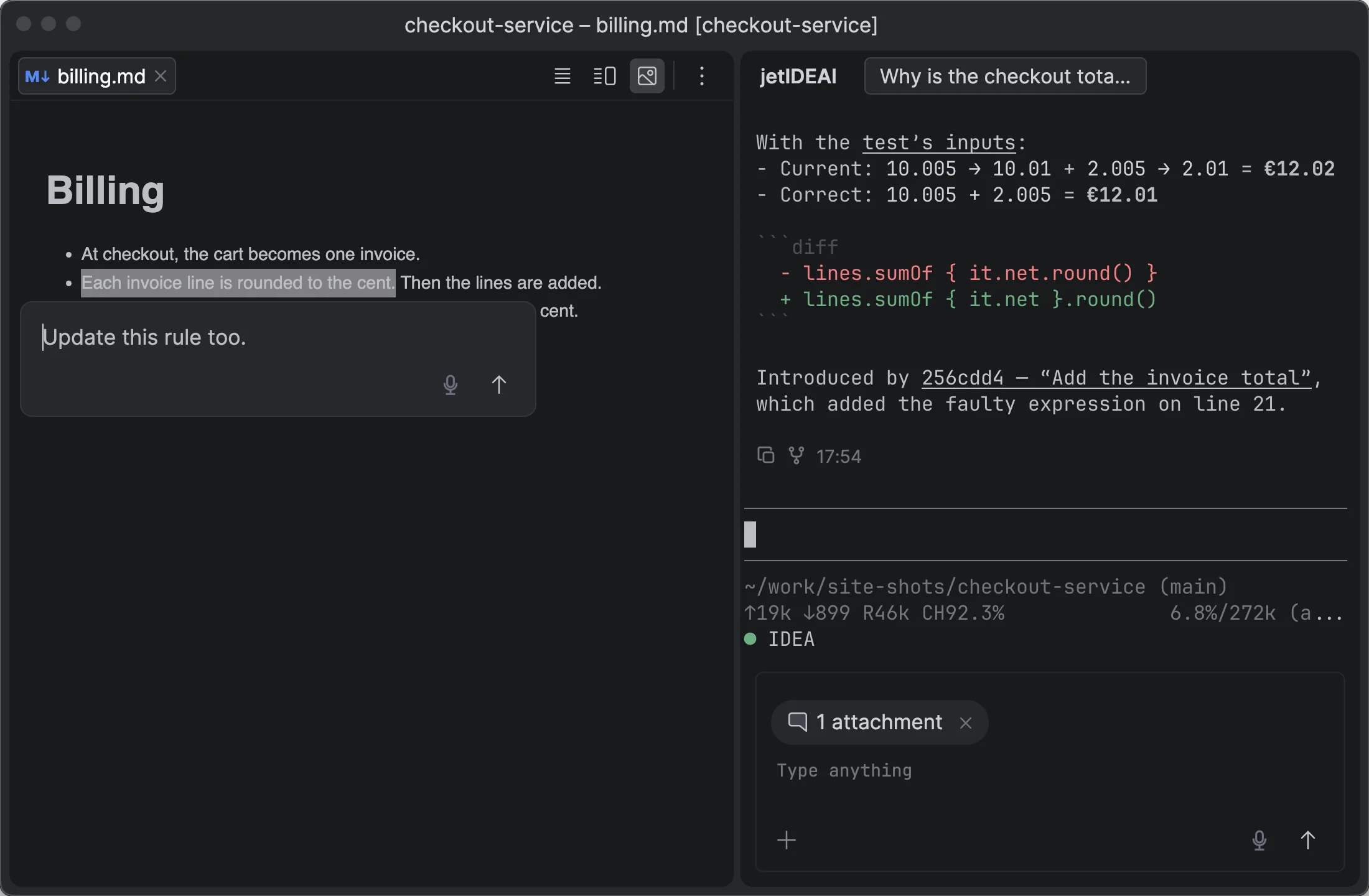
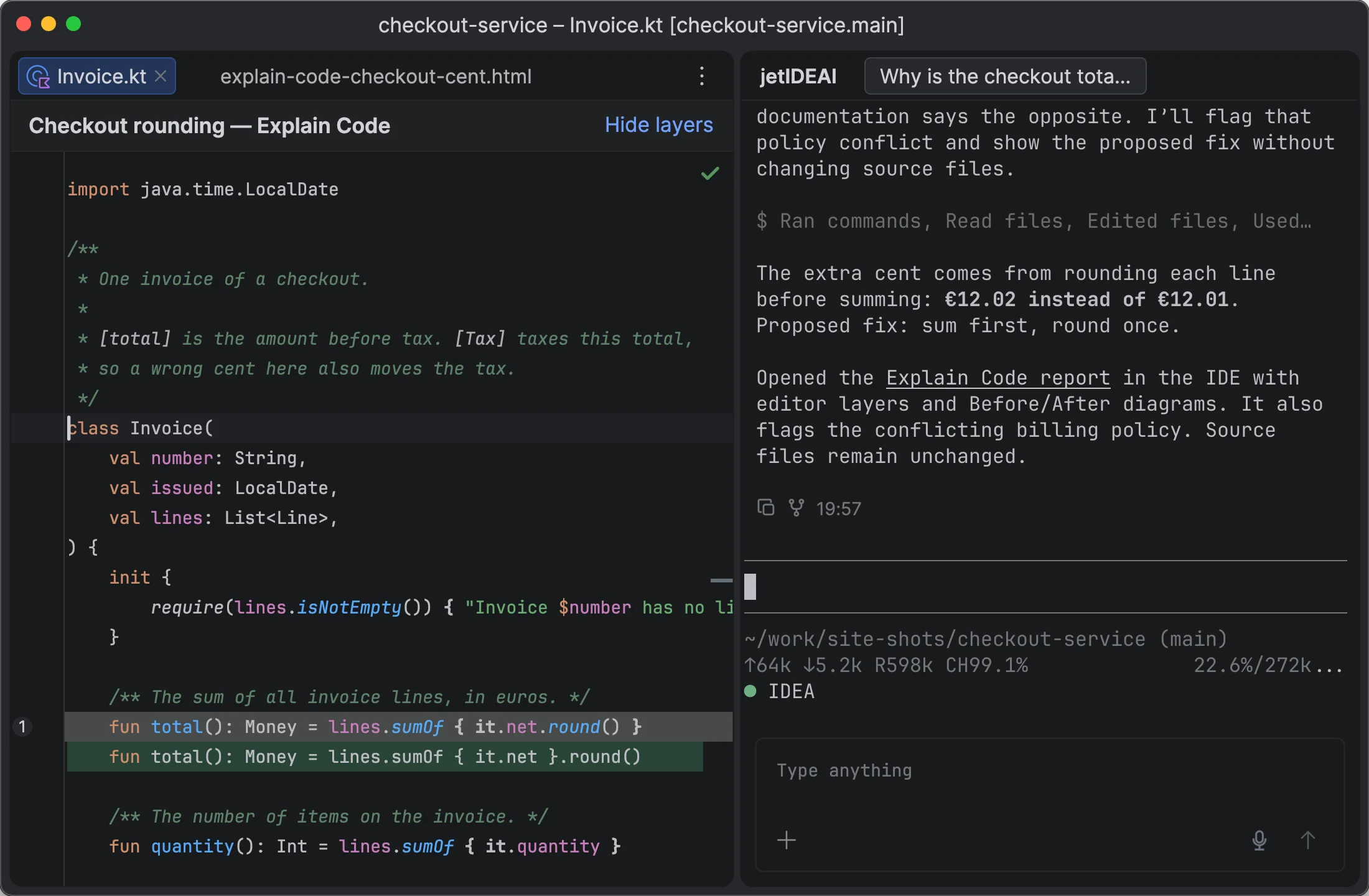
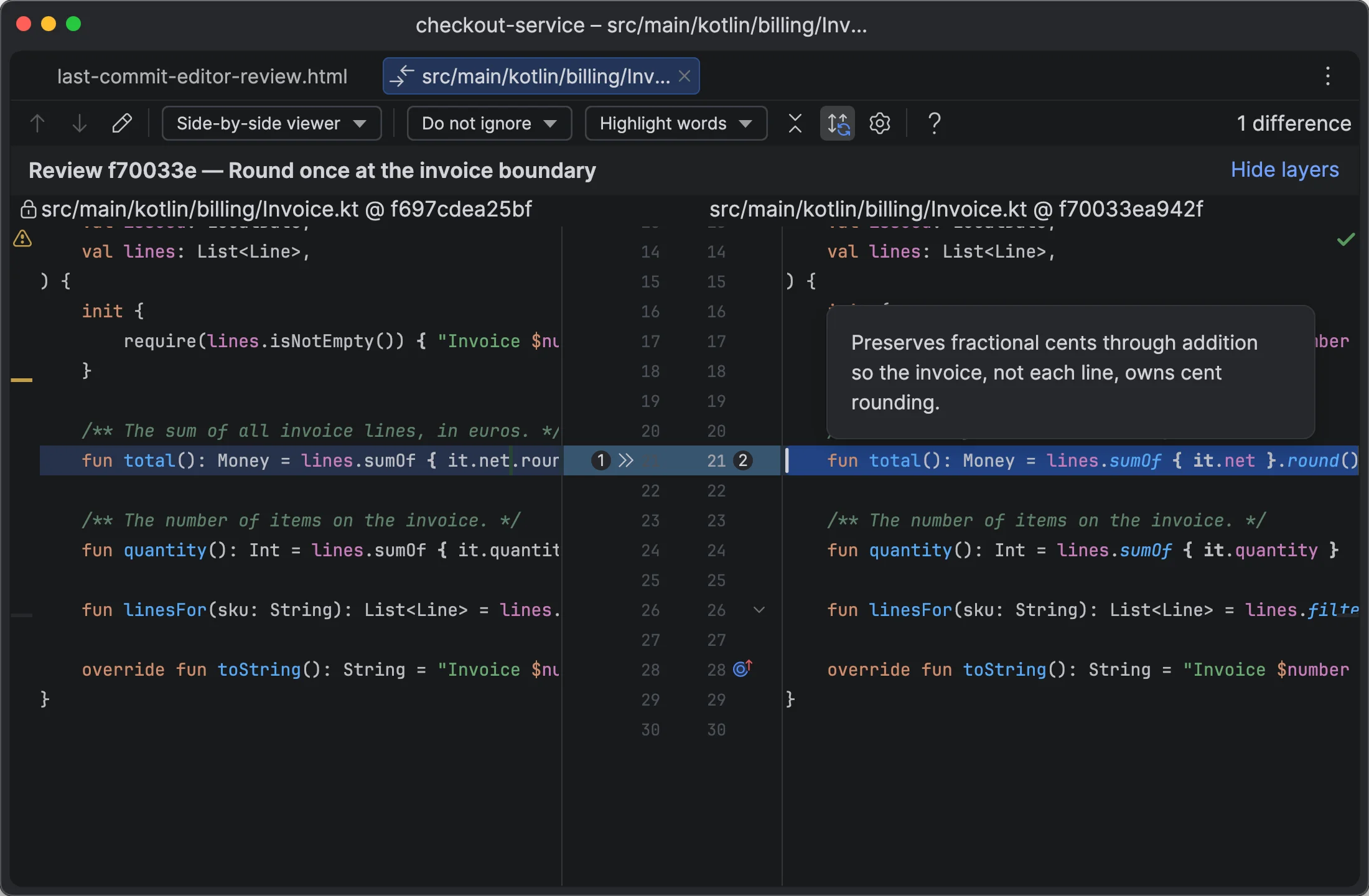
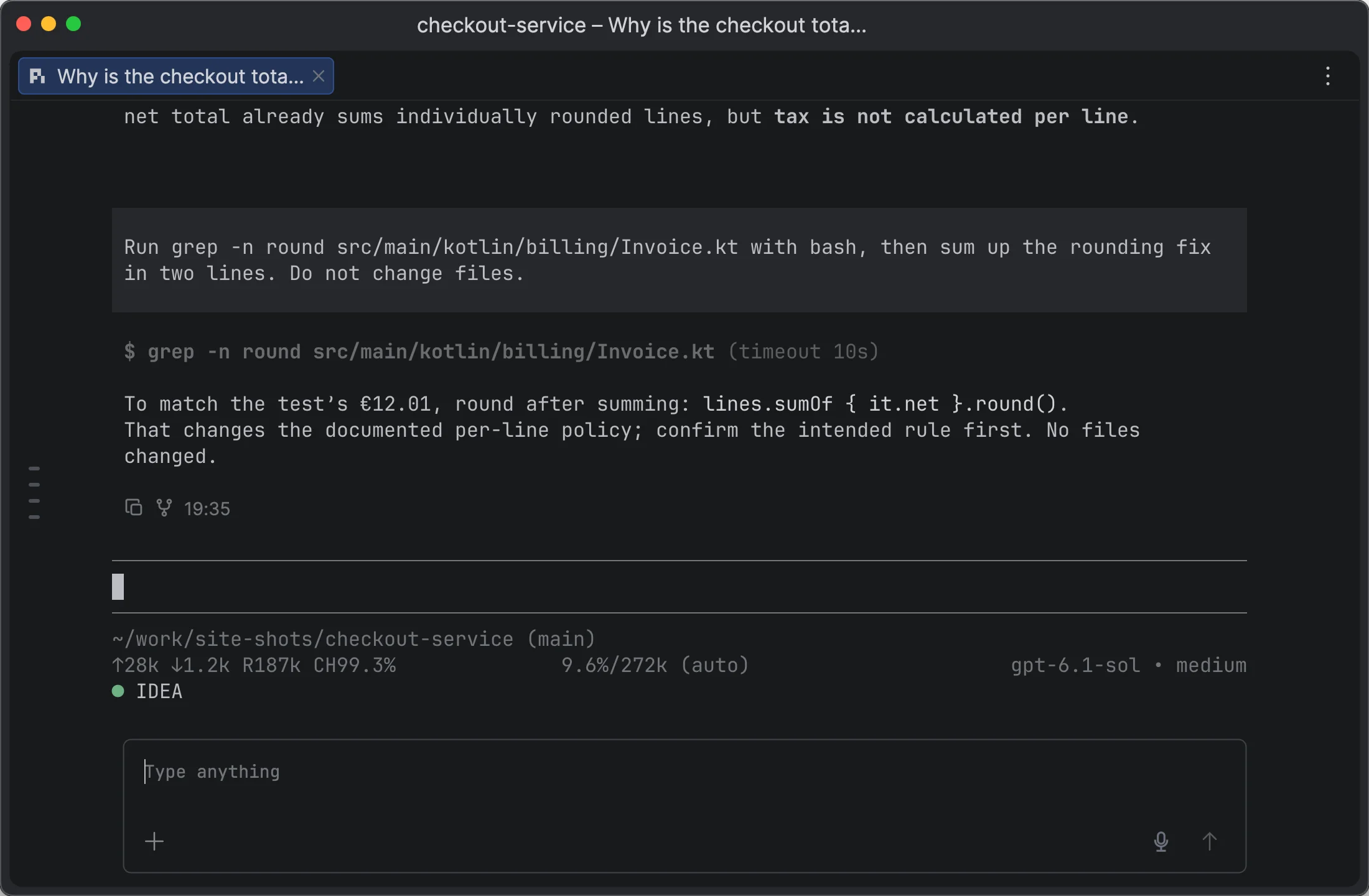
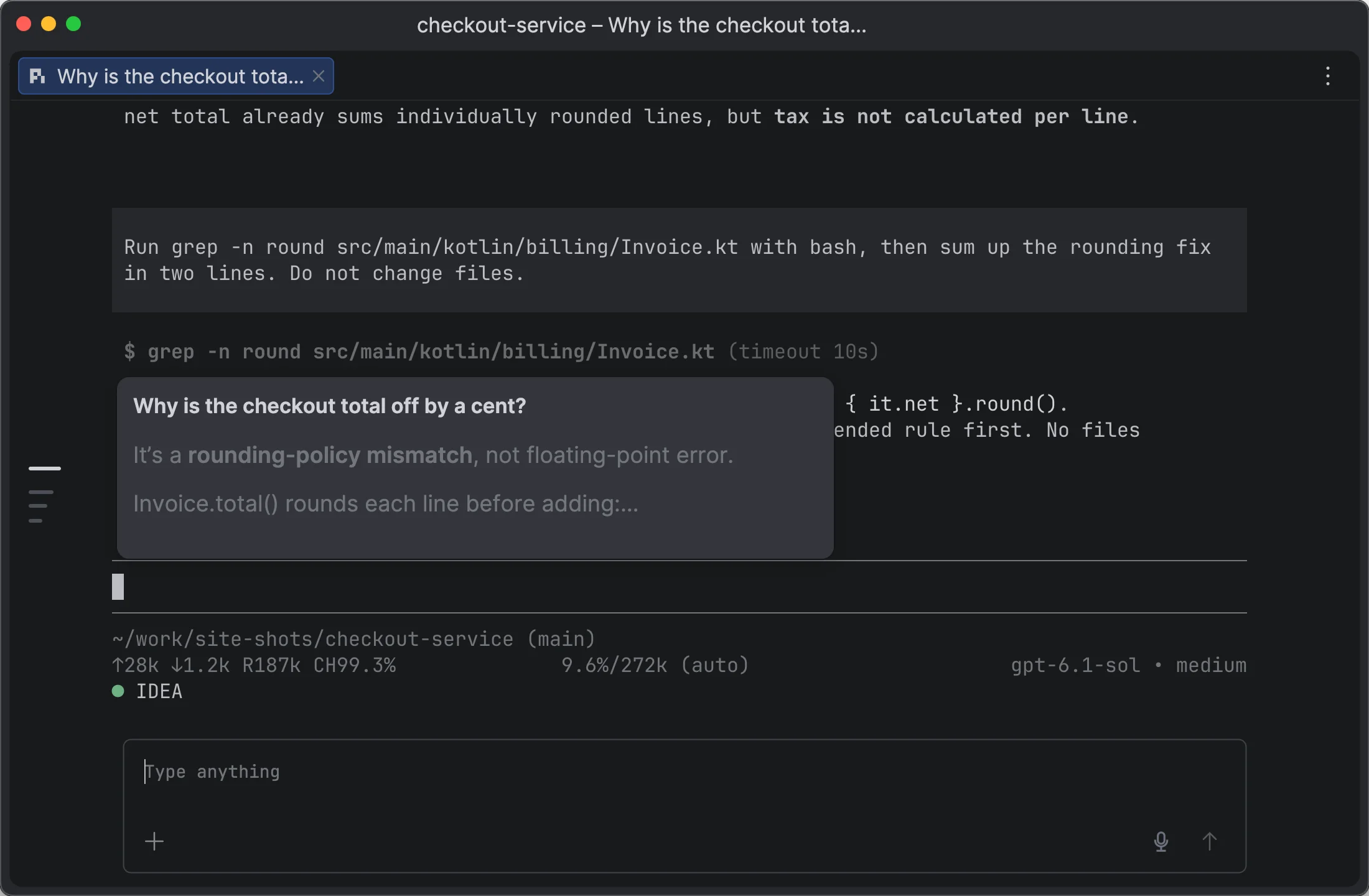
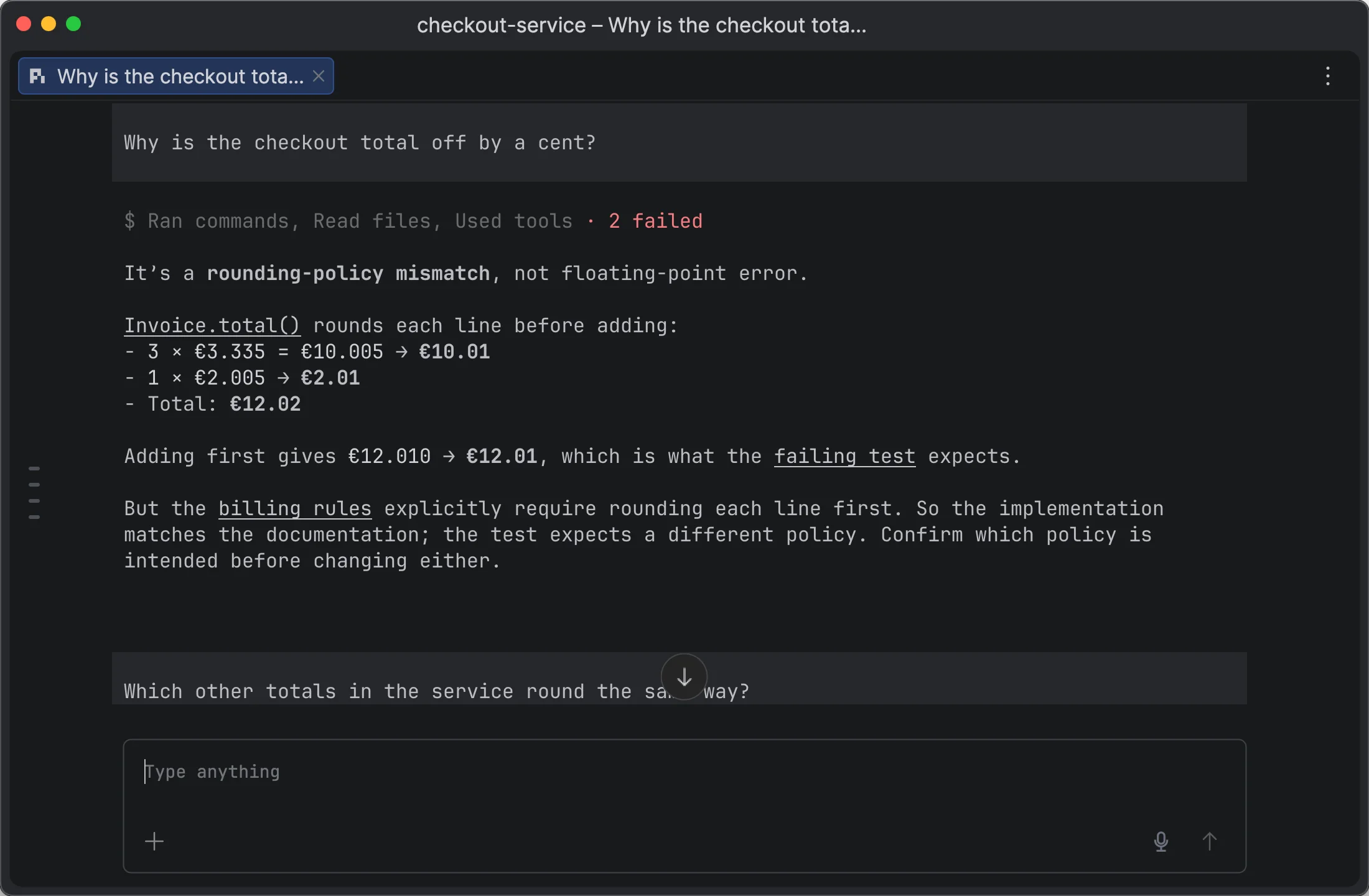
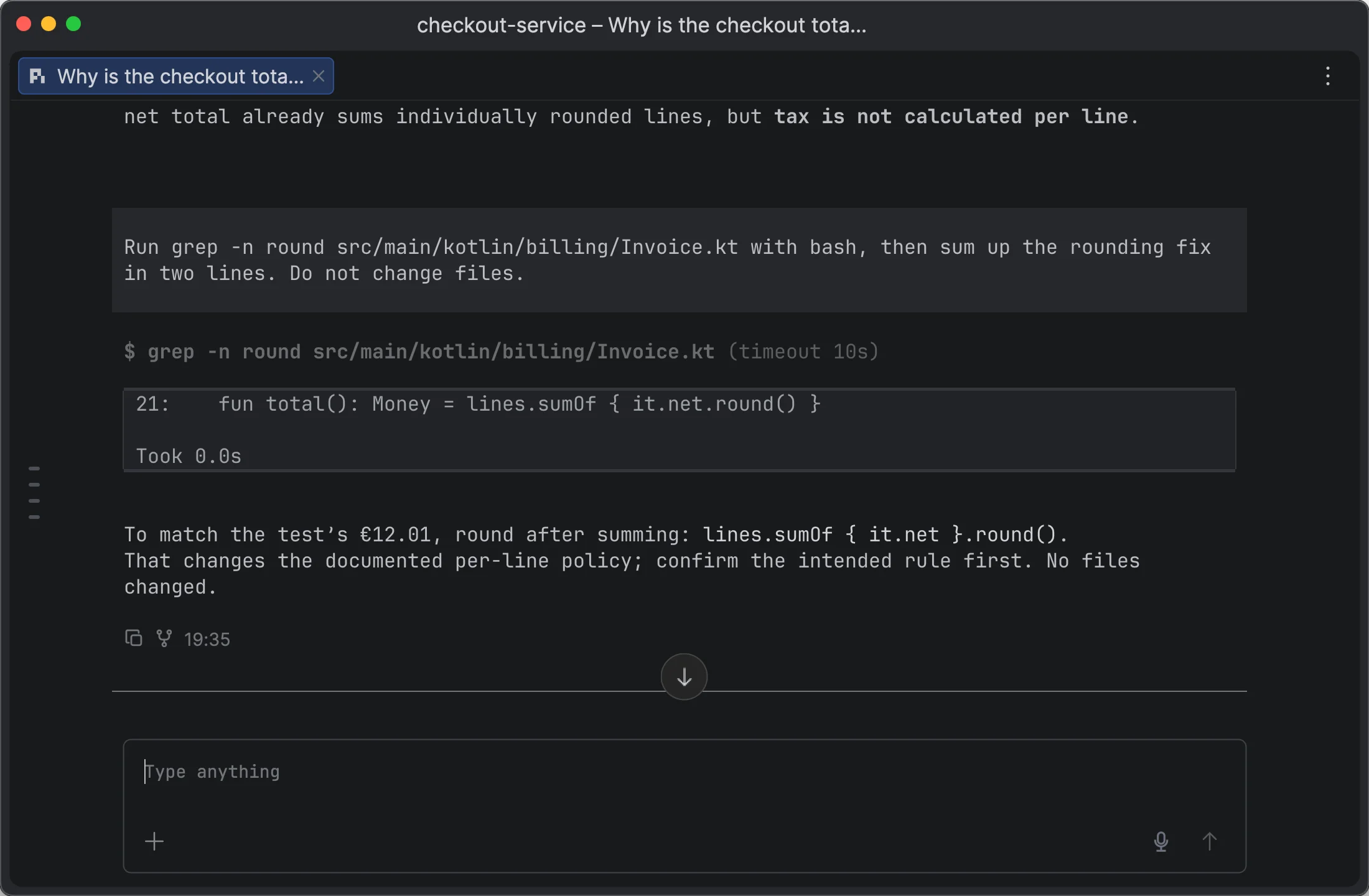
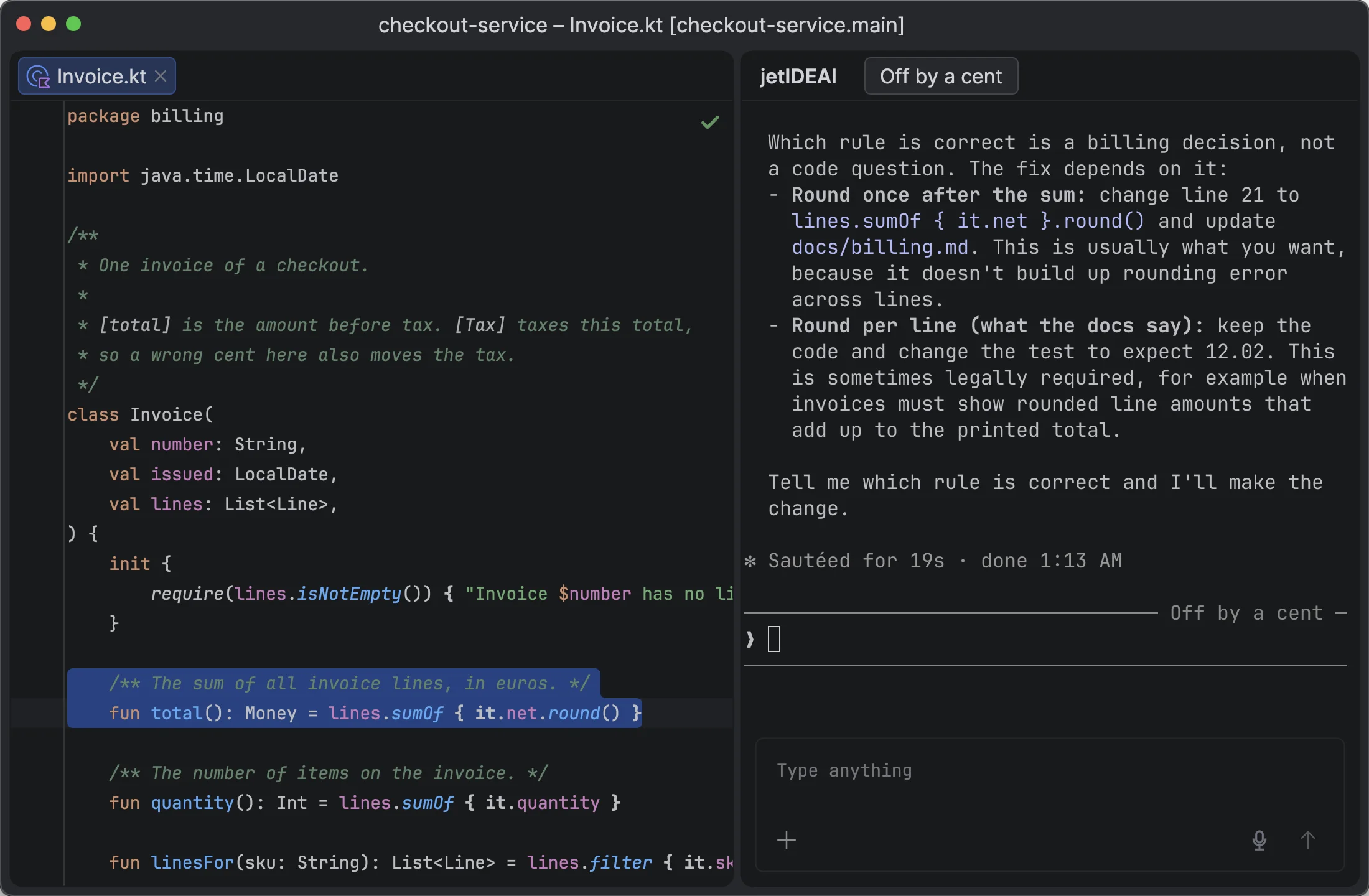
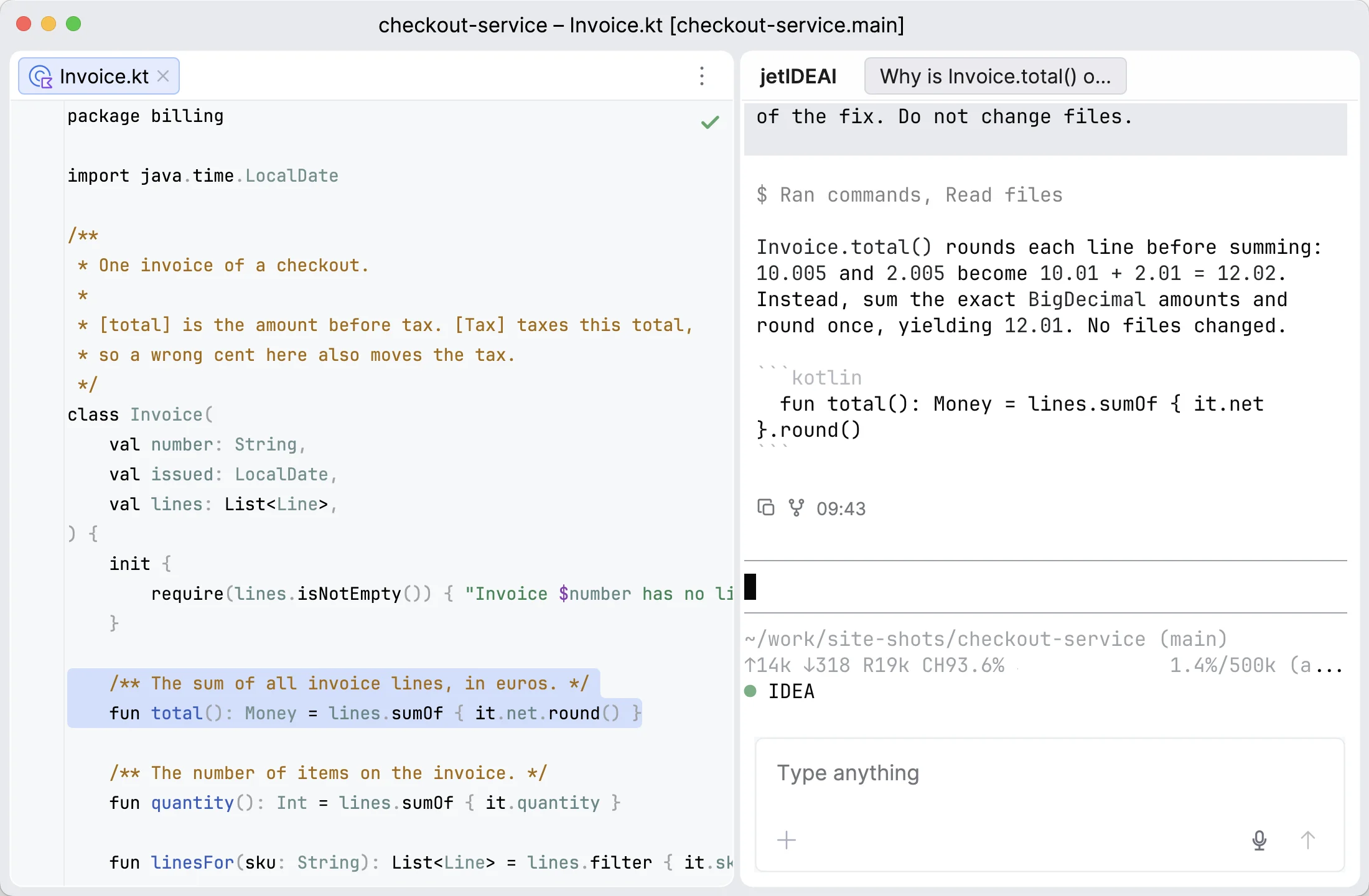
Select code, a diff, a file, or terminal output and add a comment, so the agent gets exact context. Its answers come back as links that preview and open the code.


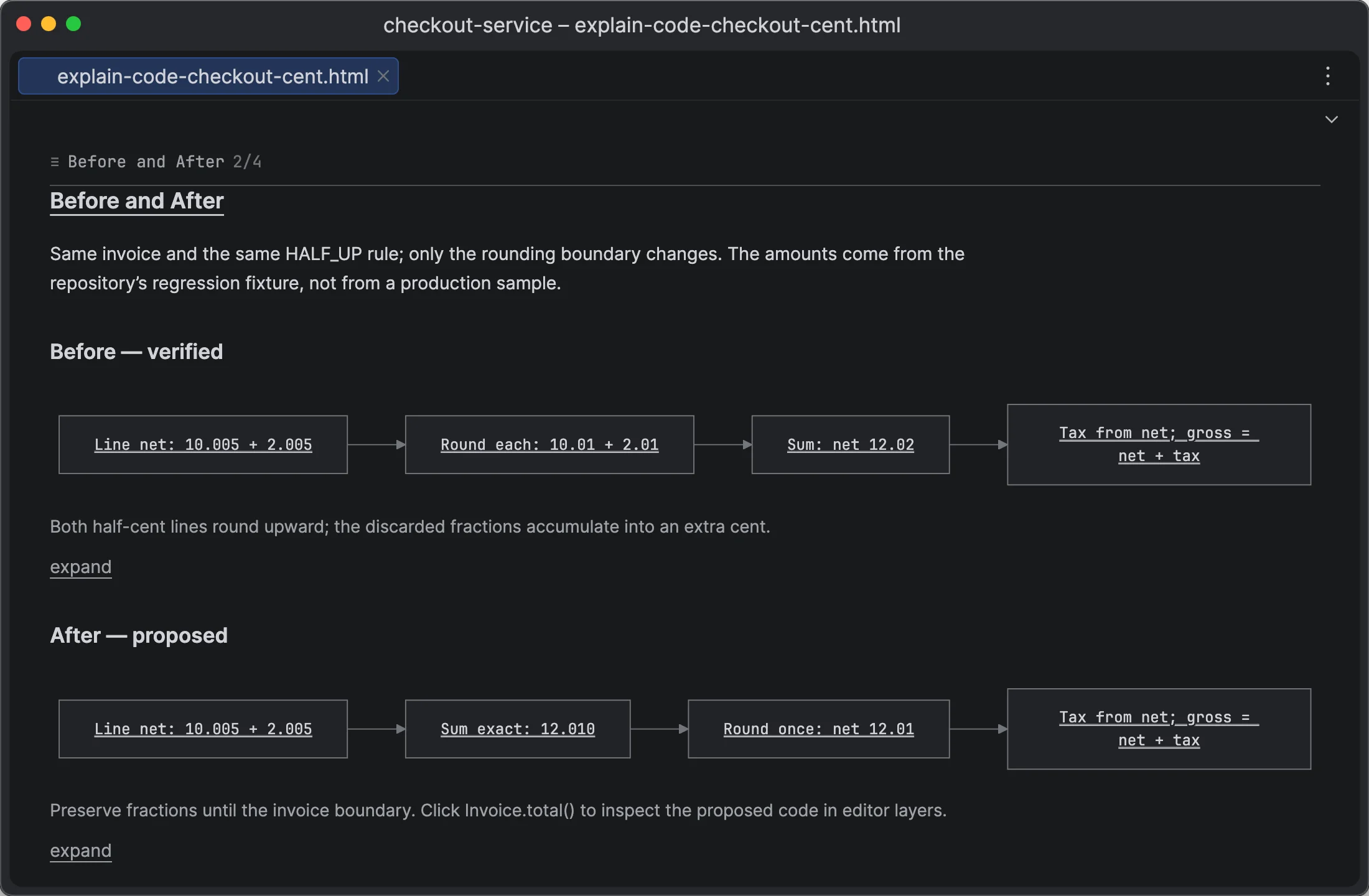
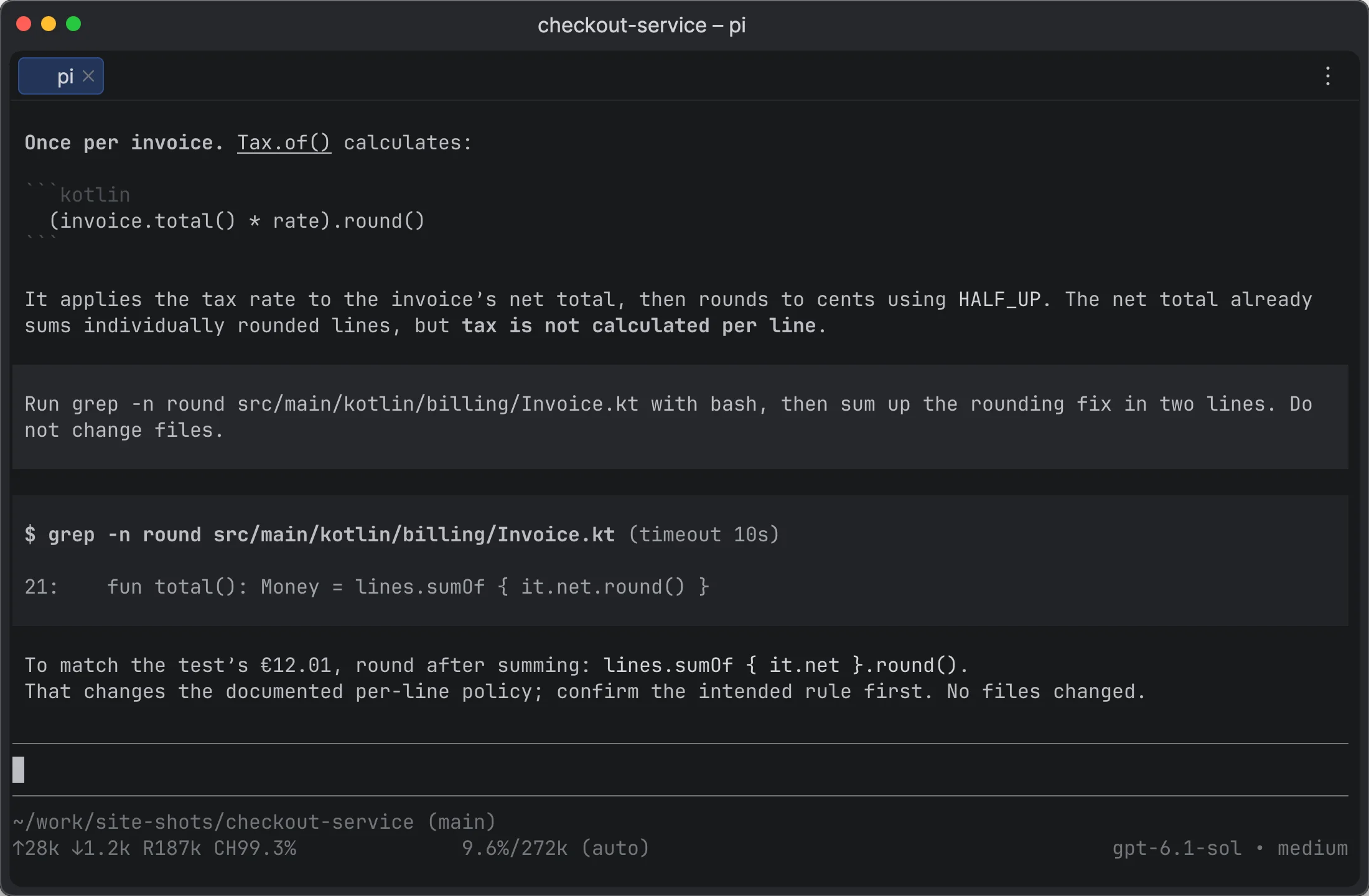
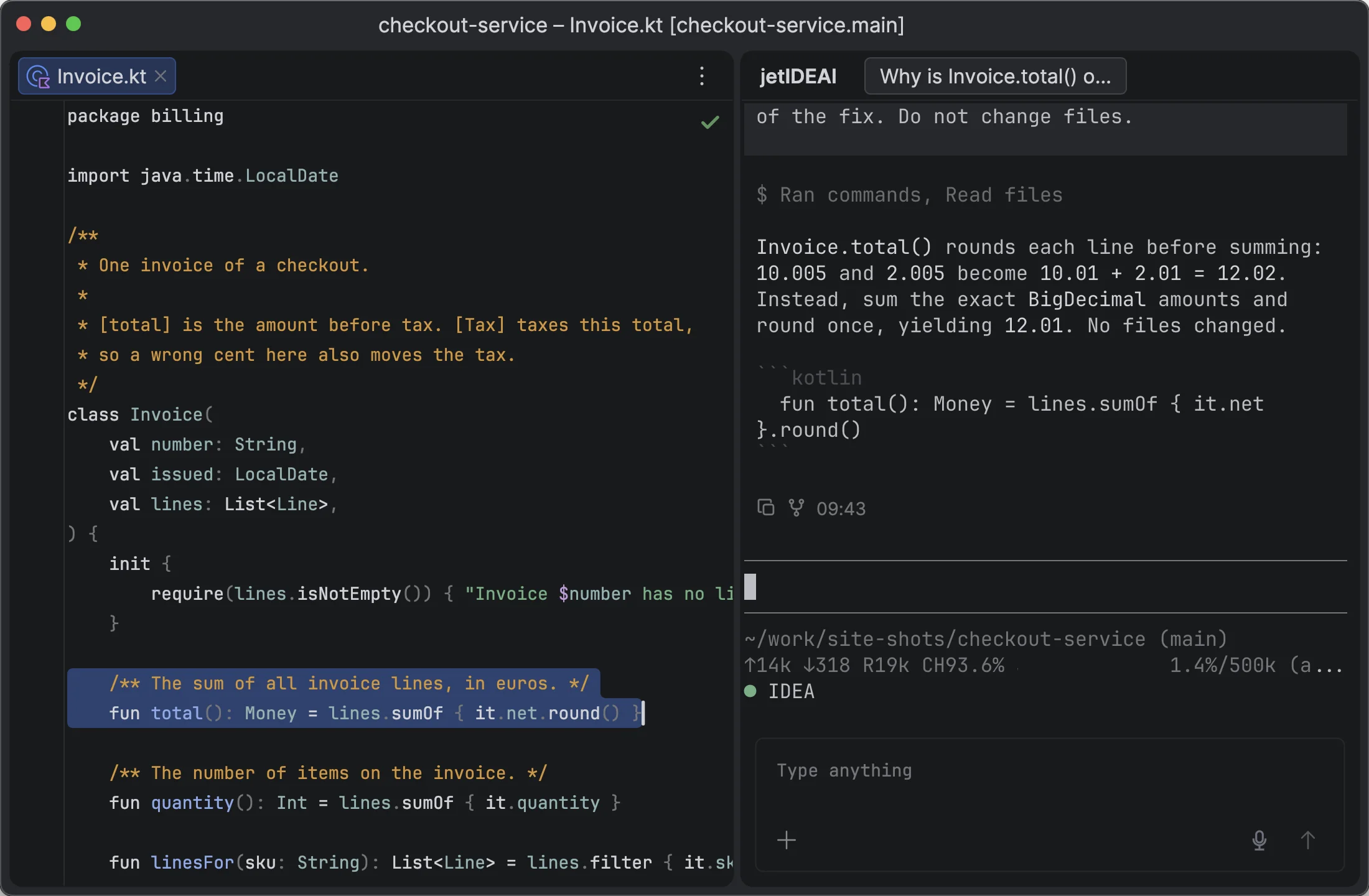
pi Each line is rounded before the sum, so the total can be off by up to 0.5¢ per line.
The sum is in , and tax reuses it in .
I rounded once at the end. See the change in .
▸ edit Invoice.kt · +2 −1 · ▸ run tests · 48 passed
Point at a link
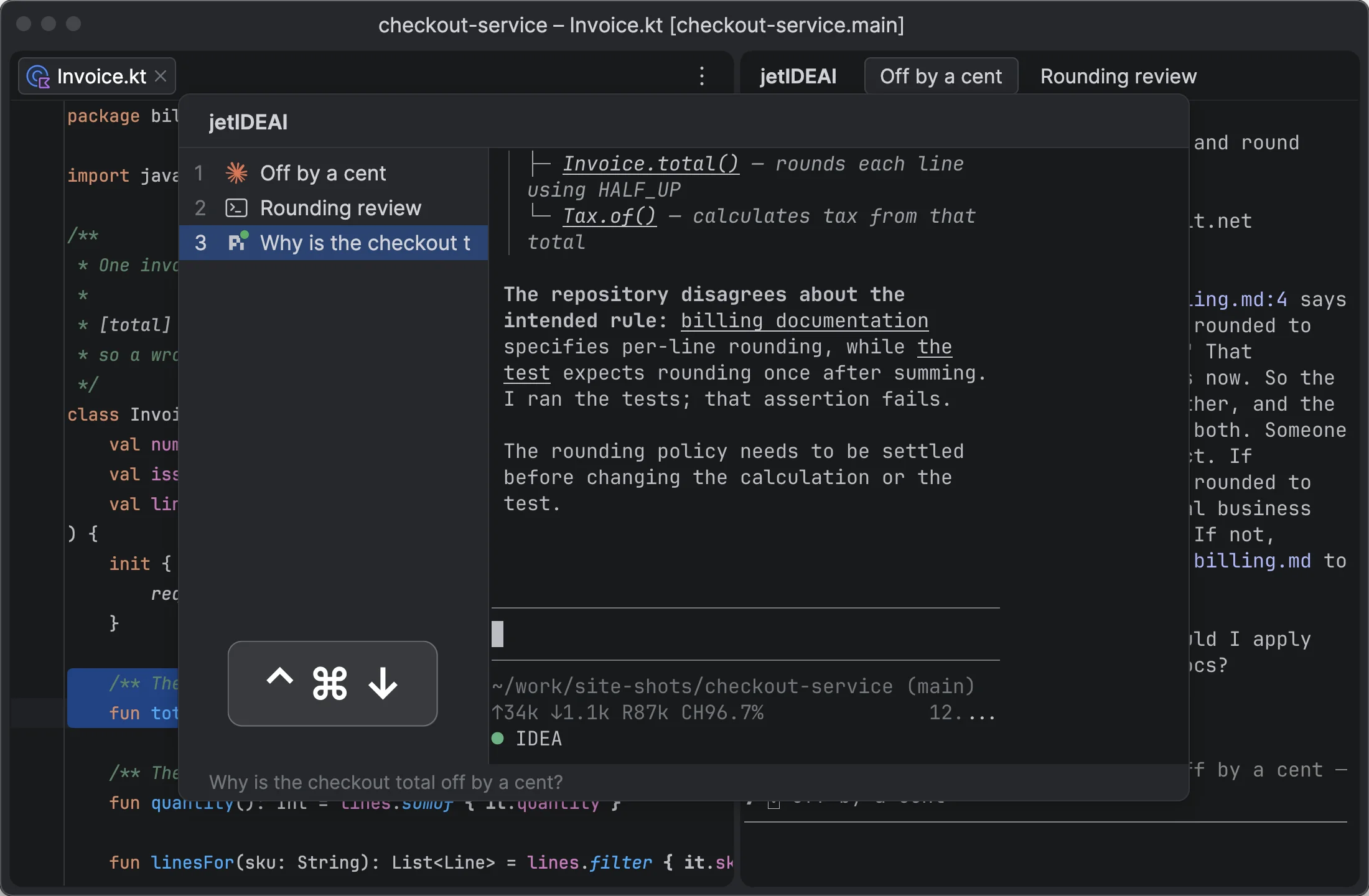
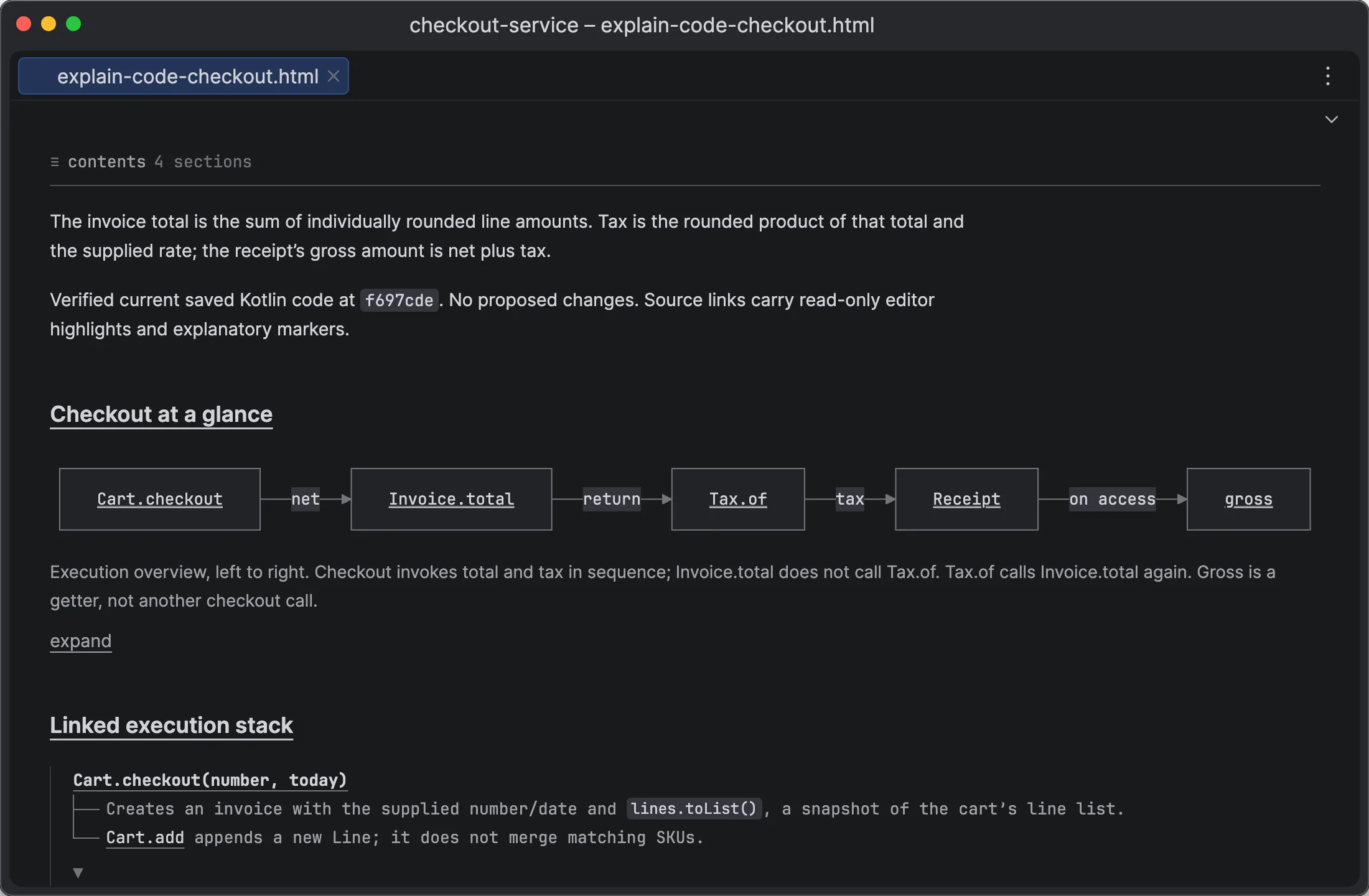
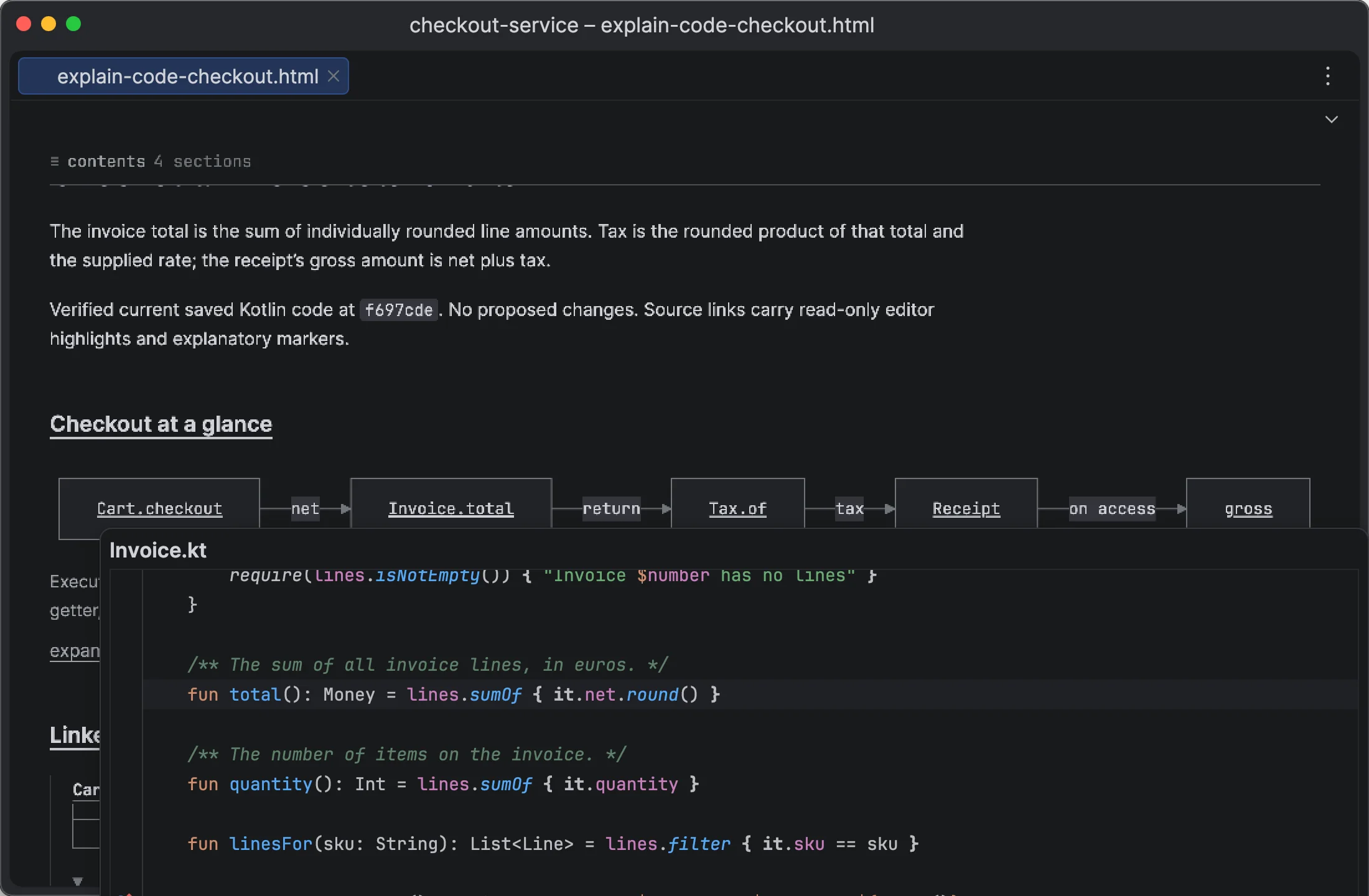
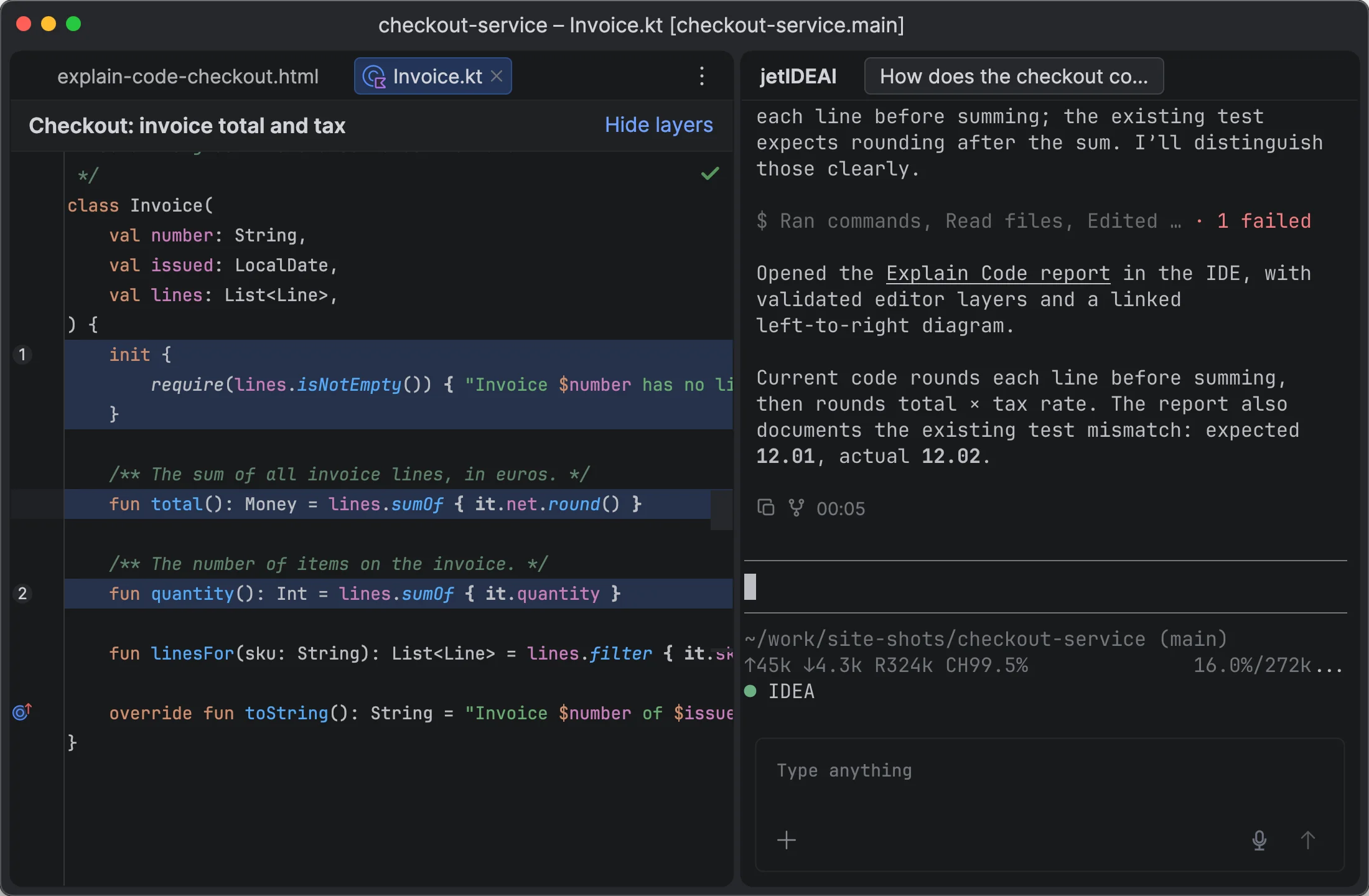
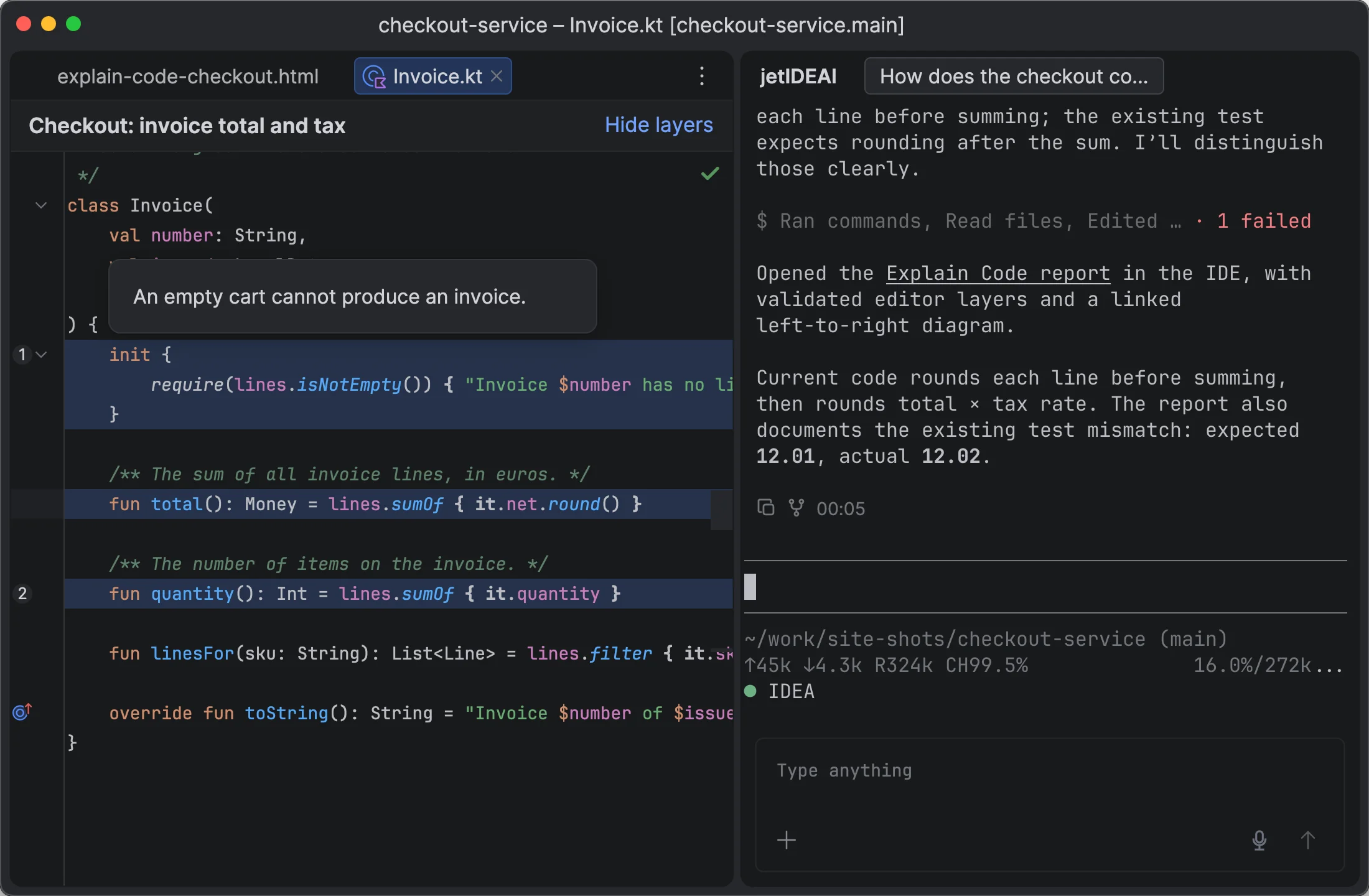
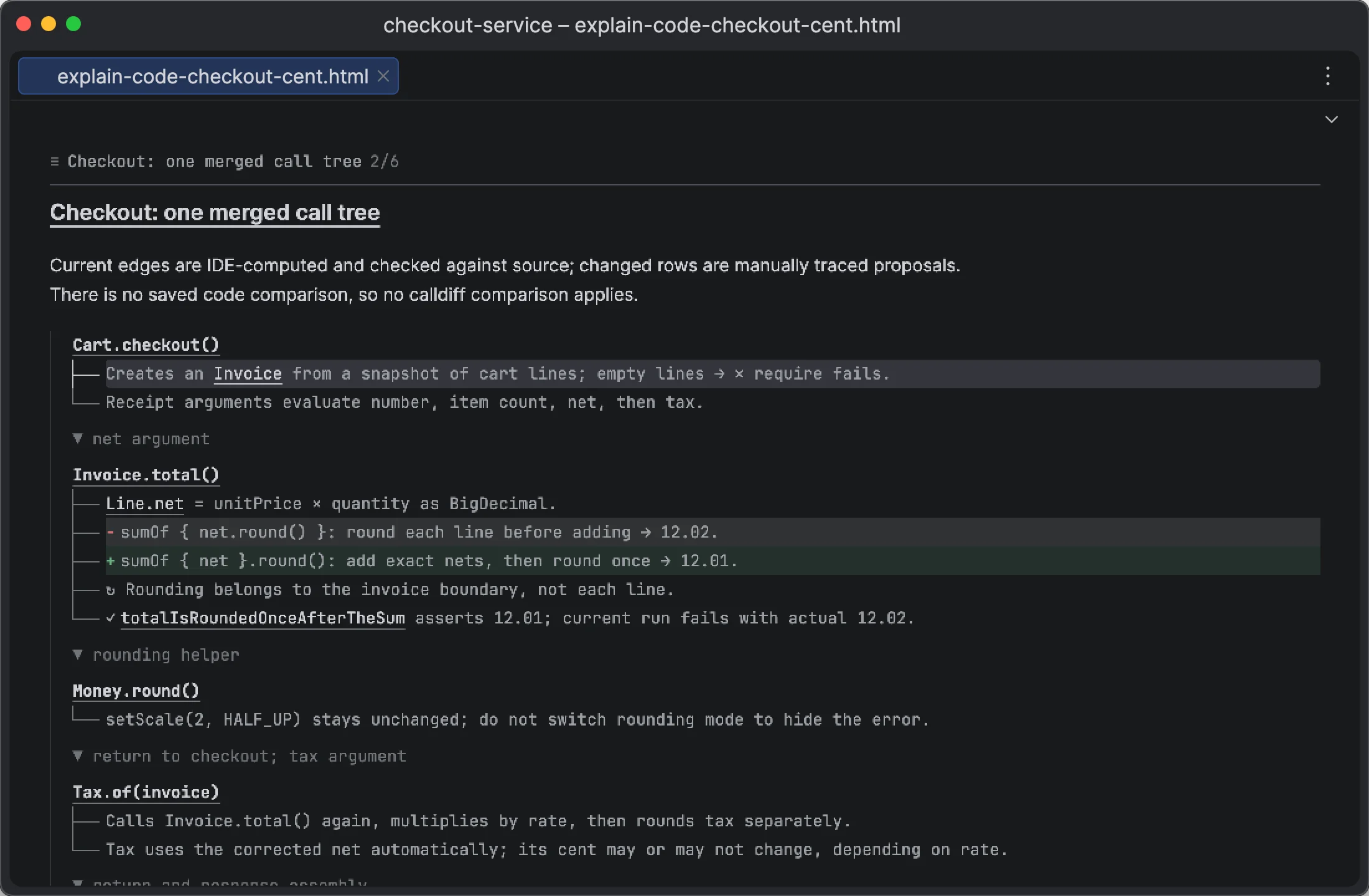
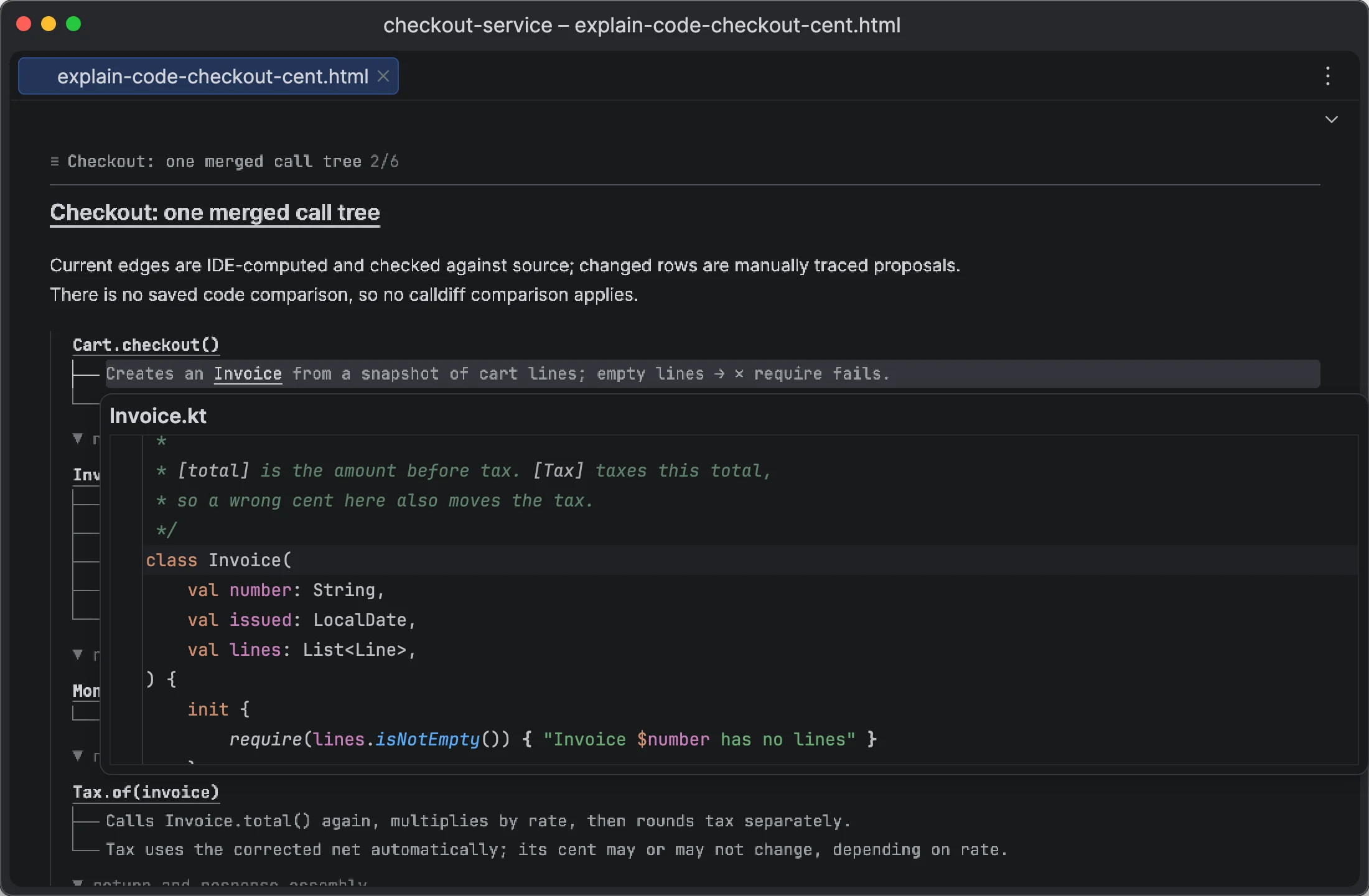
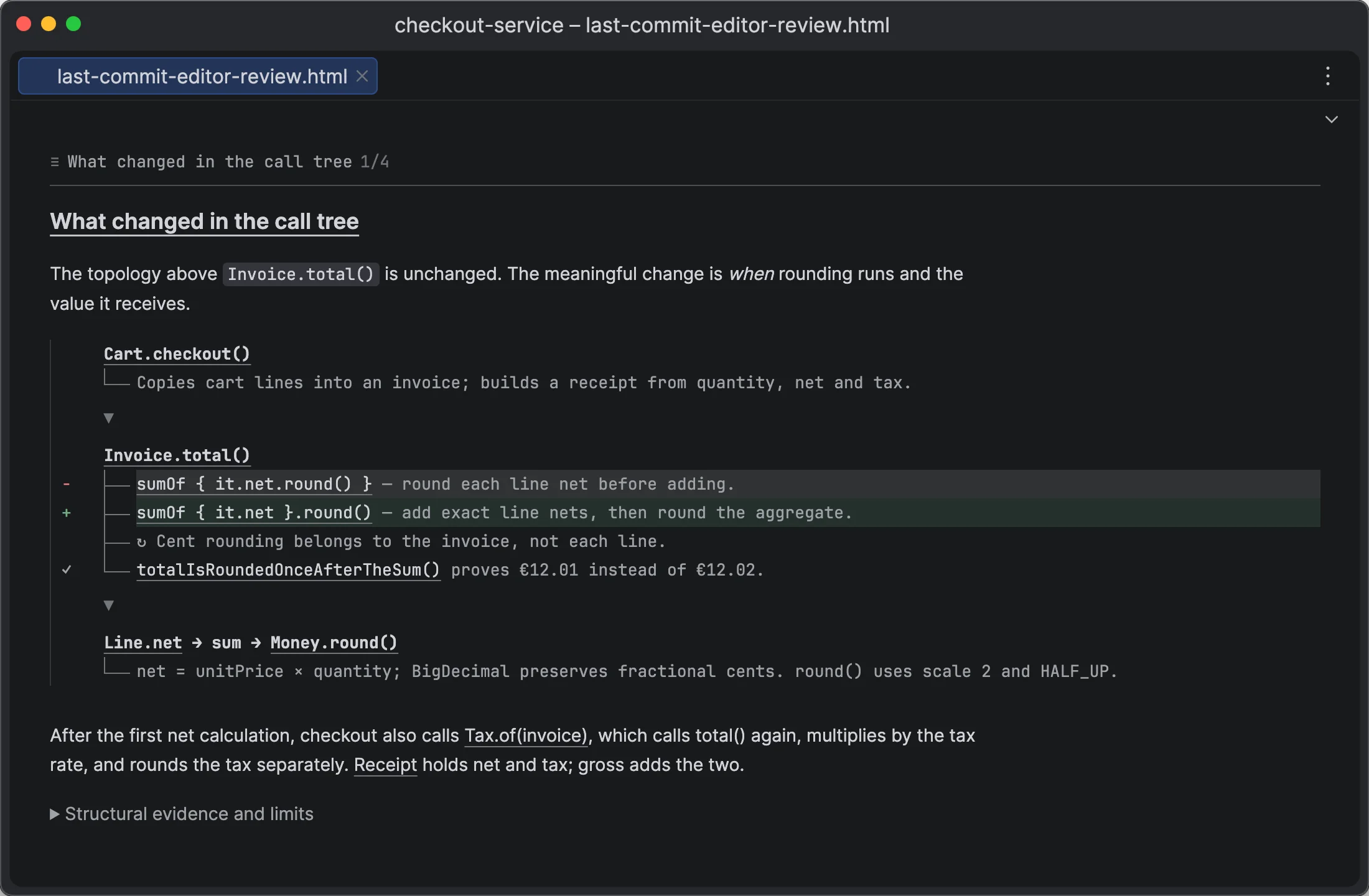
The agent explains code in a linked report: how it works now, what a change will do, and what a commit changed. Each link opens the live code with the notes on top.
Ask how the code works. The agent writes a report with diagrams and links to the source. Each link opens the code with the agent's notes on the lines.


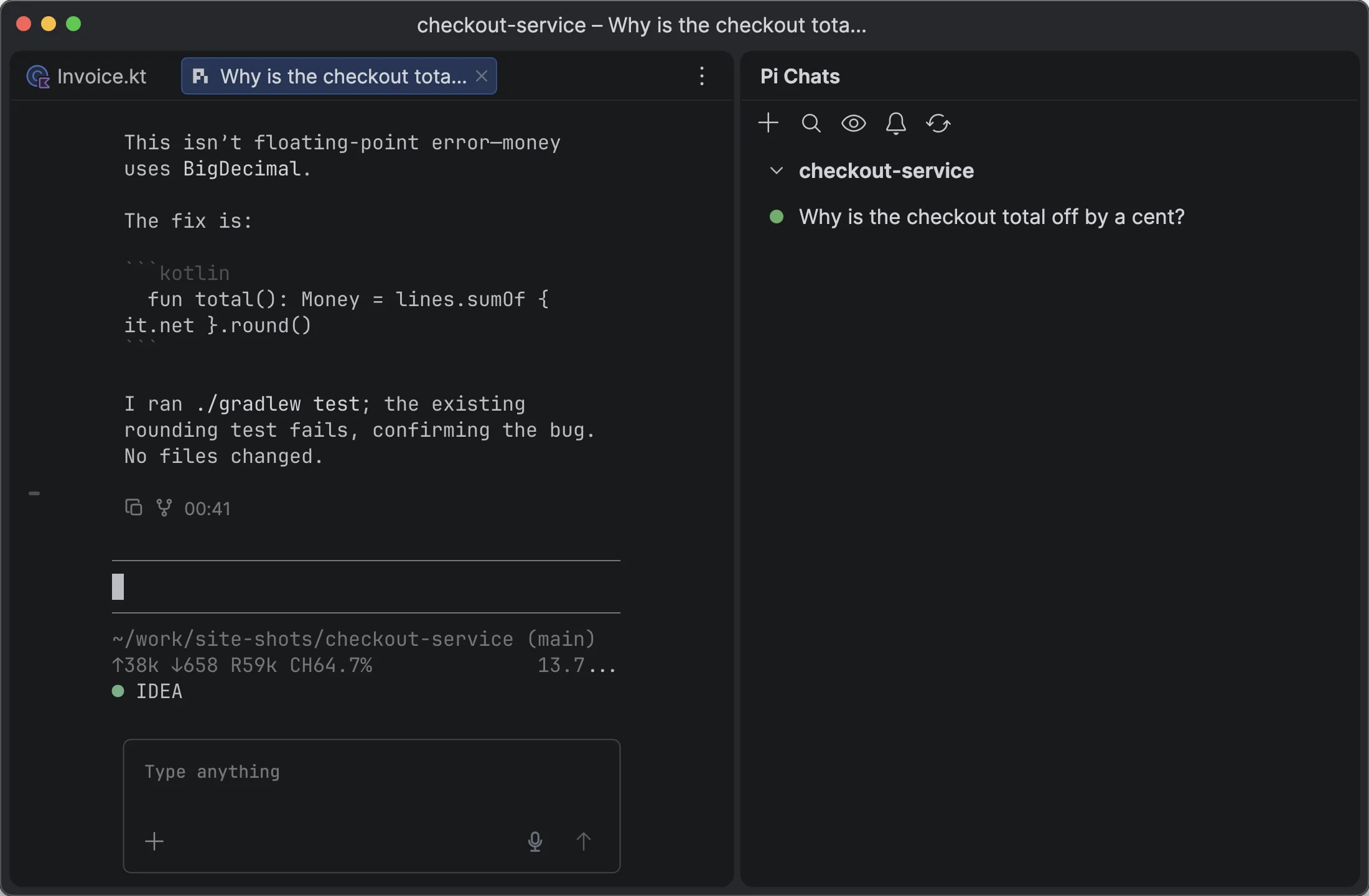
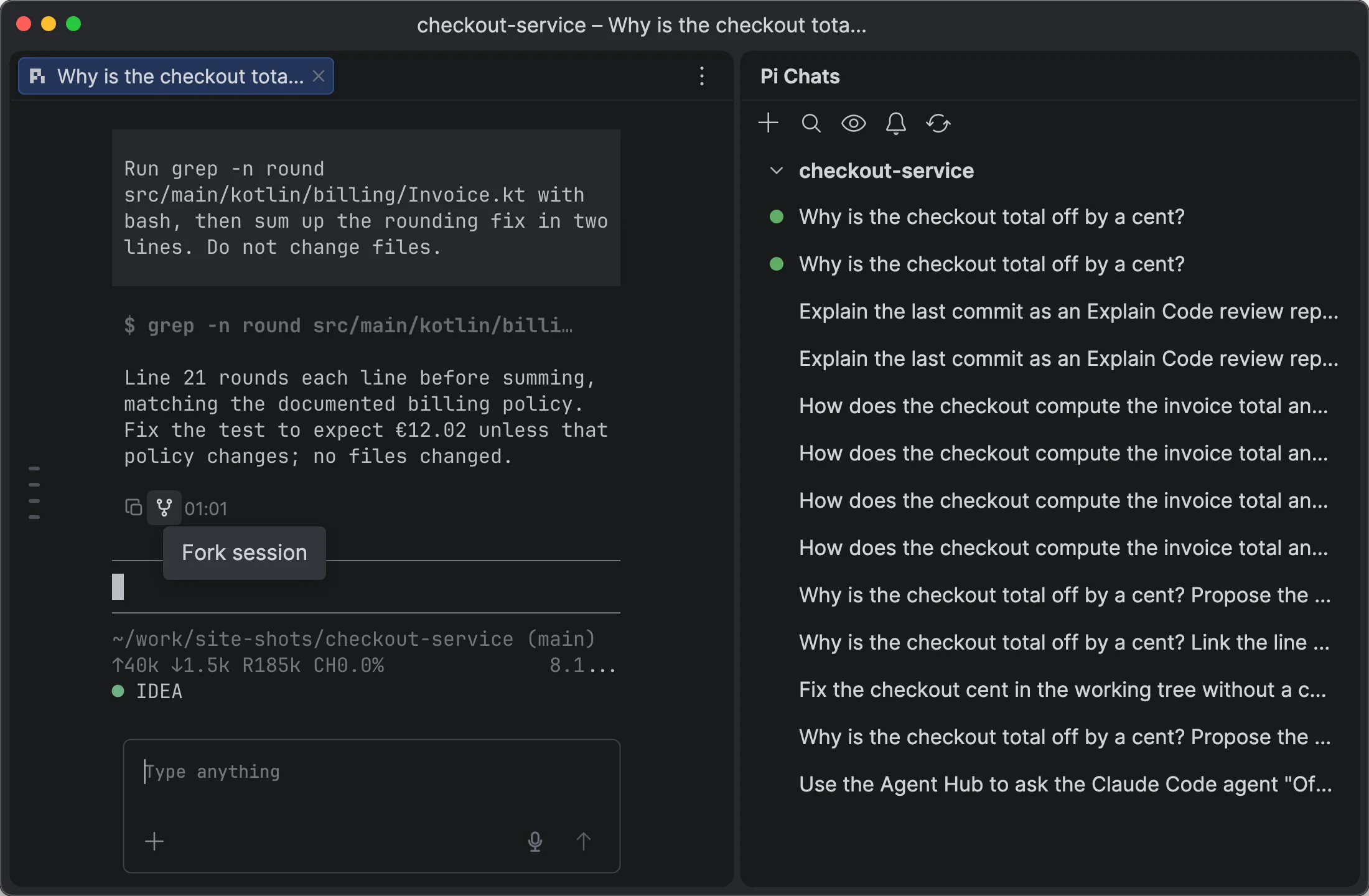
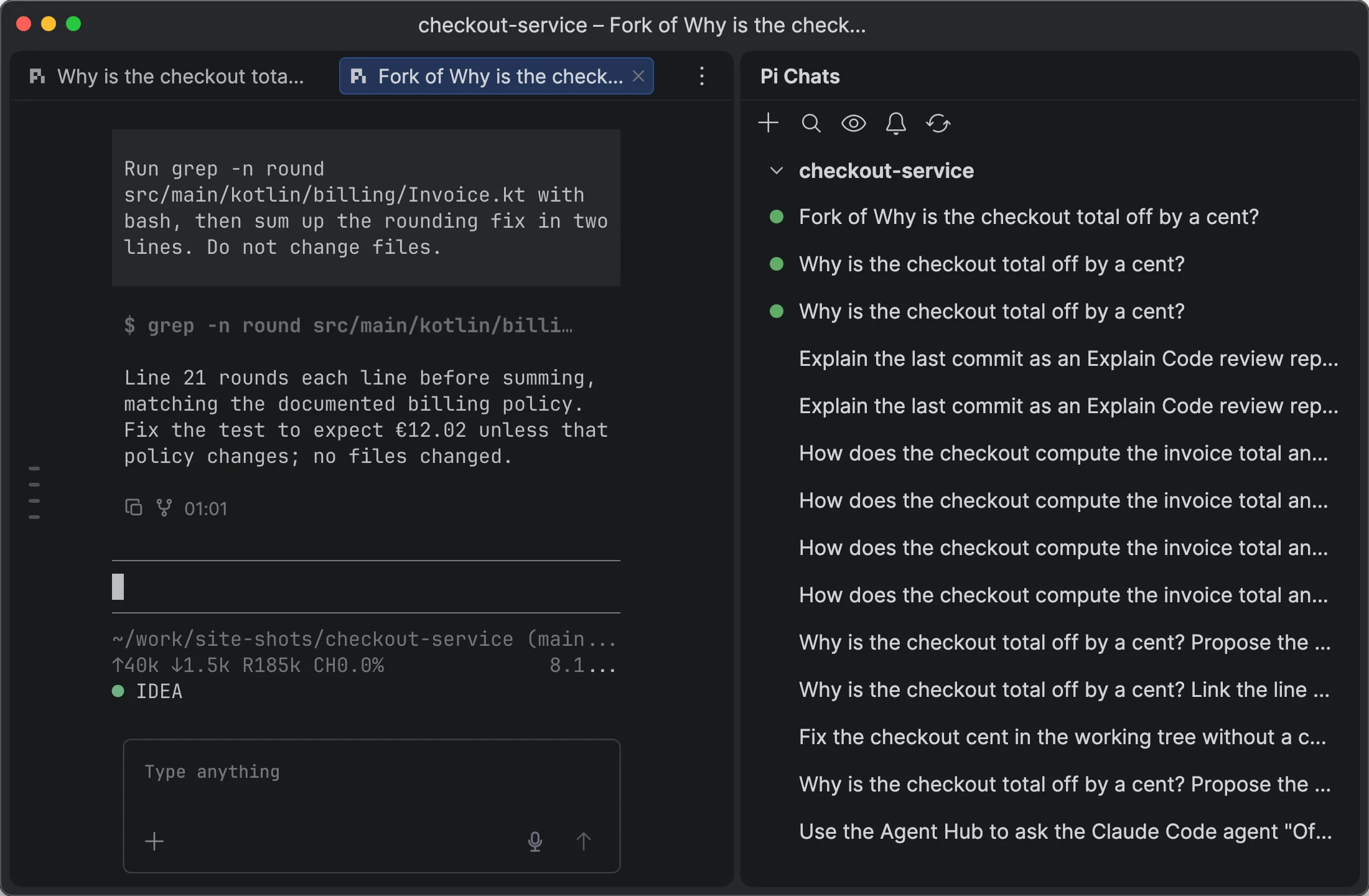
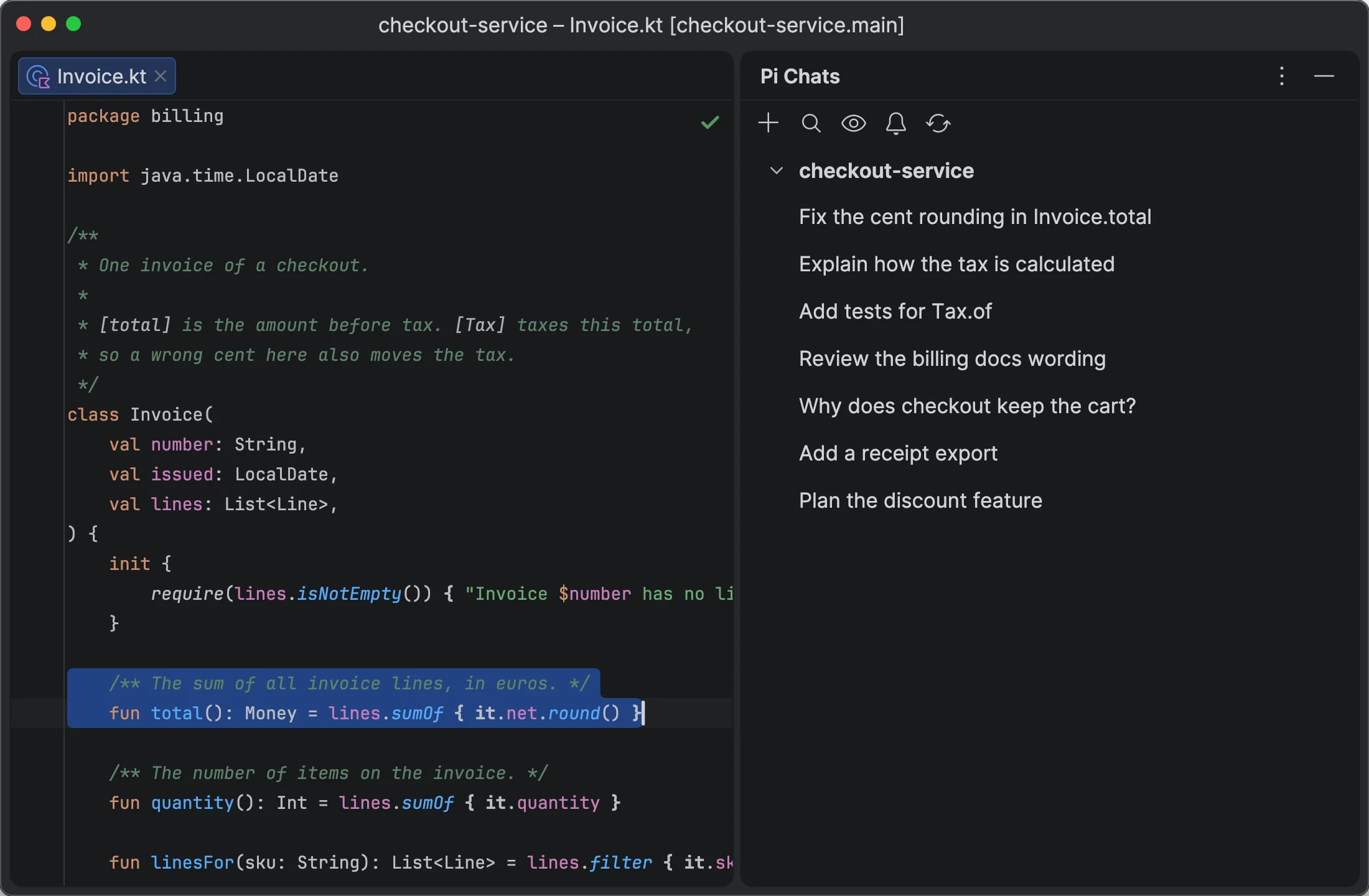
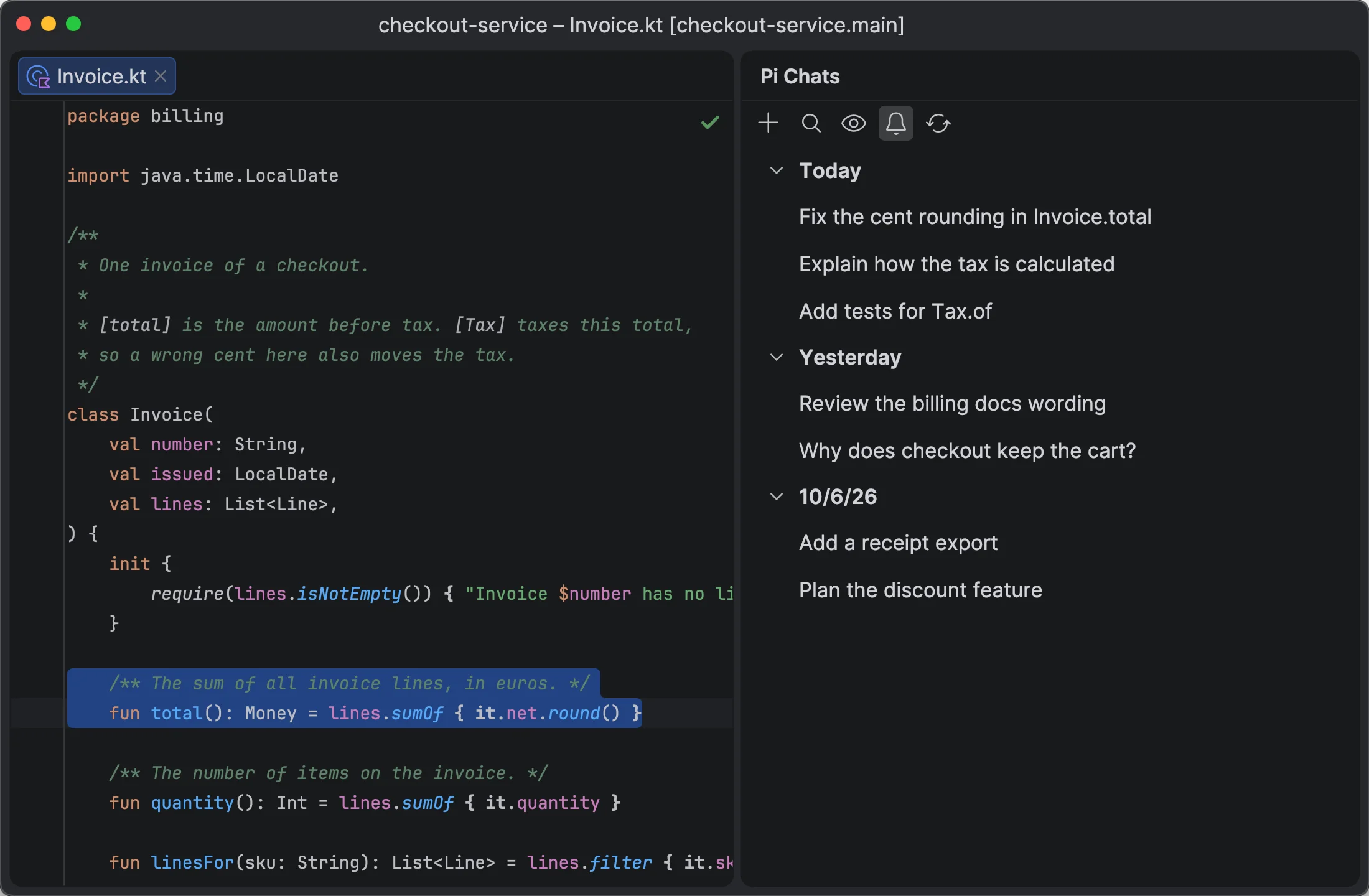
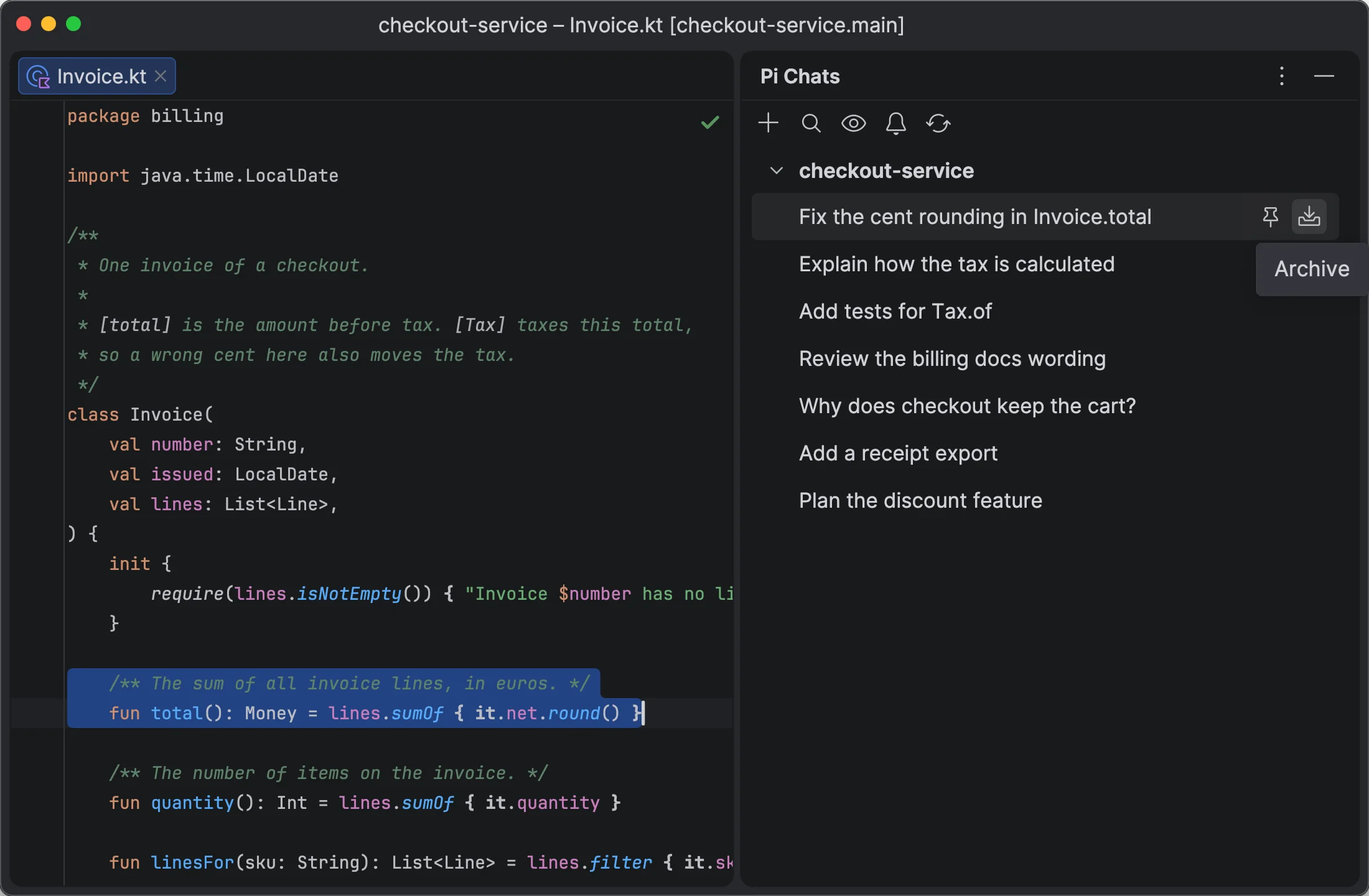
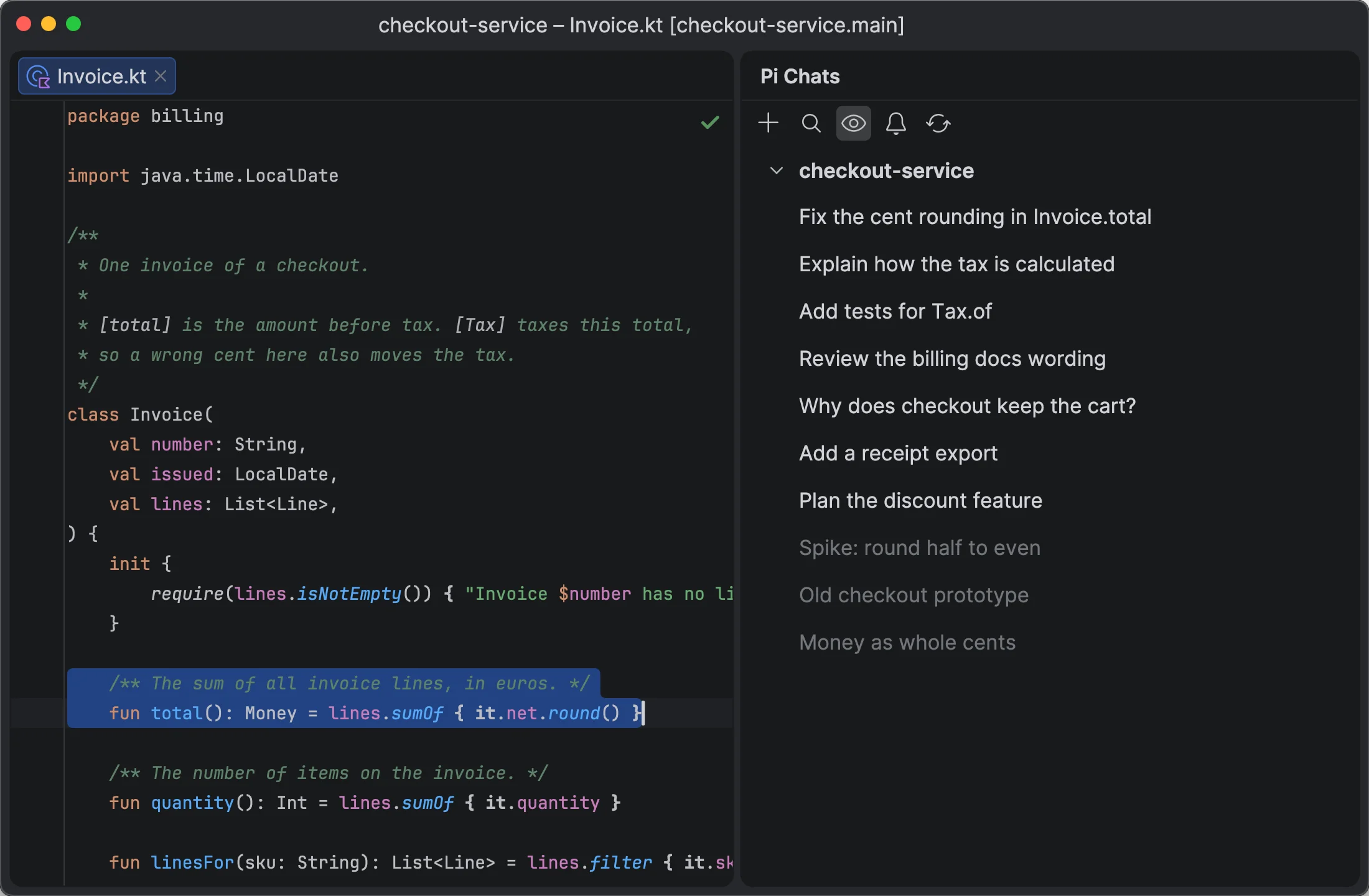
Pi is our favorite terminal agent, so it gets the deepest support: a chat list, a timeline, folded tool calls, and forks.


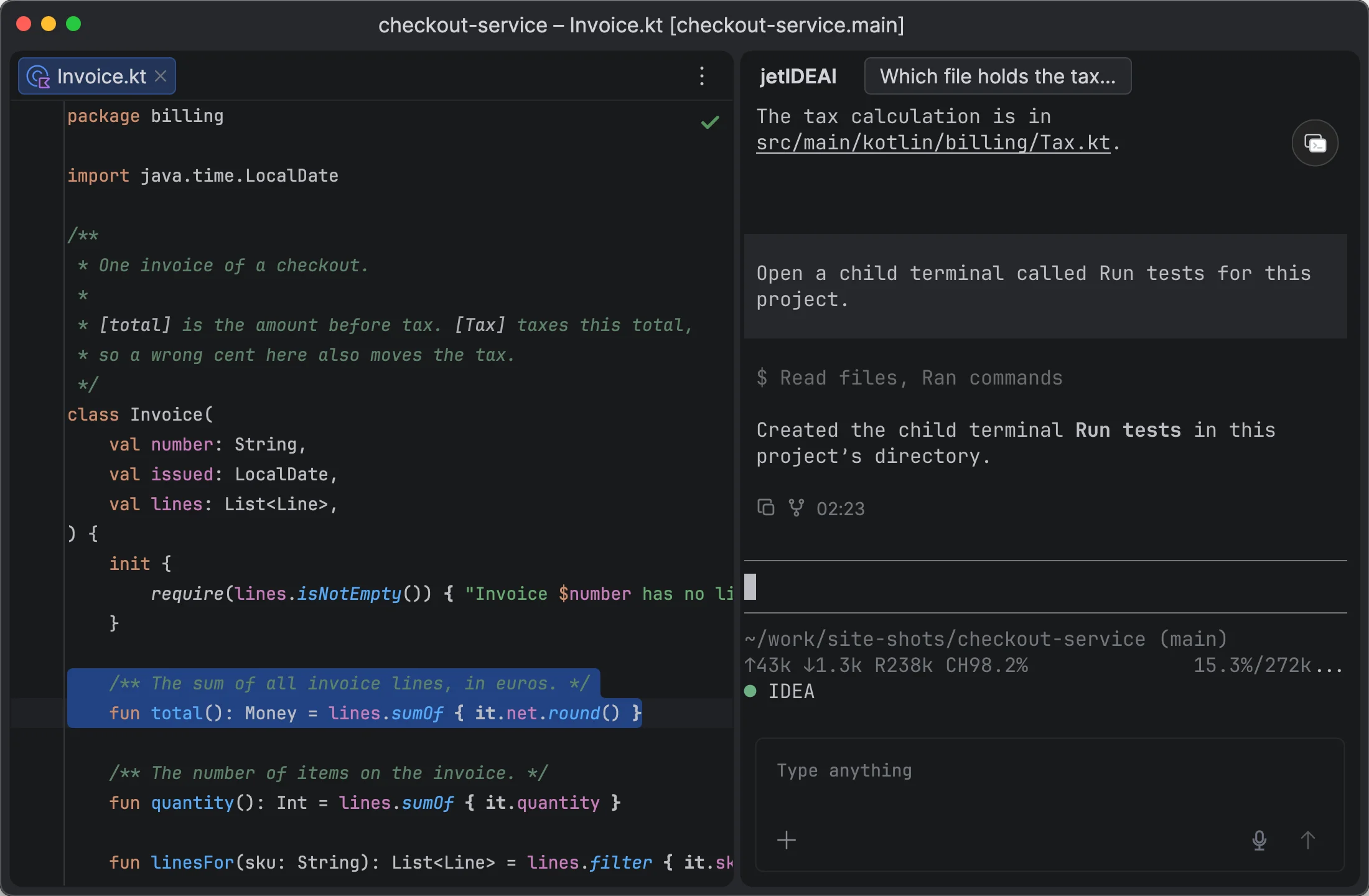
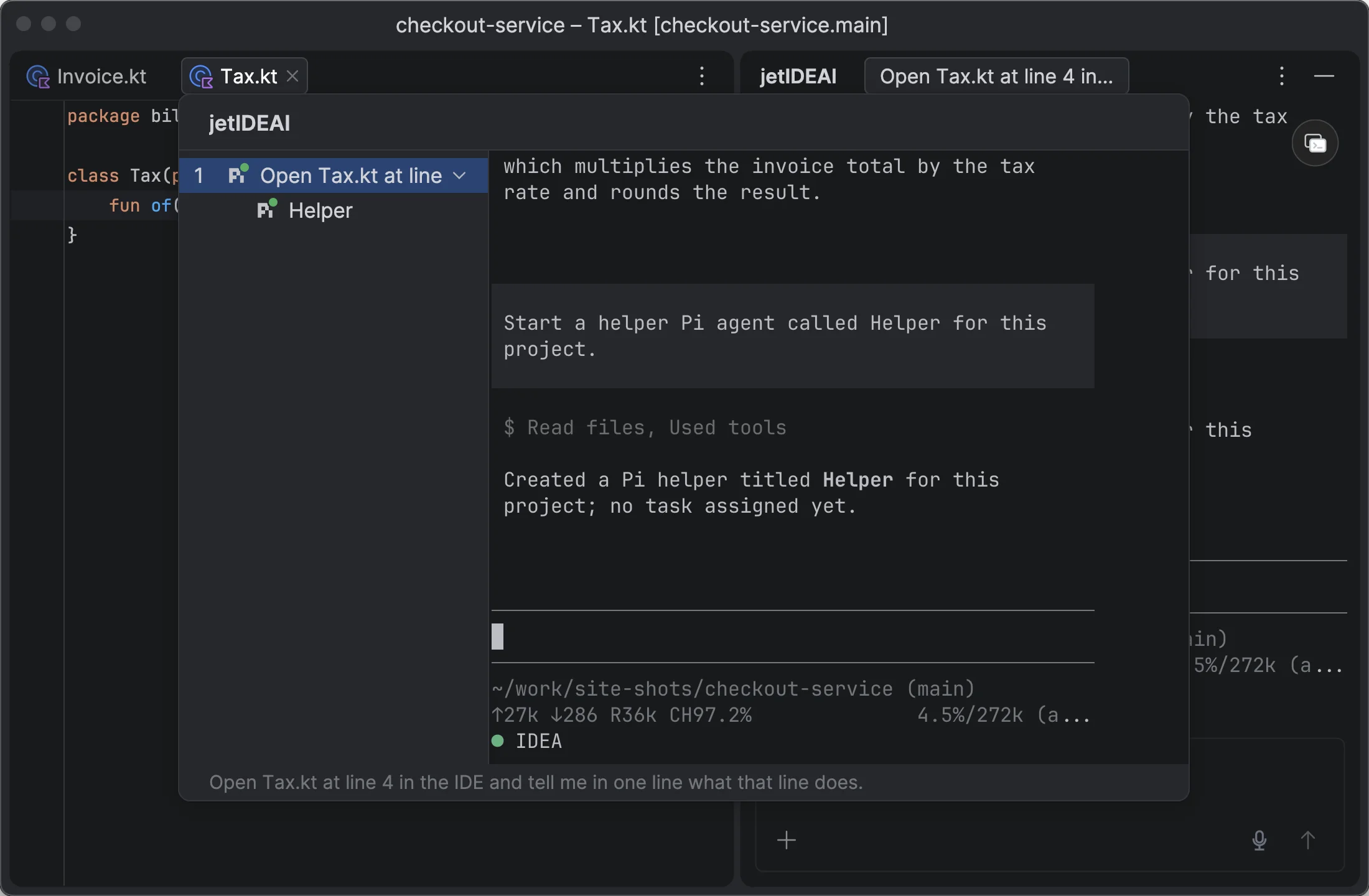
Agents start helper agents, send messages to each other, and use the IDE through a local API and CLI.


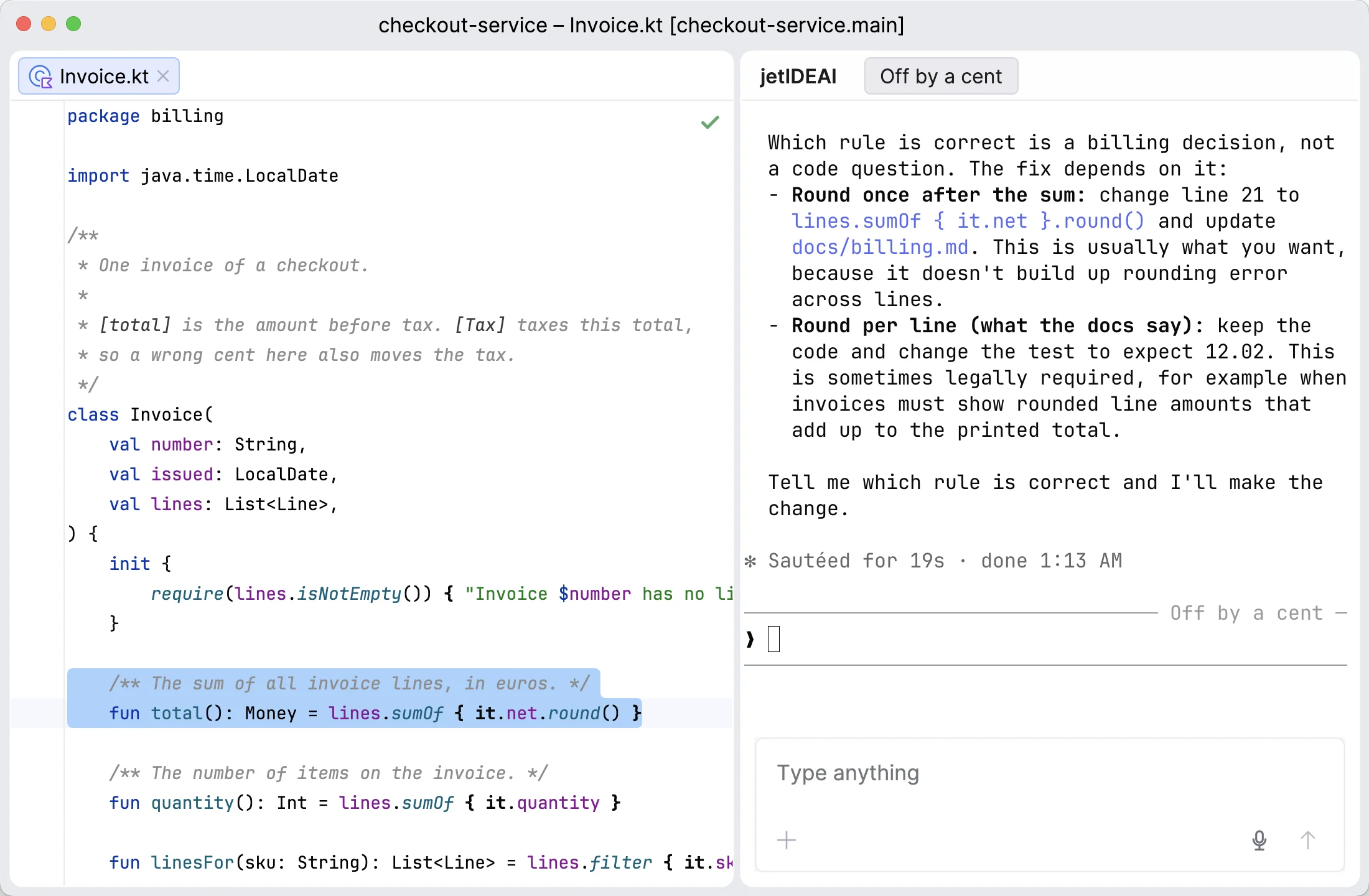
Editor color schemes, Pi themes, and terminal colors follow your IDE theme, dark or light.


Compatible with all JetBrains IDEs.


